• Skip to primary navigation
  • Skip to main content
  • Skip to primary sidebar
  • Skip to secondary sidebar
  • About
    • Contact
    • Privacy
    • Terms of use
  • Shop
    • Cart
    • Checkout
    • My Account
  • Advertise
    • Advertising
      • Buy ad space
    • Case studies
    • Design
    • Email marketing
    • Features list
    • Lead generation
    • Magazine
    • Press releases
    • Publishing
    • Sponsor an article
    • Webcasting
    • Webinars
    • White papers
    • Writing
  • Subscribe to Newsletter

Robotics & Automation News

Where Innovation Meets Imagination

  • Home
  • News
  • Features
  • Editorial Sections A-Z
    • Agriculture
    • Aircraft
    • Artificial Intelligence
    • Automation
    • Autonomous Vehicles
    • Business
    • Computing
    • Construction
    • Culture
    • Design
    • Drones
    • Economy
    • Energy
    • Engineering
    • Environment
    • Health
    • Humanoids
    • Industrial robots
    • Industry
    • Infrastructure
    • Investments
    • Logistics
    • Manufacturing
    • Marine
    • Material handling
    • Materials
    • Mining
    • Promoted
    • Research
    • Robotics
    • Science
    • Sensors
    • Service robots
    • Software
    • Space
    • Technology
    • Transportation
    • Warehouse robots
    • Wearables
  • Press releases
  • Events

light

Fetch Robotics and Piedmont to launch autonomous disinfecting robot

July 16, 2020 by David Edwards

Fetch Robotics, a warehouse and cloud robotics company, and automated packaging solutions supplier Piedmont National are to launch the SmartGuardUV disinfecting autonomous mobile robot (AMR).

Purpose built to autonomously disinfect high-traffic areas such as warehouse facilities, retail stores, office spaces and hospital rooms, SmartGuardUV combines the safety and flexibility of the Fetch Robotics cloud robotics platform, the strength of PURO Lighting pulsed Xenon UV lamp technology, and the advanced disinfecting reporting of the Piedmont 4Site cloud analytics platform.

The result is a completely autonomous, broad spectrum UV disinfection robot that eliminates up to 99.9 percent of viruses and bacteria with UV-C, UV-B, and UV-A as well as reports on the results of the disinfection. [Read more…] about Fetch Robotics and Piedmont to launch autonomous disinfecting robot

Filed Under: Humanoids, News Tagged With: amr, autonomous, cleaning, disinfect, disinfecting, disinfection, facility, fetch, light, piedmont, pulsed, robot, robotics, smartguarduv, solutions, space, spaces, technology, time, uv

MIT adapts Ava Robotics platform to build robot to disinfect Greater Boston Food Bank

June 29, 2020 by David Edwards

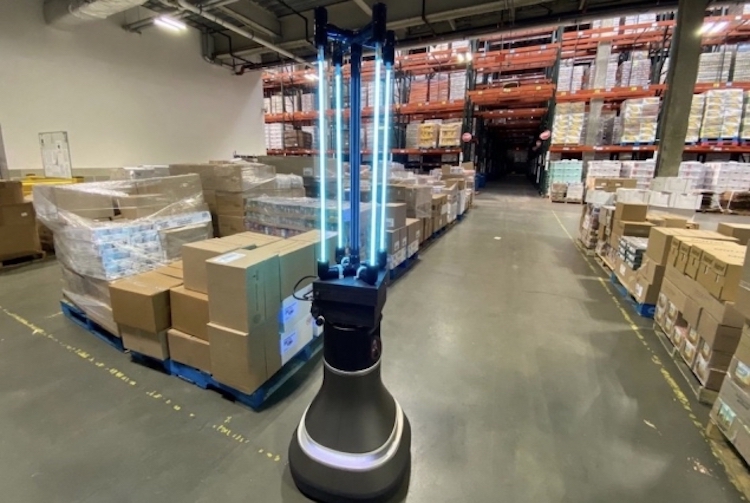
A robot built by MIT’s Computer Science and Artificial Intelligence Laboratory (CSAIL) has disinfected the Greater Boston Food Bank. (See video below.)

The robot uses ultraviolet-C light to disinfect a warehouse floor “in half an hour”, and could one day be employed in grocery stores, schools, and other spaces.

CSAIL developed the robot in partnership with Ava Robotics and the GBFB, and says the system “powerfully disinfects surfaces and neutralizes aerosolized forms of the coronavirus”. [Read more…] about MIT adapts Ava Robotics platform to build robot to disinfect Greater Boston Food Bank
Filed Under: Humanoids, News Tagged With: ava, bank, csail, food, gbfb, light, mit, robot, robotics, surfaces, team, uv-c, warehouse

A Short History of Night Vision Devices

April 7, 2020 by Polly

Night vision devices (often called night scoped by the general public) are used to intensify our sight when the lighting conditions are very poor. You can choose from many types of such devices. You’ll find a complete review on many sites that can help you find out more about the present-day technology.

An infrared imaging system, also called an “active” night vision device, will focus the infrared light on a certain scene. Since infrared is not in the light spectrum that humans can notice, the beam that is produced is not detectable. The technology of image-converting is what transforms said illuminated scene by the infrared into an image we can see.

A thermal imaging system doesn’t work very differently as this one can convert the pattern of heat that is emitted by people, animals or objects, into an image we can distinguish.

The night vision devices that were initially created for wars, but are now available in stores for the general public, are known under the “passive” night vision system name. Such a system has the role of amplifying an image that was picked up in a minimal light (for example, starlight), into an image we can see.

The view that we get using such a device is anywhere from 20,000 to 50,000 times brighter than the image our eyes could see without any such device.

Said devices for night vision were initially created for and only used by the army since being able to see in the dark gives you a big advantage over the enemy and can be used as a tactic to have the upper hand. Wars in which night vision devices were used are the Vietnam War and the Persian Gulf War.

These devices have also started to be used by the police forces. By the late 1990s, these items were being available for the public for the first time as well. They started by being used in high-end cars and are now available for most everybody to be used when they please.

How did it all start?

The research for devices that can work during the nighttime started in the United States, in the 1940s. The country managed to create a technology program by the end of the decade and in the 1950s it created an infrared viewing system. This falls into the “active” technology category because it made use of a directed beam of infrared light.

Although this beam was not noticeable by the naked eye, a person having the equivalent technology could manage to pick up the beam easily. The types of viewers that were used during the mid-1950s and 1960s are now known as “Generation 0” technology.

ITT Corporation started being the producer of night vision devices for the US military in 1958. The Department of Defense would later found its own laboratory in 1965 with the aim of improving the technology that was already existing. In the same decade, scientists created the first passive night vision system that could be considered workable.

Such a device bore the name “Starlight” as they had the ability to pick up and amplify the images that could only be seen by starlight. It came to be known as a “Generation I” device and, obviously, gave the best results under the moonlight.

New developments and commercialism

After being used in the Vietnam War, the technology started to develop more, creating devices that were smaller and less bulky and were called “Generation 2” devices. During the 1970s and the 1980s, the U.S. military worked continuously on developing and refining this technology and passive “Generation 2” devices appeared.

By the end of the 1980s “Generation 3” technology was being developed. These products had better resolutions even when the light was really low. The US Army used them in the Persian Gulf War and the troops had the advantage of seeing in the dark, but also through smoke or dust.

At the end of the 1990s, the Department of Defense cut much of the funding for the development of night vision and the shift of the producers moved to the consumer market.

In a short period of time, night vision devices went from just an idea to one important part of any combat to being used by everyday citizens.

Filed Under: Design, Features Tagged With: beam, called, created, device, devices, generation, image, infrared, light, night, Night vision devices, passive, public, Starlight, started, system, technology, thermal imaging, vision, war

Columbia engineers develop ‘tactile robot finger with no blind spots’

February 26, 2020 by Sam Francis

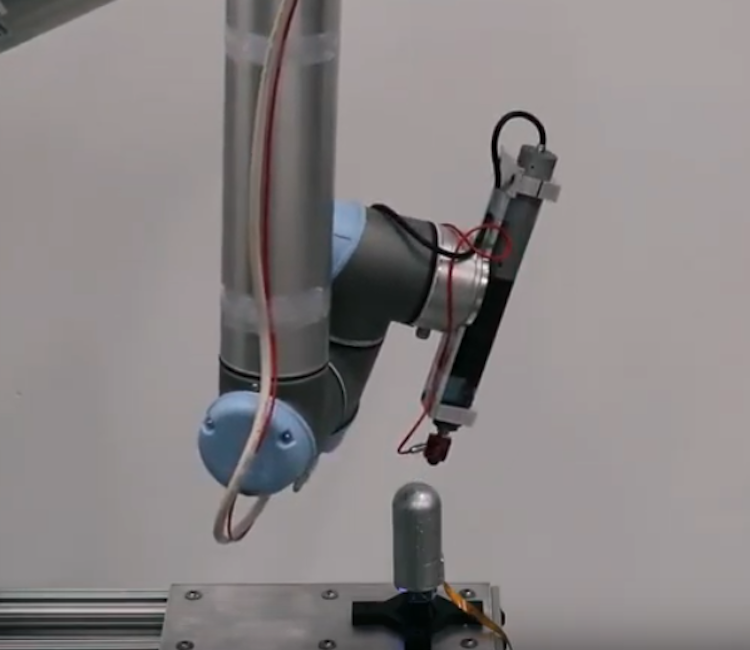
Researchers at Columbia Engineering say they have developed a new type of robotic finger with a sense of touch. Their finger can localize touch with very high precision – less than 1 mm – over a large, multicurved surface, much like its human counterpart. (See video below.)

Matei Ciocarlie, associate professor in the departments of mechanical engineering and computer science, says: “There has long been a gap between standalone tactile sensors and fully integrated tactile fingers–tactile sensing is still far from ubiquitous in robotic manipulation.”

Ciocarlie led this work in collaboration with Electrical Engineering Professor Ioannis Kymissis. [Read more…] about Columbia engineers develop ‘tactile robot finger with no blind spots’

Filed Under: Design, Features Tagged With: ciocarlie, columbia engineering, columbia university, data, dexterous, finger, hands, light, researchers, robotic, signals, tactile, touch

SICK launches its ‘most powerful and accurate’ 2D LiDAR sensor yet

December 19, 2019 by Sam Francis

SICK has launched what it describes as its “most powerful and accurate 2D LiDAR sensor yet”.

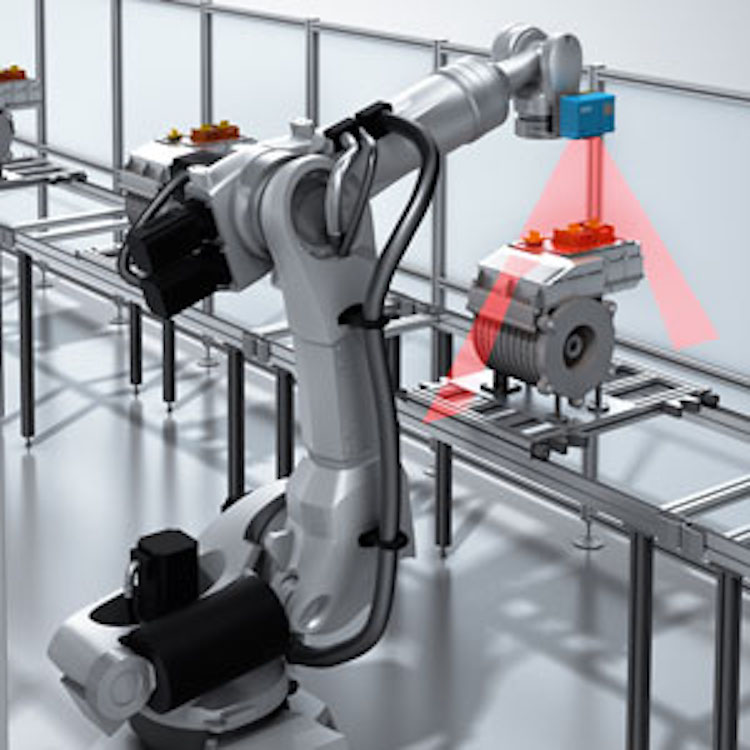
The LMS4000 is designed for materials handling and intralogistics applications, and is said to maintain its high degrees of accuracy and power even at high speeds, in low ambient light or when goods, packages or parcels are matt black or glossy.

SICK says its LMS4000 2D LiDAR Sensor’s “exceptionally high” laser scanning frequency helps to produce more than half a million measurement points per second to calculate the position, shape, volume or surface quality of goods, packages or components over a wide depth of field, and at ranges up to 3 metres. [Read more…] about SICK launches its ‘most powerful and accurate’ 2D LiDAR sensor yet

Filed Under: Industrial robots, News Tagged With: accurate, applications, data, goods, high, including, laser, lidar, light, lms, measurement, object, profiling, sensor, sick, wide

Infineon and Synopsys partner to develop AI chips for automotive applications

September 18, 2019 by David Edwards

Artificial intelligence and neural networks are becoming a key factor in developing safer, smart and eco-friendly cars.

In order to support AI-driven solutions with its future automotive microcontrollers, Infineon Technologies has started a collaboration with Synopsys.

Next generation Aurix microcontrollers from Infineon will integrate a new high-performance AI accelerator called Parallel Processing Unit (PPU) that will employ Synopsys’ DesignWare ARC EV Processor IP. [Read more…] about Infineon and Synopsys partner to develop AI chips for automotive applications

Filed Under: Computing, Features Tagged With: ai, applications, aurix, automotive, driver, engine, example, hd, infineon, light, neural, ppu, safety, solutions, synopsys, systems

Omron says its optical sensors can better detect black surfaces

September 17, 2019 by Mai Tao

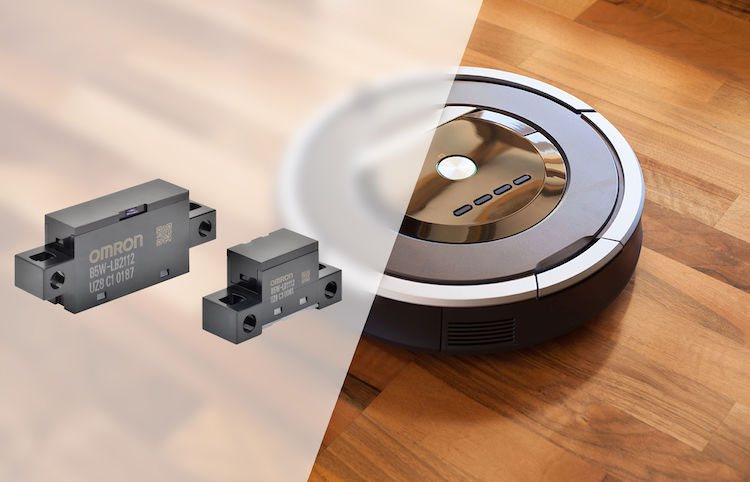
Omron has launched an updated ranges of optical sensors that the company says can better detect black, mirrored and transparent surfaces.

Omron Electronic Components Europe says the new series of optical sensors, also feature a longer detection distance.

Omron B5W sensors are particularly effective at identifying black, transparent, reflective and other hard to detect services, and the new range also features enhanced performance in this area. [Read more…] about Omron says its optical sensors can better detect black surfaces

Filed Under: Industry, News Tagged With: applications, black, colours, convergent, detect, detection, devices, diffuse, falling, items, lcr, light, machines, miniature, mm, objects, omron, optical, paper, performance, reflective, reliably, robot, sensing, sensors, step, surfaces, target, transparent, w-lb, white

BMW unveils ‘the world’s blackest’ car using nanotech coating

September 17, 2019 by Sam Francis

BMW has unveiled what the automaker describes as “the world’s blackest of black” cars, using a coating called “Vantablack”.

The company says Vantablack “highlights the expressive design language and confident, dominant and muscular appearance of the new BMW X6 to perfection”.

Vantablack is the registered trademark for the VBx2 nanostructure paint finish BMW used on the new X6 vehicle. [Read more…] about BMW unveils ‘the world’s blackest’ car using nanotech coating

Filed Under: Design, News Tagged With: black, bmw, car, carbon, design, light, paint, technology, vantablack, vbx

Cornell scientists develop new material to give robots more sensitive touch

September 12, 2019 by David Edwards

A new synthetic material created by a scientist at Cornell University is said to give robots a “softer touch”.

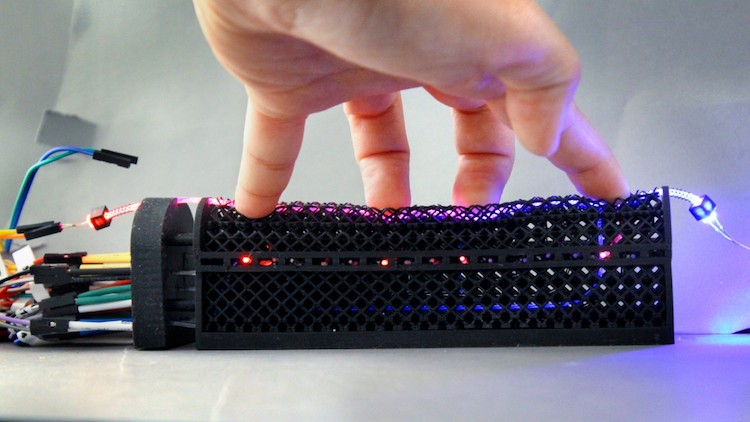
Developed by PhD student Patricia Xu, at Cornell’s Organic Robotics Lab, the “sensory network” – also dubbed “optical lace” – is said to be similar to the human biological nervous system.

The lab’s paper, Optical Lace for Synthetic Afferent Neural Networks, was published in Science Robotics. [Read more…] about Cornell scientists develop new material to give robots more sensitive touch

Filed Under: News, Science Tagged With: care, contact, cornell, deforms, detect, environment, feel, fibers, fingers, human, intensity, lab, lace, lattice, learning, light, machine, material, measure, optical, output, paper, people, robots, sensors, shepherd, structure, touch, touched, xu

Oceaneering to perform first deepwater survey in Mexico using autonomous underwater vehicle

July 11, 2019 by Anna

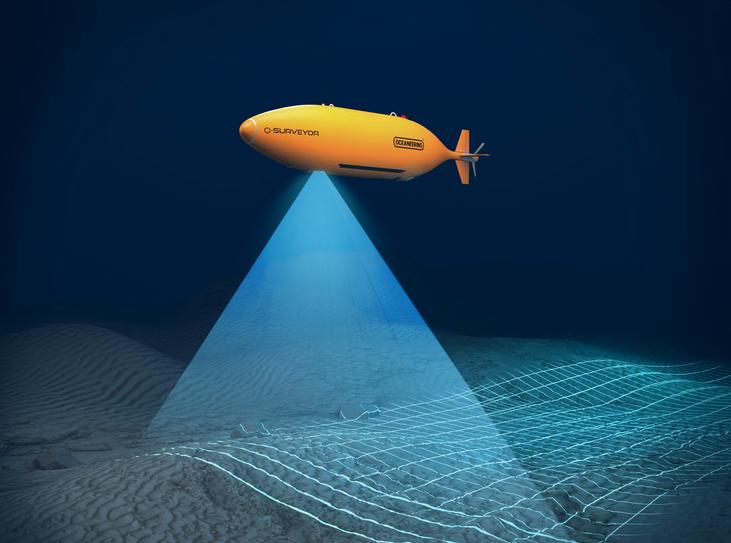
Oceaneering International, Inc. has secured a contract to perform the first-ever deepwater (1,000-3,000 m) Autonomous Underwater Vehicle (AUV) survey in Mexican waters.

The geophysical survey will take place at the BHP-operated Trion block. Oceaneering will use the DP-2 Ocean Investigator, equipped with the OS-VI AUV and light geotechnical capabilities.

Work is currently under way and will continue for approximately 45 days. Oceaneering will also provide light geotechnical services by acquiring 6 m piston core soil samples.

Filed Under: News Tagged With: acquiring, autonomous, auv, deepwater, geotechnical, light, oceaneering, oceaneering international, os-vi, perform, survey, underwater, vehicle

  • « Go to Previous Page
  • Page 1
  • Page 2
  • Page 3
  • Page 4
  • Page 5
  • Go to Next Page »

Primary Sidebar

Search this website

Latest articles

  • AGIBOT debuts A3 humanoid robot in Europe and launches UK Robot-as-a-Service model
  • What Are the Biggest Challenges in Modern Electronics Manufacturing?
  • What Are the Best AI Tools for Creating Content Faster in 2026?
  • Why Does Quality Wiring Matter More Than Ever in Modern Electronic Devices?
  • Why Are Custom Harness Solutions Essential for Next Generation Technology?
  • What Makes Asian Electronics Manufacturing a Smart Choice for Global Companies?
  • How Can Better Cable Management Improve Electronic Performance?
  • Can AI Really Recommend the Perfect Hairstyle for Your Face Shape?
  • The Role of Risk Calculations in Building More Reliable Automated Trading Systems
  • What to Look for When Buying an Oceanfront Condo in Myrtle Beach

Secondary Sidebar

Latest news

  • AGIBOT debuts A3 humanoid robot in Europe and launches UK Robot-as-a-Service model
  • What Are the Biggest Challenges in Modern Electronics Manufacturing?
  • What Are the Best AI Tools for Creating Content Faster in 2026?
  • Why Does Quality Wiring Matter More Than Ever in Modern Electronic Devices?
  • Why Are Custom Harness Solutions Essential for Next Generation Technology?
  • What Makes Asian Electronics Manufacturing a Smart Choice for Global Companies?
  • How Can Better Cable Management Improve Electronic Performance?
  • Can AI Really Recommend the Perfect Hairstyle for Your Face Shape?
  • The Role of Risk Calculations in Building More Reliable Automated Trading Systems
  • What to Look for When Buying an Oceanfront Condo in Myrtle Beach

Copyright © 2026 · News Pro on Genesis Framework · WordPress · Log in

We use cookies on our website to give you the most relevant experience by remembering your preferences and repeat visits. By clicking “Accept”, you consent to the use of ALL the cookies.
Do not sell my personal information.
Cookie SettingsAccept
Manage consent

Privacy Overview

This website uses cookies to improve your experience while you navigate through the website. Out of these, the cookies that are categorized as necessary are stored on your browser as they are essential for the working of basic functionalities of the website. We also use third-party cookies that help us analyze and understand how you use this website. These cookies will be stored in your browser only with your consent. You also have the option to opt-out of these cookies. But opting out of some of these cookies may affect your browsing experience.
Necessary
Always Enabled
Necessary cookies are absolutely essential for the website to function properly. These cookies ensure basic functionalities and security features of the website, anonymously.
CookieDurationDescription
cookielawinfo-checkbox-analytics11 monthsThis cookie is set by GDPR Cookie Consent plugin. The cookie is used to store the user consent for the cookies in the category "Analytics".
cookielawinfo-checkbox-functional11 monthsThe cookie is set by GDPR cookie consent to record the user consent for the cookies in the category "Functional".
cookielawinfo-checkbox-necessary11 monthsThis cookie is set by GDPR Cookie Consent plugin. The cookies is used to store the user consent for the cookies in the category "Necessary".
cookielawinfo-checkbox-others11 monthsThis cookie is set by GDPR Cookie Consent plugin. The cookie is used to store the user consent for the cookies in the category "Other.
cookielawinfo-checkbox-performance11 monthsThis cookie is set by GDPR Cookie Consent plugin. The cookie is used to store the user consent for the cookies in the category "Performance".
viewed_cookie_policy11 monthsThe cookie is set by the GDPR Cookie Consent plugin and is used to store whether or not user has consented to the use of cookies. It does not store any personal data.
Functional
Functional cookies help to perform certain functionalities like sharing the content of the website on social media platforms, collect feedbacks, and other third-party features.
Performance
Performance cookies are used to understand and analyze the key performance indexes of the website which helps in delivering a better user experience for the visitors.
Analytics
Analytical cookies are used to understand how visitors interact with the website. These cookies help provide information on metrics the number of visitors, bounce rate, traffic source, etc.
Advertisement
Advertisement cookies are used to provide visitors with relevant ads and marketing campaigns. These cookies track visitors across websites and collect information to provide customized ads.
Others
Other uncategorized cookies are those that are being analyzed and have not been classified into a category as yet.
SAVE & ACCEPT