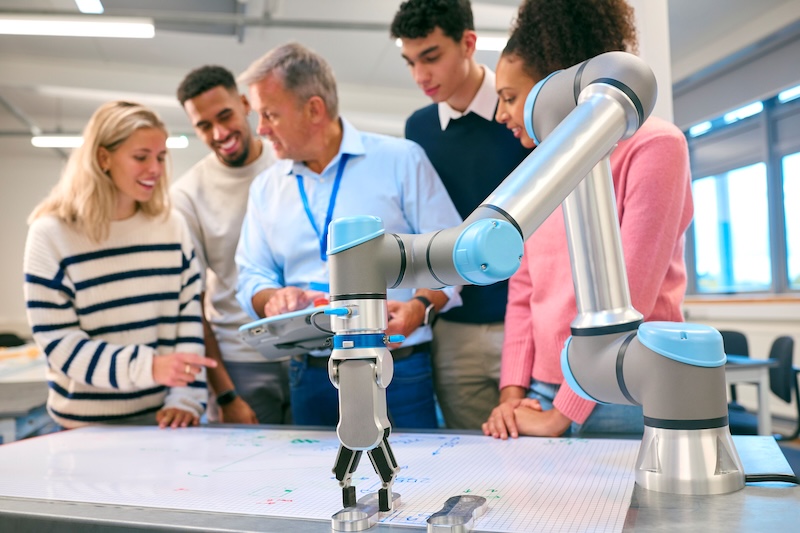
However, once these systems are deployed, they are prone to face unique challenges. Lighting conditions, variations in human behavior, the variety of surfaces encountered, and background noise are examples of factors that can contribute to these newfound friction points in untested scenarios. [Read more…] about Bridging the Gap Between Robotics Design and Deployment
robot navigation
Researchers develop control system that helps bird-inspired robots stay stable in windy conditions
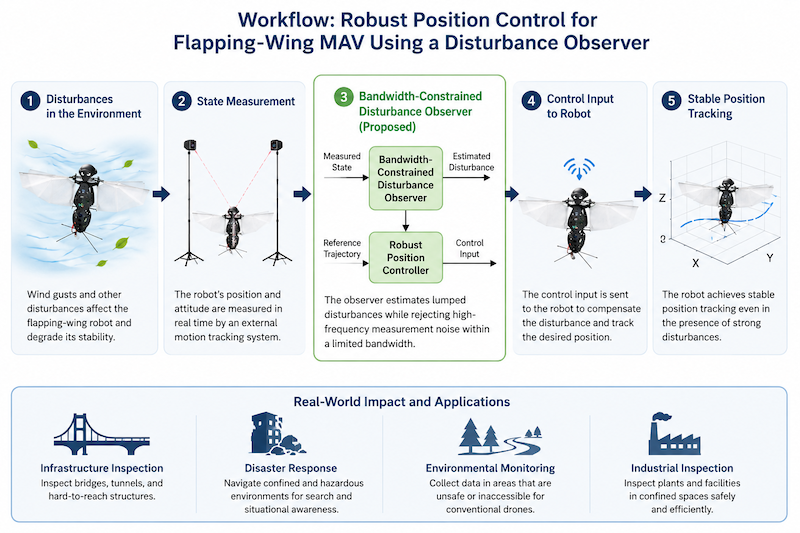
Newly developed control method overcomes unexpected movements, improving disturbance rejection and reducing X-axis position error by 53.1 percent
Small flapping-wing (FW) robots could support applications such as inspection and search and rescue. However, they are highly susceptible to disturbances such as wind gusts, making stable flight challenging.
Researchers from Japan’s Chiba University investigated the flight dynamics of a commercial FW robot and discovered a behavior that limits how quickly its control system can correct disturbances.
They developed a control method that accounts for this limitation, helping the robot achieve more stable and accurate flight. [Read more…] about Researchers develop control system that helps bird-inspired robots stay stable in windy conditions
How AI Navigation is Improving the Performance of Robotic Pool Cleaners
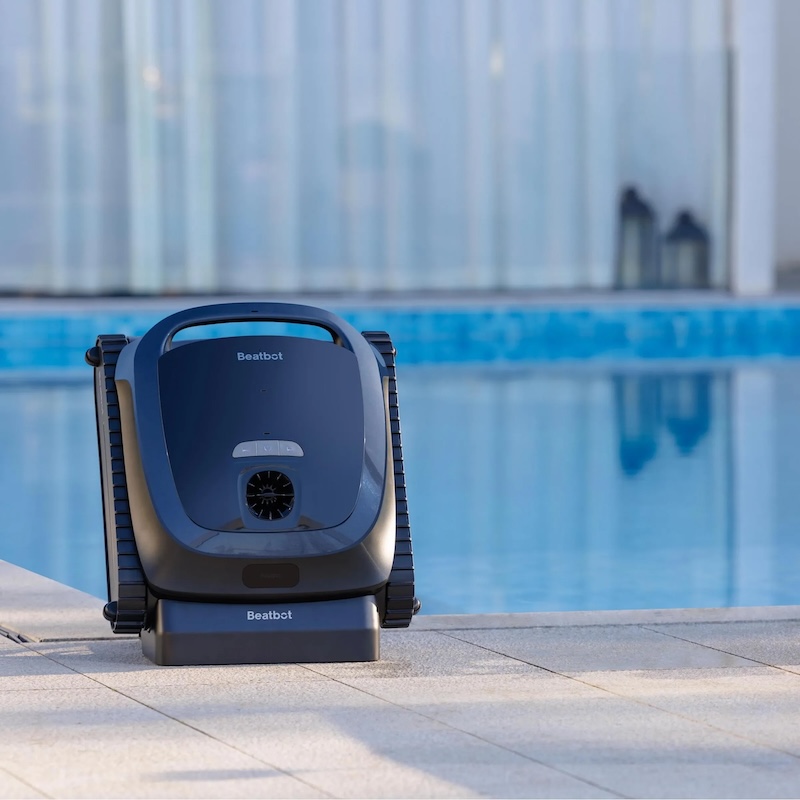
Robotic pool cleaners used to be judged mostly by suction, brushes, and how much debris they could collect. Those things still matter, but they are no longer the whole performance story.
The bigger shift is navigation.
A pool robot that moves randomly may clean some areas well and miss others. It may repeat the same route, struggle near steps, or leave the waterline looking unfinished. That is why AI navigation is becoming a core part of robotic pool cleaner performance. It helps the machine understand the pool as a space, not just a container of water. [Read more…] about How AI Navigation is Improving the Performance of Robotic Pool Cleaners
GENISOM AI steps into the global robotics spotlight at ICRA 2026 with real-world-ready robots
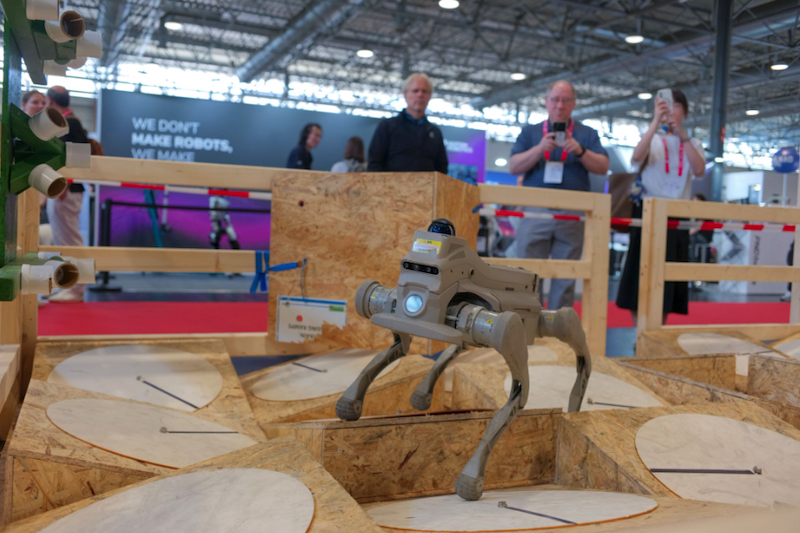
Having already produced and delivered more than 10,000 robots globally, with its products deployed in real-world industrial and infrastructure scenarios, GENISOM AI made its debut at ICRA 2026 during June 2-4 with a clear message: Embodied AI is moving from research to reality.
At the event, the company demonstrated its GENISOM M1 and GENISOM L1 robot platforms alongside technologies supporting simulation, navigation, motion control, and embodied intelligence for operation in complex environments, demonstrating end-to-end capabilities from simulation to real-world deployment.
GENISOM AI builds a full-stack embodied intelligence system that connects core robotic components, robot platforms, simulation, navigation, motion control, agentic intelligence, scalable manufacturing, and real-world deployment. [Read more…] about GENISOM AI steps into the global robotics spotlight at ICRA 2026 with real-world-ready robots
Star Robotics unveils new security robot with improved autonomy and navigation
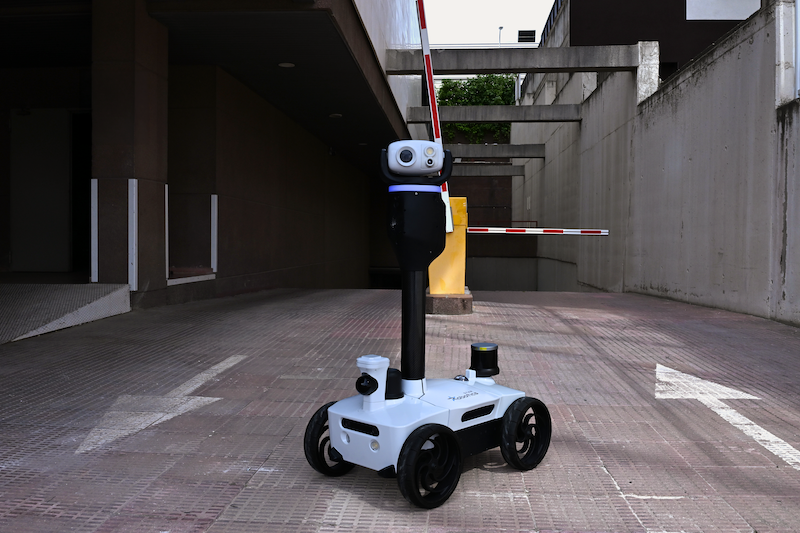
Star Robotics has launched Watchbot 2, the latest version of its autonomous robot designed for security surveillance and inspection.
The new system was introduced during a livestreamed event on April 16, with the company positioning it as a significant upgrade aimed at improving reliability and performance in real-world environments such as data centers, power facilities, and public spaces.
Watchbot 2 builds on the previous generation with a focus on longer operating time, improved durability, and enhanced sensing and navigation capabilities. [Read more…] about Star Robotics unveils new security robot with improved autonomy and navigation
Kollmorgen launches layout analysis tool to improve mobile robot performance
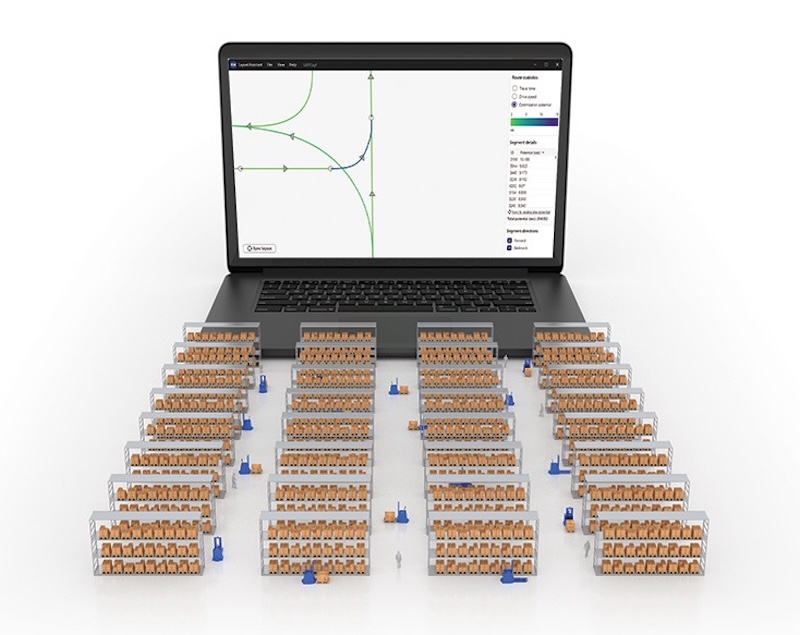
Kollmorgen has introduced a new software tool designed to help companies plan and optimize the movement of automated vehicles and mobile robots inside factories and warehouses.
Called the NDC Layout Assistant, the tool is aimed at improving how routes are designed for automated guided vehicles and autonomous mobile robots. (NDC stands for Navigation and Driving Control.)
These machines typically move materials around facilities such as distribution centers, factories, and logistics hubs. [Read more…] about Kollmorgen launches layout analysis tool to improve mobile robot performance
GMEX Robotics advances autonomous hospital logistics robot
GMEX Robotics, a developer of AI-powered robotic technologies, has announced a significant advancement of its hospital logistics robot.
The company is addressing one of the key limitations in existing portable conveyor-type medical tracked robots, which typically require medical staff or patients to bend over to retrieve items, making it inconvenient to adjust to a height suitable for operator use, and which are easily damaged if the sides are impacted by walls or oncoming foot or material traffic.
GMEX’s enhanced design focuses on improving durability, resilience and usability, reducing the risk of damage from external impacts while supporting consistent performance in high-traffic hospital environments. [Read more…] about GMEX Robotics advances autonomous hospital logistics robot
When wheels won’t do: Humanoid robots for human-centric spaces
By Nicolas Lehment, senior principal system architect, NXP Semiconductors
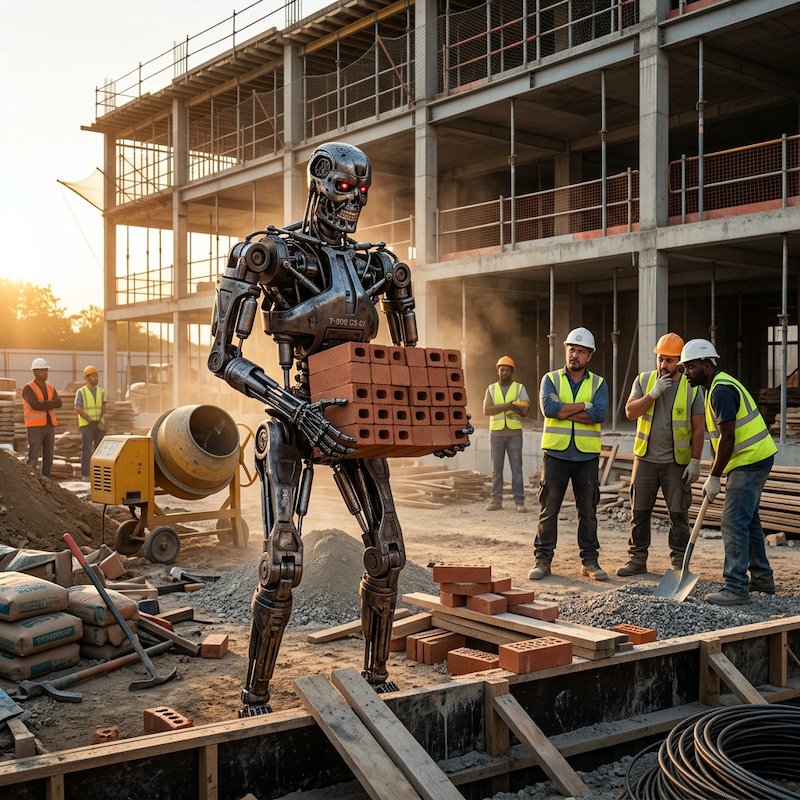
Automated guided vehicles (AGVs) and wheeled mobile robots currently dominate factories and warehouses, following magnetic stripes or optical markers permanently embedded in warehouse flooring to navigate routes.
As requirements evolve, however, wheels are simply not enough. Demand is growing for machines capable of navigating more challenging, human-centric environments, such as hospitals, restaurants, homes, and even rugged outdoor terrain.
In such environments, perfectly flat floors, free from steps and stairs, along with conspicuous, clutter-free aisles, are luxuries. [Read more…] about When wheels won’t do: Humanoid robots for human-centric spaces