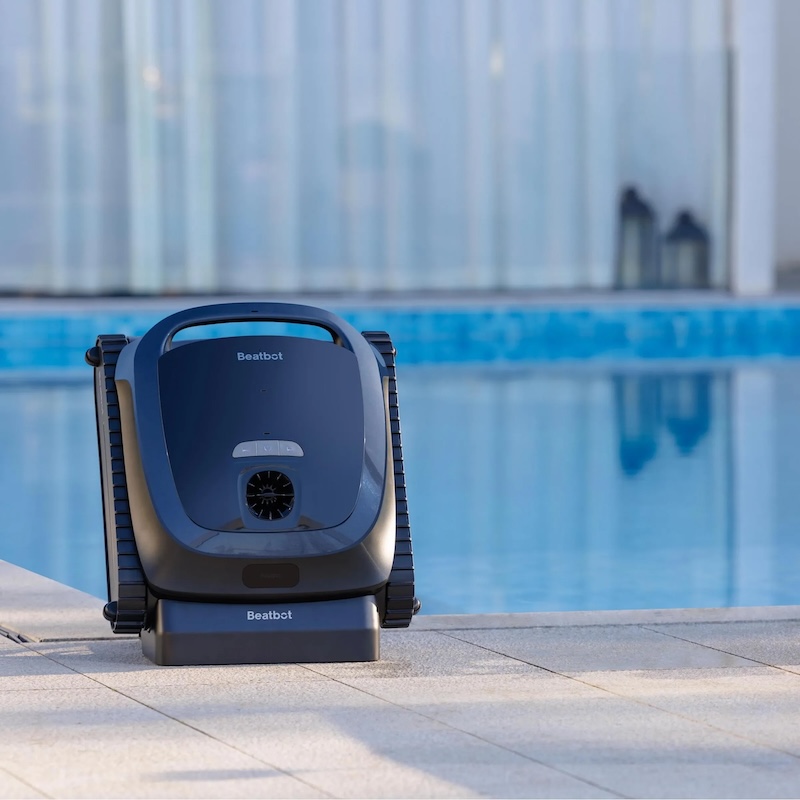
Robotic pool cleaners used to be judged mostly by suction, brushes, and how much debris they could collect. Those things still matter, but they are no longer the whole performance story.
The bigger shift is navigation.
A pool robot that moves randomly may clean some areas well and miss others. It may repeat the same route, struggle near steps, or leave the waterline looking unfinished. That is why AI navigation is becoming a core part of robotic pool cleaner performance. It helps the machine understand the pool as a space, not just a container of water.
For robotics and automation readers, this is where the category becomes more interesting. The pool cleaner is turning into a small autonomous system that uses sensing, mapping, path planning, and real-time adjustment to improve coverage.
Pool Robots Are Moving Beyond Random Cleaning
Random movement can work in a simple pool, but it is not ideal for consistent results. Pools are more complex than flat indoor floors. They include slopes, drains, corners, ledges, curves, stairs, waterlines, and different surface materials.
A cleaner that simply moves until it hits something may spend too much time in one area and not enough in another. That creates the same problem homeowners wanted to avoid: manual touch-ups after the cycle.
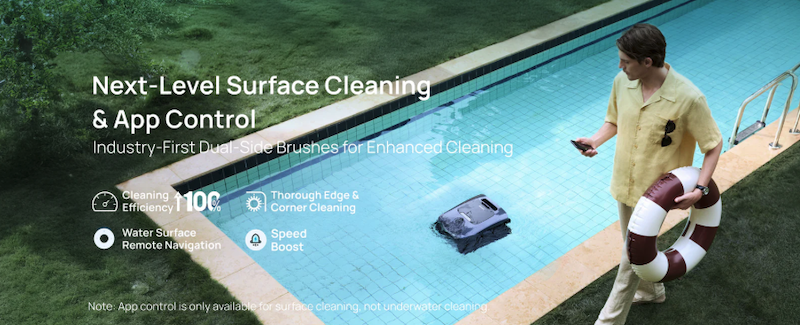
AI navigation improves performance by making movement more intentional. Instead of relying only on chance, the robot can follow a more organized cleaning logic. The result is not just cleaner water. It is better use of time, energy, and machine movement.
Mapping Helps Robots Understand Pool Geometry
Mapping is one of the most important advances in this category. When a robot can build or follow a sense of pool geometry, it can clean with more structure.
Pool shape affects cleaning logic. A rectangle has different movement needs from a kidney-shaped pool, a freeform pool, or a pool with multiple platform levels. Stairs, ledges, sun shelves, and deep-end slopes create transitions that a robot must handle without wasting motion.
This is where AI navigation changes the role of a vacuum for pool. The device is no longer only pulling debris from surfaces. It is deciding how to move through a changing three-dimensional environment.
Mapping can also reduce repeated movement. If a robot understands where it has already cleaned, it has a better chance of avoiding unnecessary overlap. That can improve runtime use and make coverage more predictable.
Sensors Turn Movement into Real-Time Decisions
Navigation depends on sensing. A pool robot needs to know more than its starting point. It must respond as conditions change during the cycle.
Orientation sensing helps the robot understand direction and movement. Obstacle awareness can help around walls, drains, steps, and objects. Vision or advanced sensing can support feature recognition and help the robot respond to different areas of the pool.
This matters because pools change. A storm may leave leaves clustered in one area. Heavy swimming may move fine dirt toward steps or corners. Landscaping work may send grit into shallow zones. A static path is useful, but real-time adjustment makes the system more adaptable.
Good navigation is not only about building a map once. It is about cleaning while continuing to interpret the environment.
AI Path Planning Improves Cleaning Efficiency
AI path planning improves performance by reducing wasted movement. A robot with better movement logic can focus more of its runtime on useful cleaning rather than random travel.
Fewer missed areas are one major benefit. Corners, slopes, steps, ledges, walls, and the waterline are all areas where basic cleaners may perform inconsistently. Smarter routing can help the robot approach these zones with more purpose.
Better runtime use is another benefit. Battery capacity matters, but so does how the robot spends that energy. A cleaner that repeats the same path too often may waste time even if the battery is strong. A more organized cleaner can turn the same runtime into better coverage.
Consistency is the real performance goal. Homeowners do not only want one good cleaning cycle. They want reliable results each time they run the machine.
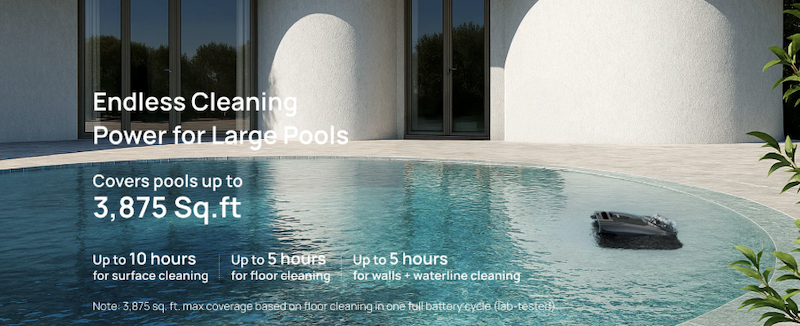
Beatbot AquaSense 2 Ultra Shows AI Navigation in Practice
Beatbot AquaSense 2 Ultra is a useful example because its value is tied directly to navigation performance rather than simple suction claims.
Beatbot describes AquaSense 2 Ultra with HybridSense AI Pool Mapping, CleverNav Smart Navigation, AI camera support, and advanced sensing, with cleaning coverage across the water surface, floor, walls, and waterline.
For a complex pool, those capabilities matter because the robot has to interpret the pool’s shape, not just move until it meets resistance.
The strongest use case is a pool with more than one level or visual zone. Think of a design with a sun shelf, curved wall, sloped floor, steps, and a long waterline.
A basic cleaner may still collect debris, but it may not handle the transitions smoothly. AquaSense 2 Ultra is built for pools where mapping, sensing, and route logic can reduce missed areas and repeated passes.
For readers evaluating a pool robot vacuum, the engineering question is how navigation translates into outcomes: better area coverage, more efficient movement, smoother wall transitions, and fewer manual touch-ups after a cycle.
It still belongs inside normal pool care. Owners must test and balance water, maintain filtration, clean baskets, remove large debris manually, follow safety rules, and call professionals for leaks, equipment faults, algae, stains, or persistent cloudy water.
AI Navigation Also Changes User Confidence
Performance is not only measured by debris collection. It is also measured by trust.
Users do not want to supervise every movement. If a robot repeatedly misses a visible area, owners start doubting the system. If it finishes cycles more predictably, users are more likely to run it often.
Smart parking and retrieval features can also reduce end-of-cycle friction. App status, cleaning modes, and progress visibility can make the device feel more like a connected maintenance system rather than a standalone machine.
This matters for adoption. A robot that is easier to trust is more likely to become part of the weekly routine.
AI Still Has Practical Limits
AI navigation improves pool cleaning, but it does not solve every pool care problem. It does not sanitize water. It does not replace chlorine, pH, alkalinity, or stabilizer testing. It does not repair pumps, filters, heaters, leaks, drains, or damaged pool surfaces.
Large branches, rocks, towels, toys, and sharp objects should still be removed by hand. Battery life, retrieval, filter cleaning, basket care, and storage still affect real-world satisfaction.
Very cloudy water, algae, stains, scale, poor circulation, or equipment faults may need professional diagnosis. Even the strongest navigation system still needs a pool that matches its design, size, surface, and debris load.
Better Navigation is Making Pool Robots More Autonomous
AI navigation is improving robotic pool cleaners because it turns movement into decision-making. Mapping helps the robot understand pool geometry. Sensors help it respond to changing conditions. Path planning helps it use time and energy more efficiently.
Premium systems like Beatbot AquaSense 2 Ultra show where the category is heading. Navigation is no longer a secondary feature. It is becoming a core measure of performance.
The future is not fully hands-off pool ownership. Water care, filtration, safety, and equipment maintenance still matter. But AI navigation is making pool robots more autonomous, more consistent, and more trustworthy as smart maintenance devices.
