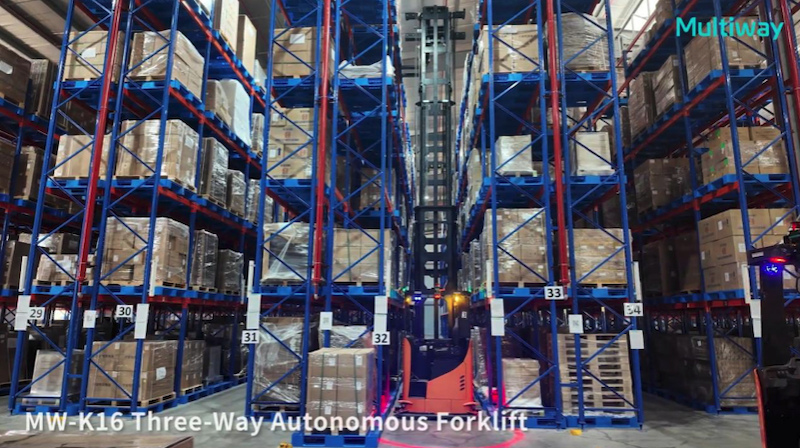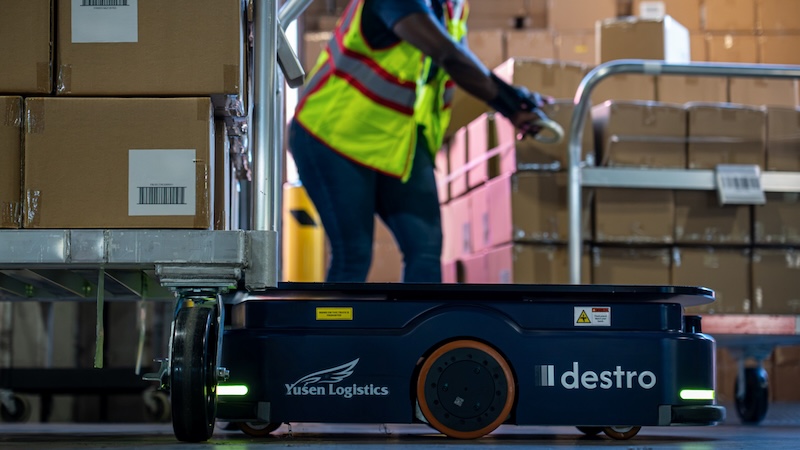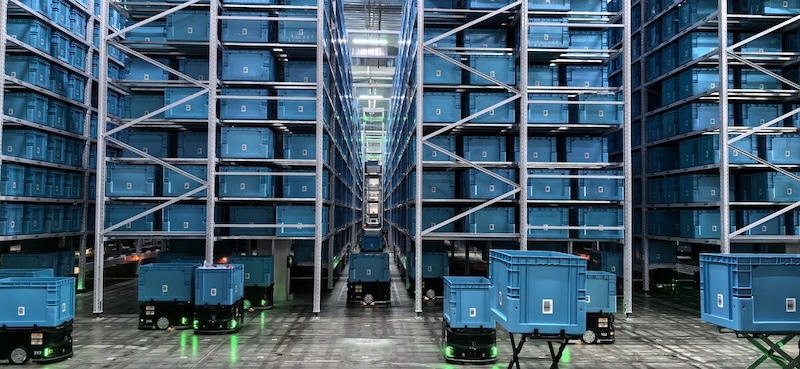
Modern pallet trucks have evolved far beyond the manually operated tools they once were. Robotics technology has transformed these machines into autonomous, intelligent material handling vehicles – commonly known as Automated Guided Vehicles (AGVs) or Autonomous Mobile Robots (AMRs).
Robotic technology is reshaping warehouse operations, integrating sophisticated sensors, navigation systems and AI – enabling these machines to manoeuvre, detect and pick pallets without any human intervention.
These modern machines use software and sensors to navigate warehouses independently, significantly improving both the efficiency and safety of warehouse operations. As adoption continues to grow across the logistics sector, understanding what drives this shift is increasingly relevant for businesses looking to stay competitive.
How Advanced Navigation and Mapping Are Streamlining Operations
Modern automated pallet trucks use Simultaneous Localisation and Mapping (SLAM) technology – incorporating Light Detection and Ranging (LiDAR) and 3D cameras – to build real-time maps of their environment. This means they can navigate complex warehouse layouts without relying on floor-embedded wire or magnetic tape for guidance.
Unlike older AGVs, robotics-enhanced pallet trucks do not stop when faced with an obstacle. Dynamic rerouting software enables them to detect obstructions in advance and calculate an alternative path without interrupting their workflow.
This capability alone represents a significant leap forward compared to earlier generations of automated handling equipment, which required costly infrastructure changes whenever a warehouse layout was modified.
The increased flexibility offered by modern AGVs means they can be easily reprogrammed to adapt to changes in warehouse automation layouts, making them far more adaptable than traditional conveyor-based systems.
How Modern Pallet Trucks Improve Operational Efficiency and Productivity
The advanced software incorporated into these pallet trucks enables them to carry out operations with greater precision and speed than manual alternatives. Autonomous pallet jacks consistently outperform manual operators in throughput, not only by moving faster, but by eliminating downtime caused by breaks, shift changes and fatigue.
Introducing automated pallet trucks into warehouse operations drives measurable gains in throughput. Robotic pallet trucks can also work continuously without breaks, fatigue or shift limitations – delivering a more consistent output around the clock.
Using built-in AI-based 3D vision, AGVs can detect both the position and orientation of a pallet to align and lift with precision, even when pallets have not been placed perfectly. The robotic arms integrated into these trucks can detect, pick and stack pallets with millimetre accuracy, reducing the risk of product damage.
When battery levels run low, these trucks autonomously return to the charging station, ensuring they are fully charged ahead of the next shift.
Features of AGVs That Increase Safety and Accident Prevention
Fatigue is one of the most common causes of warehouse accidents, particularly during long night shifts. Since AGVs are battery-powered and equipped with autonomous recharging capabilities, they eliminate the risks associated with human fatigue over extended working periods.
Improved Ergonomics
By handling heavy and repetitive lifting tasks, these pallet trucks also remove the risk of associated injuries. Pallet lifting has been linked to Musculoskeletal Disorders (MSDs), which result from the repetitive strain caused by manually moving heavy loads.
These can include conditions such as:
- Herniated discs
- Lumbar strain
- Sciatica
- Tendinitis
- Carpal tunnel syndrome
Such injuries can cause severe pain and extended absences from work. The implementation of automated pallet trucks mitigates these risks and supports long-term occupational health for workers in the industry.
Collision Avoidance
Robotic pallet trucks are equipped with 360-degree sensors and cameras that provide full situational awareness. They are also designed to stop immediately upon detecting any obstacle, greatly reducing the likelihood of collisions.
The robotic system calculates weight load and speed to determine the exact stopping distance required for a safe halt. In environments where human workers and automated vehicles share the same floor space, this level of precision is essential for maintaining a safe working environment.
Incorporating robotic pallet trucks into warehouse operations significantly reduces the risk of workplace injuries and collisions – protecting goods, reducing downtime and supporting the long-term health of the workforce.
Automated Technology is Redefining Productivity
Robotic technology has delivered clear benefits to those working in manufacturing and logistics. Warehouses have long been hazardous environments, but the inclusion of AGVs offers a meaningful improvement in both safety and accident prevention.
The ability to operate continuously without breaks makes these machines a practical solution for boosting operational efficiency. Automated pallet trucks can help address labour shortages, reduce operational costs and increase flexibility in fast-paced, high-volume warehouse environments.
Whether managing a single-site distribution centre or a multi-facility network, the operational case for AGV integration is clear.