By Charlie Andersen, CEO, Burro
Walk into a modern fulfilment centre and you will see the state of the art in autonomous mobile robotics. Robots glide across polished concrete in coordinated patterns, guided by fixed infrastructure, operating within zones that were designed around them from the ground up.
The lighting is controlled. The floor is level. The lanes are marked. The environment, in short, was built to accommodate the robot rather than the other way around.
This is genuinely impressive. It is also a very specific answer to a very specific question, and it is not the question that most of the world’s outdoor labour markets are asking.
The question those markets are asking is different: can you build a robot that adapts to environments that were never engineered for machines at all?
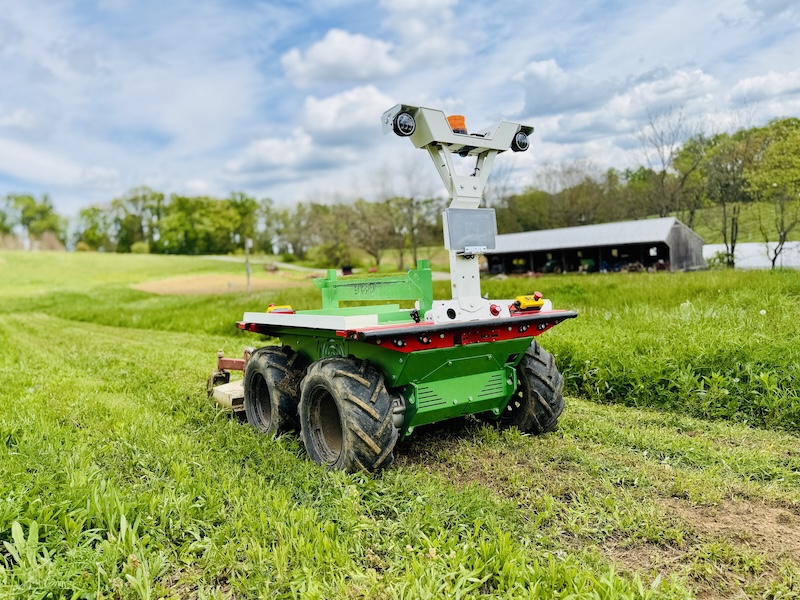
That question is where autonomous mobile robotics is heading next, and the companies that answer it will define what the category looks like for the next decade. The ones that cannot will remain useful inside the four walls they were built for and irrelevant everywhere else.
The infrastructure assumption nobody talks about
Indoor autonomous mobile robot (AMR) deployment rests on a foundational assumption that is so embedded it rarely gets named: the environment can be configured to support the robot.
You can lay QR codes on the floor. You can designate lanes. You can install Wi-Fi access points at every corner. You can flatten the surface, control the lighting, restrict the traffic patterns, and generally engineer the physical world to reduce the uncertainty the robot has to manage.
Take that assumption away and a different set of engineering problems emerge. Problems that cannot be solved by upgrading the model or adding compute. They require a fundamentally different approach to how the system was designed in the first place.
Outdoor environments do not have fixed lanes. They have terrain that changes with rainfall, with season, with the particular decision a site manager made last Tuesday about where to park the trailer.
They do not have controlled lighting. They have the sun at the horizon at 5am in late autumn, which is approximately the worst possible lighting condition for any vision system trying to operate reliably.
They do not have reliable GPS. They have structures, canopies, and overhead coverage that scatter or block satellite signals at exactly the moments when accurate localisation matters most.
What outdoor environments do have is variability, at a scale and pace that no prior mapping exercise can fully account for and no simulation can faithfully reproduce.
What happens when the robot leaves the building
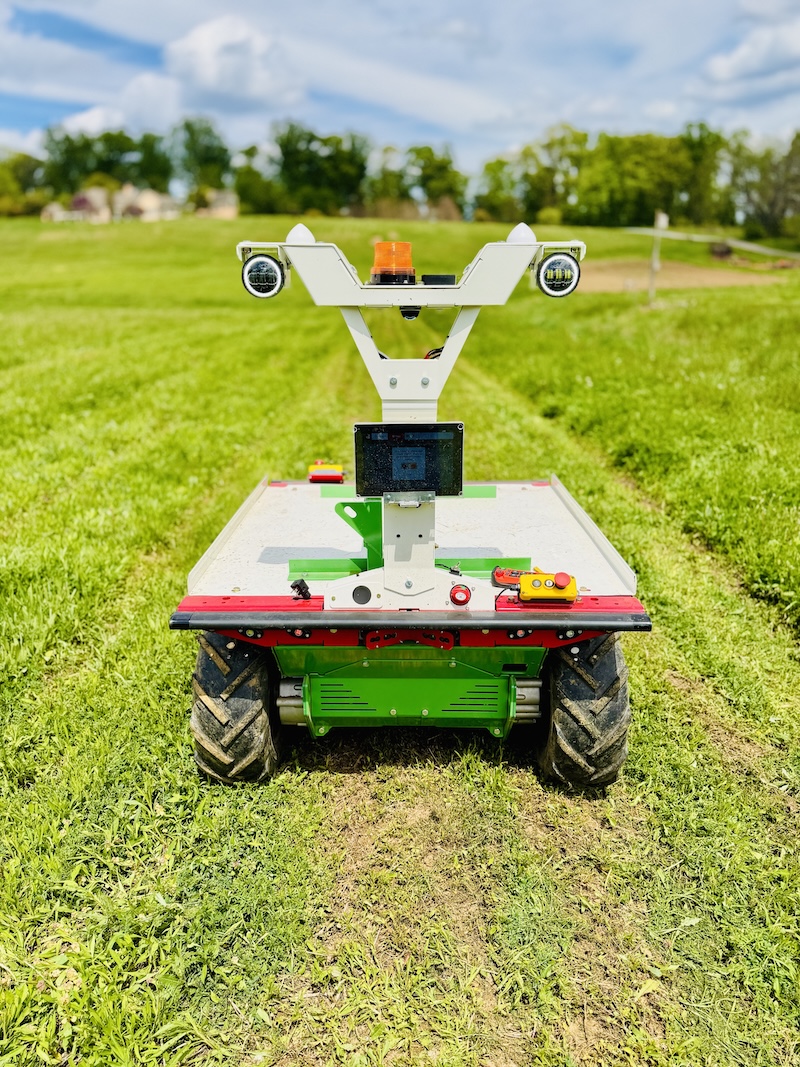
We have been operating autonomous outdoor robots commercially since 2018, across more than 800 deployments in 15 countries spanning vineyards, nurseries, berry operations, and increasingly industrial outdoor environments.
That experience has produced a working understanding of what the transition from indoor to outdoor autonomy actually requires, as opposed to what it is commonly assumed to require.
The common assumption is that it is primarily a sensing problem. Get better cameras, more capable lidar, higher-resolution perception, and the outdoor environment becomes tractable. There is truth in this. Perception capability matters.
But perception is not the binding constraint in most real-world outdoor deployments. The binding constraint is the system’s ability to maintain reliable operation across the full range of conditions it encounters over an extended commercial deployment, including conditions that nobody anticipated when the system was designed and that cannot be addressed by a software update alone.
Consider what happens when an autonomous vehicle transitions between outdoor and indoor environments repeatedly within a single operating cycle, as our platform does when moving between open yard areas and covered storage facilities.
GPS signal, which was providing acceptable localisation outdoors, degrades at the boundary of the structure and disappears entirely inside. The visual environment changes from an open space with abundant features to a potentially uniform interior with limited landmark availability.
The robot must manage this transition seamlessly, without a pause, without a reset, and without losing track of where it is at a resolution sufficient to navigate safely in a space where being off by a few centimetres means clipping infrastructure.
That transition problem is not solvable by improving any single component of the system. It requires architectural decisions about how localisation sources are fused, when to trust which source, how to detect degradation before it becomes a failure, and how to behave conservatively when uncertainty is high without simply stopping and waiting for conditions to improve.
Those decisions can only be made well by a team that has watched the system navigate that transition thousands of times in real operational conditions.
The collaboration imperative
There is a related shift happening alongside the technical one, and it matters at least as much for the next generation of autonomous mobile platforms.
Robots operating inside dedicated work cells can be designed for isolation. The cell is fenced, the human stays outside, and the robot optimises entirely for task performance within that boundary. Robots operating in shared outdoor environments cannot be designed this way.
They share space with people who have their own jobs to do, who are not trained robot operators, who will step in front of the machine without warning to pick something up, and who will form an opinion about whether they trust the system based on what it does in those moments.
That opinion matters more than most robotics engineers want to acknowledge. A robot that workers do not trust will be reported as failing constantly, even when it is performing correctly, because every unexpected behaviour becomes an incident.
A robot that workers trust will be given more latitude, reported more accurately, and integrated more effectively into the workflow. The path to commercial scale in outdoor robotics runs directly through the workforce’s willingness to work alongside the machine, and that willingness is earned through behavioural predictability rather than technical capability.
This is not a soft consideration. It is a design requirement that shapes specific engineering decisions: how the robot signals its intent when approaching a person, how it manages speed in proximity to workers, how it behaves when its path is blocked by a person who has not noticed it yet.
The AMRs that succeed in open outdoor environments will be the ones that were designed for human coexistence from the beginning, not the ones that had human safety retrofitted onto a platform optimised for speed.
What Kirkland knows
One of the more instructive data points in our experience has been the growth of our relationship with Kirkland, one of the UK’s leading agricultural equipment distributors. Kirkland was not looking for a robot that would work only in controlled conditions.
Their customers, commercial growers operating in the variable outdoor environments of British agriculture, needed something that could handle real British conditions: wet winters, variable ground, mixed operations, and a workforce that was already stretched thin.
The platform needed to earn its place without demanding that the customer change how they work to accommodate it.
What that relationship has demonstrated, in practice, is that the next wave of AMR adoption in markets like the UK will not come from environments being engineered to accept robots. It will come from robots capable of operating in the environments that already exist.
The agricultural and light industrial outdoor sector in Britain is large, labour-constrained, and operating in exactly the kinds of unstructured environments that most AMR platforms cannot handle. The opportunity is there precisely because it has been left unaddressed by platforms that cannot leave the engineered environment behind.
The Grande 44 and what it represents
Our latest platform, the Grande 44, is not a product announcement dressed up as a trend piece. But it does illustrate something directionally important.
At 6,000 pounds of towing capacity and 44 horsepower, it represents a move from the lighter transport applications that proved the category toward heavier-duty autonomous material movement in outdoor and semi-outdoor industrial settings.
The jobs it is designed for, moving significant loads through unstructured outdoor environments without GPS and without fixed infrastructure, are jobs that until recently required a person and a vehicle.
The signal is not the specific specification. It is the direction of travel. The autonomous mobile platform that can handle heavier duty work outdoors, in the environments that were never engineered for machines, is moving toward a much larger portion of the outdoor labour market than lighter platforms could reach.
Where this goes
The AMR category has spent its first decade proving that robots can work reliably in structured environments. The next decade will determine which platforms can operate reliably in unstructured ones.
That is not an incremental improvement on what exists. It is a different product, designed from different assumptions, validated against different failure modes, and built for a world that was not arranged to receive it. The companies that navigate that transition successfully will not be the ones with the most capable demonstrations.
They will be the ones that have logged the most hours in the places that demonstrations never reach, that have absorbed the failure modes that only appear after extended real-world operation, and that have built the human trust that makes scale possible in environments where the robot and the workforce share the same ground.
The indoor AMR is an extraordinary achievement. It is also, in the context of what the world actually needs from autonomous mobile robotics, a beginning.

About the author: Charlie Andersen is CEO of Burro, a robotics company developing autonomous mobile robots for agriculture and other outdoor working environments. Andersen grew up on a working farm and has a longstanding interest in using machines and automation to reduce repetitive manual work. He leads Burro’s development of vision-based autonomous robots designed to work alongside people in unstructured environments.
