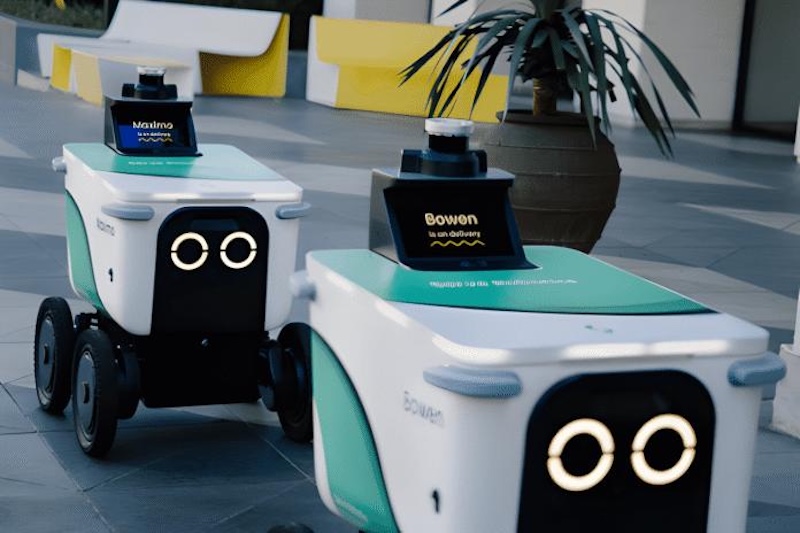
Serve Robotics has introduced physical AI Services, opening the technology behind its own robots to other companies building physical AI.
The new offering is designed to bring together technology for connecting robots to off-board intelligence, identifying valuable training data for faster learning at fleet scale, and real-world foundation model data to help AI understand the physical world.
Among its launch customers is Bedrock Robotics, which builds autonomous systems for heavy construction equipment.
Serve has deployed over 2,000 robots in more than 40 cities and 27 hospitals. As it has grown, the company has built robust robots and powerful autonomy, as it solves real world challenges that come with operating at scale.
The tools Serve uses to address these challenges are now available to other growing Physical AI fleets to help turbo charge their flywheels.
Serve Physical AI Services launched three products today:
- Serve Link connects robots to intelligence. As more of the computation behind physical AI moves to data centers, Serve Link is the high-performance, reliable link between machines in the field and the models, monitoring and training systems that make them smarter in real-time.
- Serve Data Curator shortens the loop between what robots see in the field and what their model learns. A fleet of robots produces far more real-world data than any engineering team can review.
- Serve’s curation tool surfaces the rare moments that matter, so robots can improve their models from the examples that count.
A real-world, foundation-model data catalog drawn from Serve’s own sidewalk deployments, such as terrain and infrastructure data, that teaches models how to understand complex human environments such as city sidewalks.
Serve Physical AI Services already powers thousands of vehicles across a dozen industries, including construction, mining and autonomous trucking as well as Serve Robotic’s own sidewalk food delivery fleet. Bedrock uses Serve Link to connect its machines over Wi-Fi, LTE, 5G and satellite networks.
Ali Kashani, co-founder and CEO of Serve Robotics, says: “Building a robot is only the beginning. Keeping thousands of them connected, learning and improving requires another layer of technology.
“We’ve put that technology to work in our own fleet. Now we’re opening it to other companies so they can focus on what their robots do, rather than rebuilding the systems around them.”
