• Skip to primary navigation
  • Skip to main content
  • Skip to primary sidebar
  • Skip to secondary sidebar
  • About
    • Contact
    • Privacy
    • Terms of use
  • Shop
    • Cart
    • Checkout
    • My Account
  • Advertise
    • Advertising
      • Buy ad space
    • Case studies
    • Design
    • Email marketing
    • Features list
    • Lead generation
    • Magazine
    • Press releases
    • Publishing
    • Sponsor an article
    • Webcasting
    • Webinars
    • White papers
    • Writing
  • Subscribe to Newsletter

Robotics & Automation News

Where Innovation Meets Imagination

  • Home
  • News
  • Features
  • Editorial Sections A-Z
    • Agriculture
    • Aircraft
    • Artificial Intelligence
    • Automation
    • Autonomous Vehicles
    • Business
    • Computing
    • Construction
    • Culture
    • Design
    • Drones
    • Economy
    • Energy
    • Engineering
    • Environment
    • Health
    • Humanoids
    • Industrial robots
    • Industry
    • Infrastructure
    • Investments
    • Logistics
    • Manufacturing
    • Marine
    • Material handling
    • Materials
    • Mining
    • Promoted
    • Research
    • Robotics
    • Science
    • Sensors
    • Service robots
    • Software
    • Space
    • Technology
    • Transportation
    • Warehouse robots
    • Wearables
  • Press releases
  • Events

simulation

Intel Labs introduces SPEAR: An open-source photorealistic simulator for embodied AI

December 25, 2022 by Mark Allinson

By Mike Roberts, a research scientist at Intel Labs, where he works on using photorealistic synthetic data for computer vision applications

Interactive simulators are becoming powerful tools for training embodied artificial intelligence (AI) systems, but existing simulators have limited content diversity, physical interactivity, and visual fidelity.

To better serve the embodied AI developer community, Intel Labs has collaborated with the Computer Vision Center in Spain, Kujiale in China, and the Technical University of Munich to develop the Simulator for Photorealistic Embodied AI Research (SPEAR).

This highly realistic simulation platform helps developers to accelerate the training and validation of embodied agents for a growing set of tasks and domains.

With its large collection of photorealistic indoor environments, SPEAR applies to a wide range of household navigation and manipulation tasks. Ultimately, SPEAR aims to drive research and commercial applications in household robotics and manufacturing, including human-robot interaction scenarios and digital twin applications.

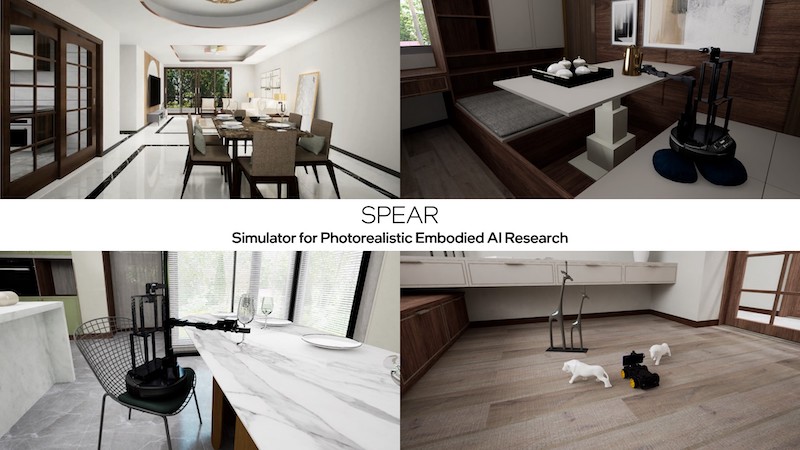
Figure 1. Scenes may be cluttered with objects that can be manipulated individually. A strong impulse can be applied to all objects at the start of the simulation to create the disordered environment. Messy room configurations could serve as initial states for a cleaning task.

To create SPEAR, Intel Labs worked closely with a team of professional artists for over a year to construct a collection of high-quality, handcrafted, interactive environments. Currently, SPEAR features a starter pack of 300 virtual indoor environments with more than 2,500 rooms and 17,000 objects that can be manipulated individually.

These interactive training environments use detailed geometry, photorealistic materials, realistic physics, and accurate lighting. New content packs targeting industrial and healthcare domains will be released soon.

By offering larger, more diverse, and realistic environments, SPEAR helps throughout the development cycle of embodied AI systems, and enables training robust agents to operate in the real world, potentially even straight from simulation.

SPEAR helps to improve accuracy on many embodied AI tasks, especially traversing and rearranging cluttered indoor environments. Ultimately, SPEAR aims to decrease the time to market for household robotics and smart warehouse applications, and increase the spatial intelligence of embodied agents.

Challenges in Training and Validating Embodied AI Systems

In the field of embodied AI, agents learn by interacting with different variables in the physical world. However, capturing and compiling these interactions into training data can be time consuming, labor intensive, and potentially dangerous.

In response to this challenge, the embodied AI community has developed a variety of interactive simulators, where robots can be trained and validated in simulation before being deployed in the physical world.

While existing simulators have enabled rapid progress on increasingly complex and open-ended real-world tasks such as point-goal and object navigation, object manipulation, and autonomous driving, these sims have several limitations.

Simulators that use artist-created environments typically provide a limited selection of unique scenes, such as a few dozen homes or a few hundred isolated rooms, which can lead to severe over-fitting and poor sim-to-real transfer performance.

On the other hand, simulators that use scanned 3D environments provide larger collections of scenes, but offer little or no interactivity with objects.

In addition, both types of simulators offer limited visual fidelity, either because it is too labor intensive to author high-resolution art assets, or because of 3D scanning artifacts.

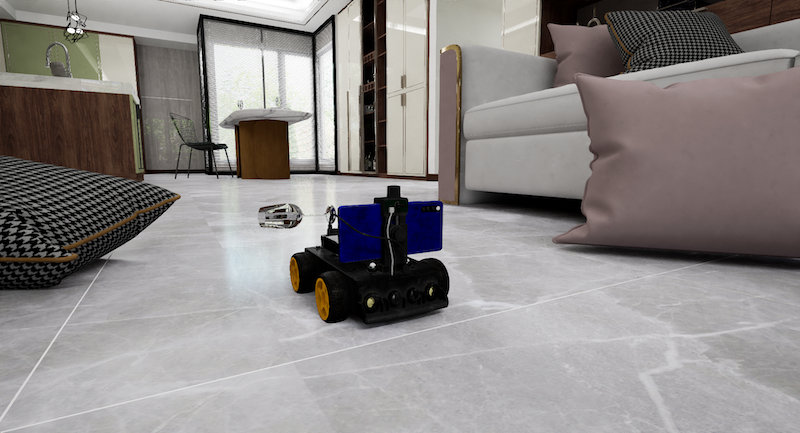
Figure 2. SPEAR enables embodied AI developers to train a navigation policy on an OpenBot entirely in simulation.

Overview of SPEAR

SPEAR was designed based on three main requirements:

  1. support a collection of environments that is as large, diverse, and high-quality as possible;
  2. provide sufficient physical realism to support realistic interactions with a wide range of household objects; and
  3. offer as much photorealism as possible, while still maintaining enough rendering speed to support training complex embodied agent behaviors.

Motivated by these requirements, SPEAR was implemented on top of the Unreal Engine, which is an industrial-strength open-source game engine. SPEAR environments are implemented as Unreal Engine assets, and SPEAR provides an OpenAI Gym interface to interact with environments via Python.

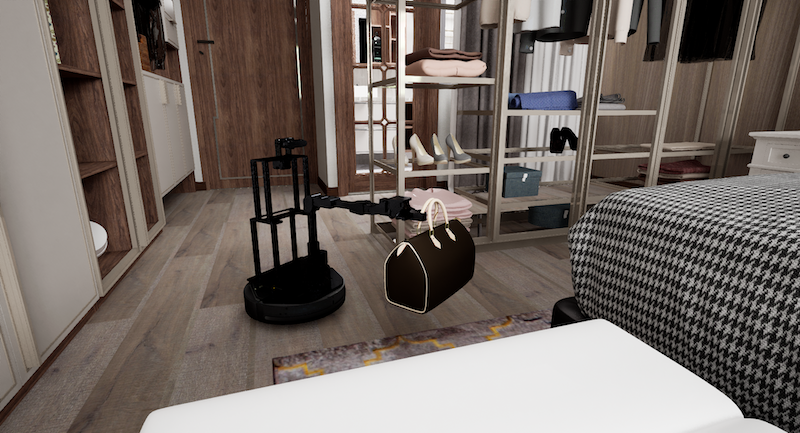
Figure 3. The LoCoBot Agent is suitable for both navigation and manipulation in simulation. This agent’s realistic gripper makes it ideal for rearrangement tasks.

SPEAR currently supports four distinct embodied agents:

  • The OpenBot Agent provides identical image observations to a real-world OpenBot, implements an identical control interface, and has been modeled with accurate geometry and physical parameters. It is well-suited for sim-to-real experiments.
  • The Fetch Agent and LoCoBot Agent have also been modeled using accurate geometry and physical parameters, and each has a physically realistic gripper. These agents are ideal for rearrangement tasks.
  • The Camera Agent can be teleported anywhere, making it useful for collecting static datasets.

Figure 3. The LoCoBot Agent is suitable for both navigation and manipulation in simulation. This agent’s realistic gripper makes it ideal for rearrangement tasks.

By default, agents return photorealistic egocentric observations from camera sensors, as well as wheel encoder states and joint encoder states. Additionally, agents can optionally return several types of privileged information.

First, agents can return a sequence of waypoints representing the shortest path to a goal location, as well as GPS and compass observations that point directly to the goal, both of which can be useful when defining navigation tasks.

Second, agents can return pixel-perfect semantic segmentation and depth images, which can be useful when controlling for the effects of imperfect perception in downstream embodied tasks and collecting static datasets.

SPEAR currently supports two distinct tasks:

  • The Point-Goal Navigation Task randomly selects a goal position in the scene’s reachable space, computes a reward based on the agent’s distance to the goal, and triggers the end of an episode when the agent hits an obstacle or the goal.
  • The Freeform Task is an empty placeholder task that is useful for collecting static datasets.

SPEAR is available under an open-source MIT license, ready for customization on any hardware. For more details, visit the SPEAR GitHub page.

Filed Under: Features, Science Tagged With: agent, agents, ai, embodied, environments, goal, navigation, objects, photorealistic, physical, realistic, simulation, simulators, spear, tasks, training

Reinforcing the value of simulation: Teaching dexterity to a real robot hand

December 8, 2022 by Mark Allinson

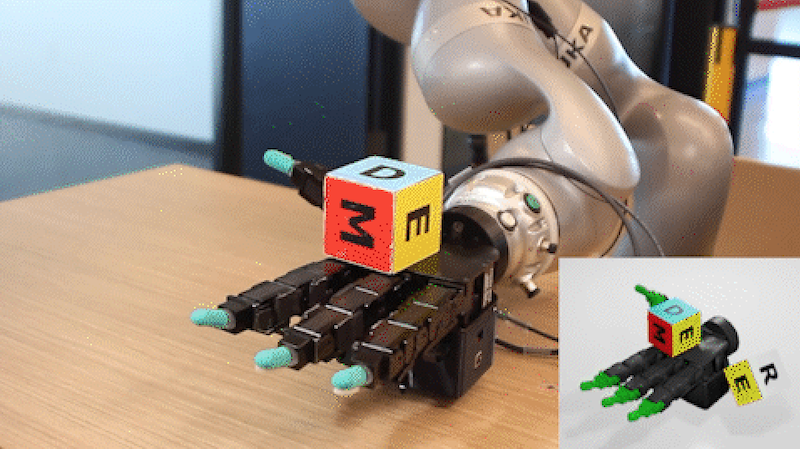
Nvidia researchers show how training in simulation enables the transfer of complex manipulation skills to a robot hand with project DeXtreme

The human hand is one of the most remarkable outcomes of millions of years of evolution. The ability to pick up all sorts of objects and use them as tools is a crucial differentiator allowing us to shape the world around us.

For robots to work in the everyday human world, the ability to deftly interact with our tools and the environment around them is critical. Without that capability, they will continue to be useful only in specialized domains such as factories or warehouses.

While it has been possible to teach robots with legs how to walk for some time, robots with hands have generally proven to be much trickier to control. A hand with fingers has more joints, and they must move in specific coordinated ways to accomplish a given task. [Read more…] about Reinforcing the value of simulation: Teaching dexterity to a real robot hand

Filed Under: Features, Science Tagged With: control, cube, data, dextreme, experiments, hand, hardware, isaac, learning, network, nvidia, project, real, researchers, robot, robotics, robots, simulation, simulations, task, time, train, training, work

ABB RobotStudio takes to the cloud, enabling real-time collaboration

December 7, 2022 by Mark Allinson

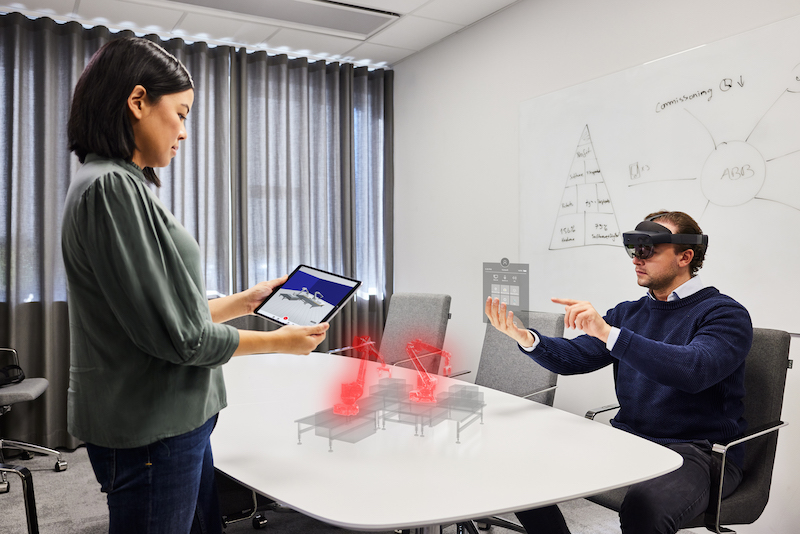
ABB has enhanced its RobotStudio robot programming and simulation software with cloud-enabled functionality. The new RobotStudio Cloud enables individuals and teams to collaborate in real-time on robot cell designs from anywhere in the world, on any device. 

New features such as automatic version control increase transparency and productivity across teams. The software’s simplified interfaces and intuitive navigation allow users of all skill levels to work on robotic projects.

Marc Segura, president of ABB Robotics division, says: “At ABB Robotics, we continue to develop innovative and flexible solutions to help businesses overcome challenges, respond to changing customer needs and thrive in an age of increasing digitalization. [Read more…] about ABB RobotStudio takes to the cloud, enabling real-time collaboration

Filed Under: News, Software Tagged With: abb, cloud, design, developers, enabling, help, program, programming, real-time, robot, robotic, robotics, robotstudio, simplified, simulation, software, solutions, teams, time, users, virtual

Nimbus’ in-browser simulation ‘reduces costs by 80 percent’

December 6, 2022 by Mark Allinson

Cogniteam says its Nimbus Robotic operating system’s in-browser simulation “reduces robot simulation costs by 80 percent”, adding that the software is focused on cost-saving and collaboration, enabling teams to simulate robots at “breakneck speeds”.

Dr Yehuda Elmaliach, co-founder and CEO of Cogniteam, says: “Upload your robot and drag & drop sensors, then run an in-browser simulation without worrying about costs or hardware capabilities.”

Cogniteam says Nimbus unifies development, cloud connectivity, and deployment capabilities. The company says it has also added new low-cost, high-powered in-browser simulation capabilities. [Read more…] about Nimbus’ in-browser simulation ‘reduces costs by 80 percent’

Filed Under: News, Software Tagged With: capabilities, cloud, cogniteam, computing, costs, demands, development, elmaliach, expensive, hardware, in-browser, nimbus, percent, robot, robots, simulation, team, teams, worrying

Realtime Robotics integrates robot motion planning and control software with Siemens Process Simulate

October 9, 2022 by Mark Allinson

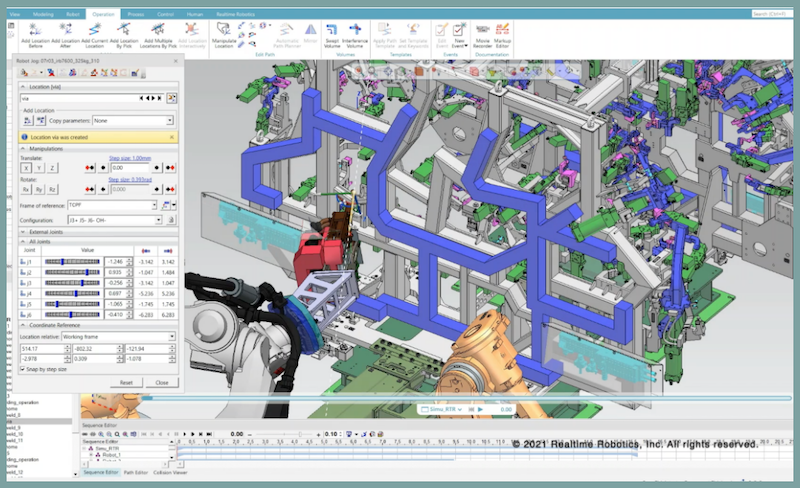
Realtime Robotics, the leader in collision-free autonomous motion planning for industrial robots, today announced that it has teamed with Siemens to integrate its RapidPlan software with Siemens Process Simulate, in the company’s Tecnomatix portfolio.

This integration enables Siemens customers to utilize Realtime’s innovative robot motion planning and control software as a part of their regular workflow, without leaving Process Simulate.

Customers using the integration can easily visualize, prioritize and simulate robot task plans, and validate them through virtual commissioning. Support for servo weld guns has also been added. [Read more…] about Realtime Robotics integrates robot motion planning and control software with Siemens Process Simulate

Filed Under: News, Software Tagged With: automated, collision-free, control, customers, industrial, integration, manual, motion, planning, plans, process, programming, rapidplan, realtime, robot, robotics, robots, siemens, simulate, simulation, software, task, time

Fraunhofer Research uses Nvidia simulation technologies to design ‘futuristic autonomous mobile robots’

September 2, 2022 by Mark Allinson

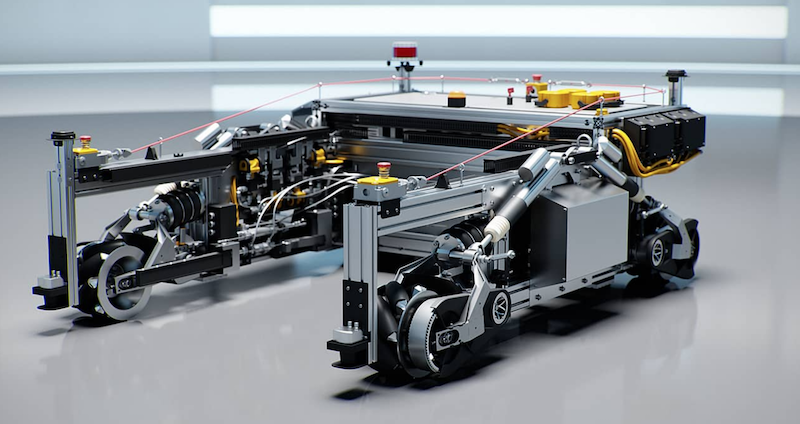
Fraunhofer Research is using Nvidia simulation technologies to design futuristic autonomous mobile robots that significantly advance the state of the art in autonomous mobile robots.

The Germany-based research group’s O3dyn platform is intended for the creation and testing of autonomous mobile robots for manufacturing. [Read more…] about Fraunhofer Research uses Nvidia simulation technologies to design ‘futuristic autonomous mobile robots’

Filed Under: Design, Features Tagged With: ai, autonomous, fraunhofer, iml, logistics, mobile, nvidia, robot, robots, simulation

Hexagon and ESAB to help manufacturers ‘optimise robotic welding processes’

July 27, 2022 by David Edwards

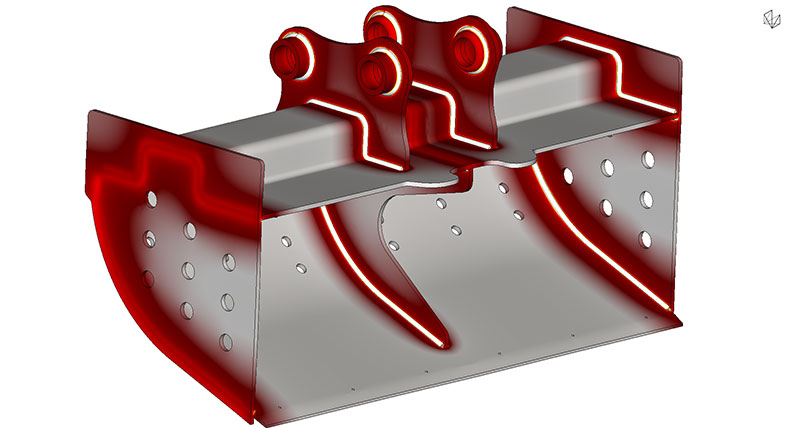
Hexagon’s manufacturing intelligence division has signed a partnership agreement with ESAB, a fabrication specialist, to create a “streamlined welding solution” combining Hexagon’s simulation software with ESAB’s InduSuite solutions to help fabricators perform more efficient and successful welding operations.

Hexagon’s simulation intelligence, embedded within ESAB’s software and automation portfolio, will ensure that users have the tools required to “consistently manufacture high-quality products without costly trial and error”, according to the companies.

Producing successful welds can be challenging without the benefit of many years’ shop-floor experience and, even with an extensive welding experience, can incur high costs from waste and time. [Read more…] about Hexagon and ESAB to help manufacturers ‘optimise robotic welding processes’

Filed Under: Design, News Tagged With: better, confidence, decisions, ensure, ensuring, esab, experience, fabrication, fabricators, hexagon, joint, manufacturers, manufacturing, perform, process, processes, products, quality, simulation, software, solutions, welding, welds

Avidbots and Maplesoft partner to design new autonomous commercial cleaning systems

July 27, 2022 by David Edwards

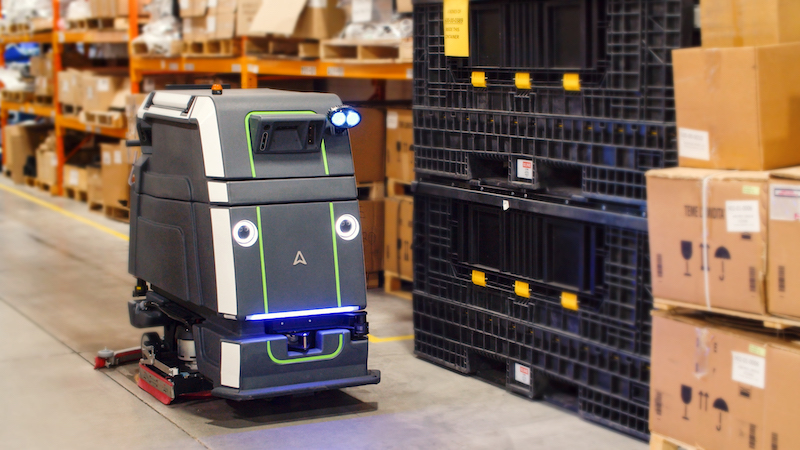
Avidbots, a maker of commercial robotic cleaning systems, and Maplesoft, a provider of modeling and calculation software for engineering and research, have agreed a strategic partnership to “bring more innovation to autonomous cleaning robot design for commercial customers”.

Warehouses and retail businesses are frequently turning to tech to provide efficient, cost-effective cleaning options for essential commercial cleaning tasks, say the companies.

Finding efficient cleaning solutions has been made challenging by unpredictable staffing and the additional Covid-related surface disinfection steps. [Read more…] about Avidbots and Maplesoft partner to design new autonomous commercial cleaning systems

Filed Under: Design, News Tagged With: advanced, autonomous, avidbots, capabilities, cleaning, commercial, companies, company, design, development, engineering, features, maplesim, maplesoft, modeling, neo, product, simulation, software, tech, test, variety, virtual

MORAI showcases autonomous vehicle driving simulator

June 19, 2022 by Mai Tao

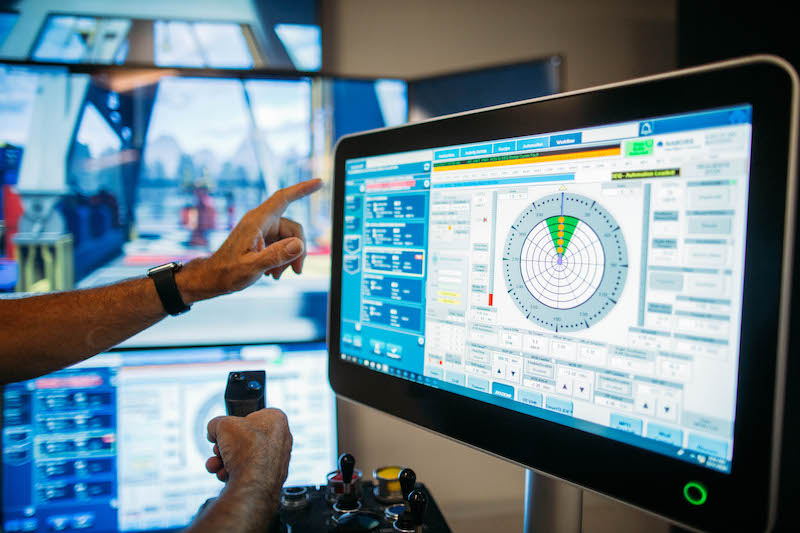
MORAI, a developer of autonomous vehicle simulation technology in Korea, has showcased its MORAI SIM Drive, its “true-to-life autonomous vehicle driving simulator” at the recent CommunicAsia 2022 trade event.

As a part of the region’s flagship tech event, Asia Tech x Singapore, CommunicAsia is Asia’s most established and relevant international industry event for the telecommunications sector, showcasing the latest ICT technologies.

This year, the event was held from June 1 to 3 at Singapore Expo and MORAI demonstrated its latest autonomous driving simulation technology. [Read more…] about MORAI showcases autonomous vehicle driving simulator

Filed Under: Computing, News Tagged With: autonomous, driving, event, global, korea, morai, simulation, technology, vehicle

RoboDK targets integrator sales demos with web version of robot simulation software

February 23, 2022 by David Edwards

A new web version the popular robot programming software RoboDK has just been released.

This simplified version needs no license and provides a portable, intuitive interface for sales representatives, new robot users, and educational uses.

Creating convincing sales demos of robotic solutions is not always easy. Robot integrators often use simulations to make it easier for clients to understand their solutions, but such simulations are not easily portable. [Read more…] about RoboDK targets integrator sales demos with web version of robot simulation software

Filed Under: News, Software Tagged With: robodk, robot, robot simulations, simulation, software, users, version, web

  • « Go to Previous Page
  • Page 1
  • Page 2
  • Page 3
  • Page 4
  • Page 5
  • Page 6
  • Interim pages omitted …
  • Page 8
  • Go to Next Page »

Primary Sidebar

Search this website

Latest articles

  • Waabi says its AI driver transferred to Volvo autonomous truck without retraining
  • Ambi Robotics and Pickle Robot integrate AI-powered robots to automate inbound warehouse logistics
  • UK startup Humanoid launches reinforcement learning system to improve robot manipulation
  • Apptronik launches Robot Park to train Apollo humanoid robots with Google DeepMind
  • University of Rhode Island opens advanced Ocean Robotics Laboratory for autonomous marine research
  • Oak Ridge National Lab reveals ‘hidden workforce’ behind AI-powered research facilities
  • The Hardware Powering the Hybrid Industrial Workforce
  • How to Choose a Robot Vacuum and Mop That Actually Fits Your Home
  • How Modern Software Helps Construction Companies in Qatar Work Smarter and Safer
  • Antivirus vs malware: Why antivirus alone is no longer enough

Secondary Sidebar

Latest news

  • Waabi says its AI driver transferred to Volvo autonomous truck without retraining
  • Ambi Robotics and Pickle Robot integrate AI-powered robots to automate inbound warehouse logistics
  • UK startup Humanoid launches reinforcement learning system to improve robot manipulation
  • Apptronik launches Robot Park to train Apollo humanoid robots with Google DeepMind
  • University of Rhode Island opens advanced Ocean Robotics Laboratory for autonomous marine research
  • Oak Ridge National Lab reveals ‘hidden workforce’ behind AI-powered research facilities
  • The Hardware Powering the Hybrid Industrial Workforce
  • How to Choose a Robot Vacuum and Mop That Actually Fits Your Home
  • How Modern Software Helps Construction Companies in Qatar Work Smarter and Safer
  • Antivirus vs malware: Why antivirus alone is no longer enough

Copyright © 2026 · News Pro on Genesis Framework · WordPress · Log in

We use cookies on our website to give you the most relevant experience by remembering your preferences and repeat visits. By clicking “Accept”, you consent to the use of ALL the cookies.
Do not sell my personal information.
Cookie SettingsAccept
Manage consent

Privacy Overview

This website uses cookies to improve your experience while you navigate through the website. Out of these, the cookies that are categorized as necessary are stored on your browser as they are essential for the working of basic functionalities of the website. We also use third-party cookies that help us analyze and understand how you use this website. These cookies will be stored in your browser only with your consent. You also have the option to opt-out of these cookies. But opting out of some of these cookies may affect your browsing experience.
Necessary
Always Enabled
Necessary cookies are absolutely essential for the website to function properly. These cookies ensure basic functionalities and security features of the website, anonymously.
CookieDurationDescription
cookielawinfo-checkbox-analytics11 monthsThis cookie is set by GDPR Cookie Consent plugin. The cookie is used to store the user consent for the cookies in the category "Analytics".
cookielawinfo-checkbox-functional11 monthsThe cookie is set by GDPR cookie consent to record the user consent for the cookies in the category "Functional".
cookielawinfo-checkbox-necessary11 monthsThis cookie is set by GDPR Cookie Consent plugin. The cookies is used to store the user consent for the cookies in the category "Necessary".
cookielawinfo-checkbox-others11 monthsThis cookie is set by GDPR Cookie Consent plugin. The cookie is used to store the user consent for the cookies in the category "Other.
cookielawinfo-checkbox-performance11 monthsThis cookie is set by GDPR Cookie Consent plugin. The cookie is used to store the user consent for the cookies in the category "Performance".
viewed_cookie_policy11 monthsThe cookie is set by the GDPR Cookie Consent plugin and is used to store whether or not user has consented to the use of cookies. It does not store any personal data.
Functional
Functional cookies help to perform certain functionalities like sharing the content of the website on social media platforms, collect feedbacks, and other third-party features.
Performance
Performance cookies are used to understand and analyze the key performance indexes of the website which helps in delivering a better user experience for the visitors.
Analytics
Analytical cookies are used to understand how visitors interact with the website. These cookies help provide information on metrics the number of visitors, bounce rate, traffic source, etc.
Advertisement
Advertisement cookies are used to provide visitors with relevant ads and marketing campaigns. These cookies track visitors across websites and collect information to provide customized ads.
Others
Other uncategorized cookies are those that are being analyzed and have not been classified into a category as yet.
SAVE & ACCEPT