A couple of decades ago, you could argue that bicycle accidents weren’t a thing. But fast-forwarding to 2022, an increasing number of people are biking to work. And while there are many reasons for this uptick in bicycle fatalities, one of the most common is dooring. [Read more…] about Keep Yourself Safe While Cycling With These Useful Tips
Science
How the MIT mini cheetah learns to run
By Rachel Gordon, MIT CSAIL
CSAIL scientists came up with a learning pipeline for the four-legged robot that learns to run entirely by trial and error in simulation (see video below)
It’s been roughly 23 years since one of the first robotic animals trotted on the scene, defying classical notions of our cuddly four-legged friends.
Since then, a barrage of the walking, dancing, and door-opening machines have commanded their presence, a sleek mixture of batteries, sensors, metal, and motors. [Read more…] about How the MIT mini cheetah learns to run
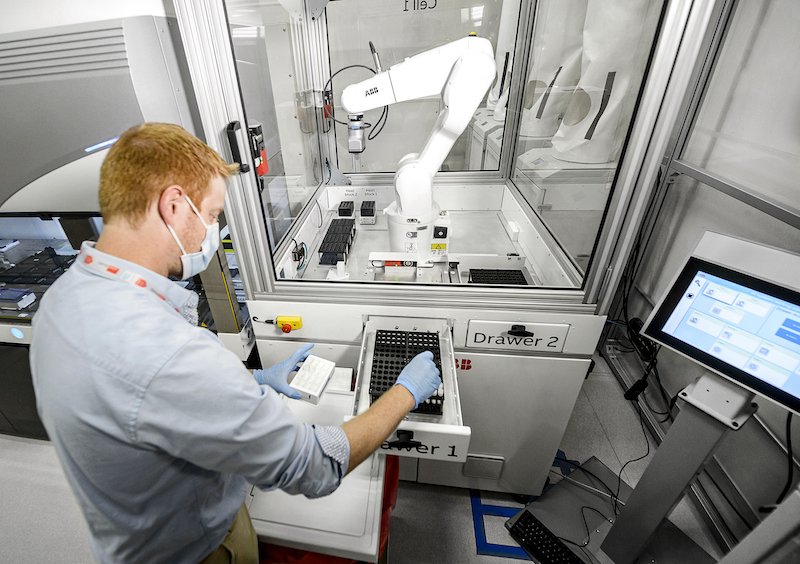
Wikswo and VIIBRE team to build third-generation ‘self-driving lab’ with $1 million from National Science Foundation
John Wikswo, founder and director of the Vanderbilt Institute for Integrative Biosystems Research and Education and Gordon A. Cain University Professor, is the principal investigator of a $1 million award from the National Science Foundation.
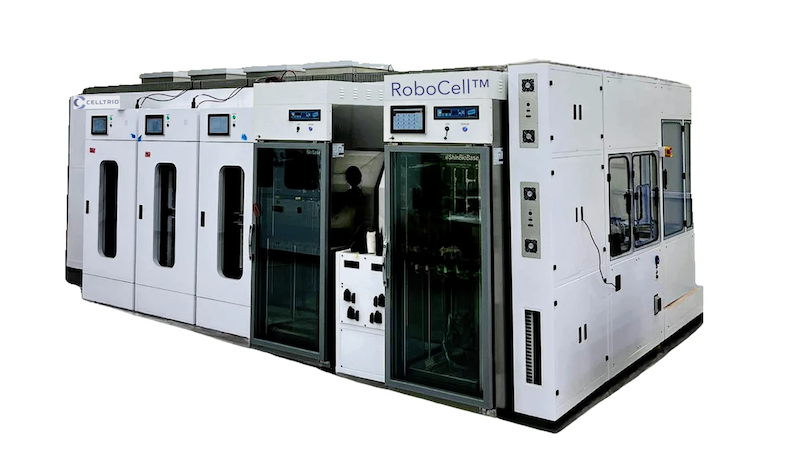
The object is to build a pathbreaking “robot scientist” – a fully automated microfluidic system for parallel, independent, long-duration, machine-guided experiments.
The target organisms are the single-cell eukaryotic yeast Saccharomyces cerevisiae, commonly known as brewer’s and baker’s yeast, the bacterium Escherichia coli and other microbes used in commercial biotechnologies, and the Chinese hamster ovary (CHO) cells used to produce antibody-based drugs and vaccines. [Read more…] about Wikswo and VIIBRE team to build third-generation ‘self-driving lab’ with $1 million from National Science Foundation
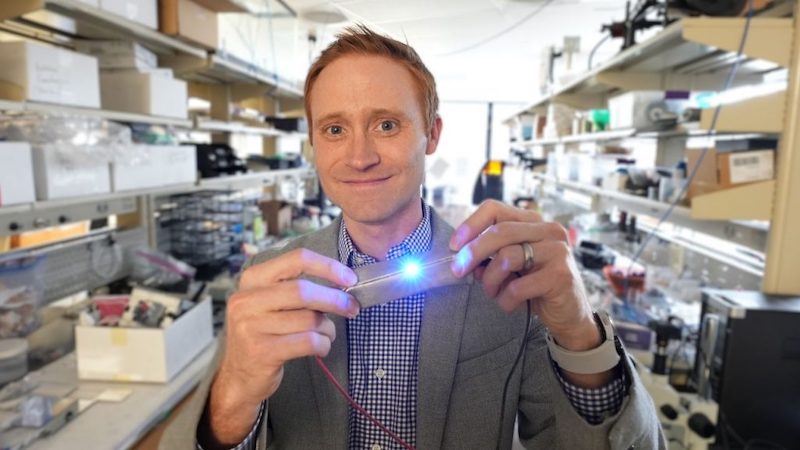
New sensor that mimics automatic human reaction to heat could pave the way for ‘soft robots of the future’
A new robotic sensor that mimics the automatic human reaction to heat is being hailed as a world first.
The device has been built by a team of experts from Liverpool Hope University, who say it’s the first sensor that can trigger this “sensory impulse” that the robotics community has yet seen.
The findings have been published in IEEE Xplore last December 15, 2021 as an early-access article and published this month in the IEEE Sensors Journal. [Read more…] about New sensor that mimics automatic human reaction to heat could pave the way for ‘soft robots of the future’
UAE scientists figure out way to get swarm robots to split up tasks efficiently
Researchers at the Technology Innovation Institute in the UAE are developing a new paradigm for teaching robot swarms how to allocate themselves to tasks efficiently.
The ideas – published in the paper, Group-Size Regulation in Self-organized Aggregation in Robot Swarms – could spark interest in better ways of controlling lots of simple robots to do more complicated tasks independently, with little or no outside communication.
Much prior work has been done to organizing swarms of drones to perform impressive tasks, such as a coordinated light show. But these approaches often relied on centralized coordination, expensive equipment in each drone, or both. [Read more…] about UAE scientists figure out way to get swarm robots to split up tasks efficiently
Purdue scientists build a chip that makes connections like a human brain
An electronic chip that can be reprogrammed on demand may enable artificial intelligence to learn more continuously like the human brain does, researchers have discovered.
When the human brain learns something new, it adapts. But when artificial intelligence learns something new, it tends to forget information it already learned.
As companies use more and more data to improve how AI recognizes images, learns languages and carries out other complex tasks, a paper published in Science this week shows a way that computer chips could dynamically rewire themselves to take in new data like the brain does, helping AI to keep learning over time. [Read more…] about Purdue scientists build a chip that makes connections like a human brain
Mercedes partners with ProLogium to develop next-generation solid-state battery cells for electric vehicles
Mercedes-Benz and ProLogium, a developer of solid-state batteries, have signed a technology cooperation agreement to develop next-generation battery cells.
The first Mercedes-Benz test vehicles equipped with solid-state batteries co-developed with ProLogium are expected to be introduced in the coming years.
The companies also agreed on milestones that would enable integration of the solid-state battery technology into a range of passenger vehicles in the second half of the decade. [Read more…] about Mercedes partners with ProLogium to develop next-generation solid-state battery cells for electric vehicles
New soft robot morphs from a ground to air vehicle using liquid metal
Imagine a small autonomous vehicle that could drive over land, stop, and flatten itself into a quadcopter. The rotors start spinning, and the vehicle flies away.
Looking at it more closely, what do you think you would see? What mechanisms have caused it to morph from a land vehicle into a flying quadcopter? You might imagine gears and belts, perhaps a series of tiny servo motors that pulled all its pieces into place.
If this mechanism was designed by a team at Virginia Tech led by Michael Bartlett, assistant professor in mechanical engineering, you would see a new approach for shape changing at the material level. [Read more…] about New soft robot morphs from a ground to air vehicle using liquid metal
Startup awarded $5 million to build autonomous car that ‘runs on light’
Intelligence Advanced Research Projects Activity (IARPA), an agency of the US military akin to Darpa, is funding a $4.8 million project spearheaded by Boston University College of Engineering, the Harvard John A. Paulson School of Engineering and Applied Sciences, and Lightmatter, a startup developing “photonic supercomputing” chips.
Electro-photonic computing, or optical computing, is thought to hold the promise of solving one of the biggest technical hurdles that self-driving cars face today – delivering high performance, low latency computing power that is also energy efficient.
At the end of the IARPA-funded experiment, the scientists hope to have “a fully functioning prototype of a self-driving car that runs on light”. [Read more…] about Startup awarded $5 million to build autonomous car that ‘runs on light’
Swiss university shows brain-computer interface for controlling robots
A Swiss university called the École Polytechnique Fédérale de Lausanne has showcased a new brain-computer interface that can be used to control robots. (See video below.)
Unlike previous BCI’s famously demonstrated to former US president, Barack Obama, the EPFL brain-computer interface does not require a hole to be drilled in the user’s head.
Two EPFL research groups teamed up to develop a machine-learning program that can be connected to a human brain and used to command a robot. [Read more…] about Swiss university shows brain-computer interface for controlling robots