• Skip to primary navigation
  • Skip to main content
  • Skip to primary sidebar
  • Skip to secondary sidebar
  • About
    • Contact
    • Privacy
    • Terms of use
  • Shop
    • Cart
    • Checkout
    • My Account
  • Advertise
    • Advertising
      • Buy ad space
    • Case studies
    • Design
    • Email marketing
    • Features list
    • Lead generation
    • Magazine
    • Press releases
    • Publishing
    • Sponsor an article
    • Webcasting
    • Webinars
    • White papers
    • Writing
  • Subscribe to Newsletter

Robotics & Automation News

Where Innovation Meets Imagination

  • Home
  • News
  • Features
  • Editorial Sections A-Z
    • Agriculture
    • Aircraft
    • Artificial Intelligence
    • Automation
    • Autonomous Vehicles
    • Business
    • Computing
    • Construction
    • Culture
    • Design
    • Drones
    • Economy
    • Energy
    • Engineering
    • Environment
    • Health
    • Humanoids
    • Industrial robots
    • Industry
    • Infrastructure
    • Investments
    • Logistics
    • Manufacturing
    • Marine
    • Material handling
    • Materials
    • Mining
    • Promoted
    • Research
    • Robotics
    • Science
    • Sensors
    • Service robots
    • Software
    • Space
    • Technology
    • Transportation
    • Warehouse robots
    • Wearables
  • Press releases
  • Events

Science

Festo automation technology aids restoration of Notre-Dame Cathedral

January 16, 2023 by Mark Allinson

Rapid leaps in innovation characterise the development of additive manufacturing processes. Rotterdam-based company Concr3de has been working on a 3D printer for stone for more than five years, developing an inkjet technique to participate in the reconstruction of Notre-Dame Cathedral in Paris. They achieved this aim using automation technology from Festo.

Architectural applications were the catalyst for the development of Armadillo White, the inkjet 3D stone printer.

The founders of Concr3de, architects Eric Geboers and Matteo Baldessari, started with a geopolymer – a material made by binding a residual product from the coal and steel industry with a chemical binder (“ink”). [Read more…] about Festo automation technology aids restoration of Notre-Dame Cathedral

Filed Under: Features, Science Tagged With: automation, binder, building, cathedral, concr, de, festo, notre-dame, printer, stone, technology

Intel Labs introduces SPEAR: An open-source photorealistic simulator for embodied AI

December 25, 2022 by Mark Allinson

By Mike Roberts, a research scientist at Intel Labs, where he works on using photorealistic synthetic data for computer vision applications

Interactive simulators are becoming powerful tools for training embodied artificial intelligence (AI) systems, but existing simulators have limited content diversity, physical interactivity, and visual fidelity.

To better serve the embodied AI developer community, Intel Labs has collaborated with the Computer Vision Center in Spain, Kujiale in China, and the Technical University of Munich to develop the Simulator for Photorealistic Embodied AI Research (SPEAR).

This highly realistic simulation platform helps developers to accelerate the training and validation of embodied agents for a growing set of tasks and domains.

With its large collection of photorealistic indoor environments, SPEAR applies to a wide range of household navigation and manipulation tasks. Ultimately, SPEAR aims to drive research and commercial applications in household robotics and manufacturing, including human-robot interaction scenarios and digital twin applications.

Figure 1. Scenes may be cluttered with objects that can be manipulated individually. A strong impulse can be applied to all objects at the start of the simulation to create the disordered environment. Messy room configurations could serve as initial states for a cleaning task.

To create SPEAR, Intel Labs worked closely with a team of professional artists for over a year to construct a collection of high-quality, handcrafted, interactive environments. Currently, SPEAR features a starter pack of 300 virtual indoor environments with more than 2,500 rooms and 17,000 objects that can be manipulated individually.

These interactive training environments use detailed geometry, photorealistic materials, realistic physics, and accurate lighting. New content packs targeting industrial and healthcare domains will be released soon.

By offering larger, more diverse, and realistic environments, SPEAR helps throughout the development cycle of embodied AI systems, and enables training robust agents to operate in the real world, potentially even straight from simulation.

SPEAR helps to improve accuracy on many embodied AI tasks, especially traversing and rearranging cluttered indoor environments. Ultimately, SPEAR aims to decrease the time to market for household robotics and smart warehouse applications, and increase the spatial intelligence of embodied agents.

Challenges in Training and Validating Embodied AI Systems

In the field of embodied AI, agents learn by interacting with different variables in the physical world. However, capturing and compiling these interactions into training data can be time consuming, labor intensive, and potentially dangerous.

In response to this challenge, the embodied AI community has developed a variety of interactive simulators, where robots can be trained and validated in simulation before being deployed in the physical world.

While existing simulators have enabled rapid progress on increasingly complex and open-ended real-world tasks such as point-goal and object navigation, object manipulation, and autonomous driving, these sims have several limitations.

Simulators that use artist-created environments typically provide a limited selection of unique scenes, such as a few dozen homes or a few hundred isolated rooms, which can lead to severe over-fitting and poor sim-to-real transfer performance.

On the other hand, simulators that use scanned 3D environments provide larger collections of scenes, but offer little or no interactivity with objects.

In addition, both types of simulators offer limited visual fidelity, either because it is too labor intensive to author high-resolution art assets, or because of 3D scanning artifacts.

Figure 2. SPEAR enables embodied AI developers to train a navigation policy on an OpenBot entirely in simulation.

Overview of SPEAR

SPEAR was designed based on three main requirements:

  1. support a collection of environments that is as large, diverse, and high-quality as possible;
  2. provide sufficient physical realism to support realistic interactions with a wide range of household objects; and
  3. offer as much photorealism as possible, while still maintaining enough rendering speed to support training complex embodied agent behaviors.

Motivated by these requirements, SPEAR was implemented on top of the Unreal Engine, which is an industrial-strength open-source game engine. SPEAR environments are implemented as Unreal Engine assets, and SPEAR provides an OpenAI Gym interface to interact with environments via Python.

Figure 3. The LoCoBot Agent is suitable for both navigation and manipulation in simulation. This agent’s realistic gripper makes it ideal for rearrangement tasks.

SPEAR currently supports four distinct embodied agents:

  • The OpenBot Agent provides identical image observations to a real-world OpenBot, implements an identical control interface, and has been modeled with accurate geometry and physical parameters. It is well-suited for sim-to-real experiments.
  • The Fetch Agent and LoCoBot Agent have also been modeled using accurate geometry and physical parameters, and each has a physically realistic gripper. These agents are ideal for rearrangement tasks.
  • The Camera Agent can be teleported anywhere, making it useful for collecting static datasets.

Figure 3. The LoCoBot Agent is suitable for both navigation and manipulation in simulation. This agent’s realistic gripper makes it ideal for rearrangement tasks.

By default, agents return photorealistic egocentric observations from camera sensors, as well as wheel encoder states and joint encoder states. Additionally, agents can optionally return several types of privileged information.

First, agents can return a sequence of waypoints representing the shortest path to a goal location, as well as GPS and compass observations that point directly to the goal, both of which can be useful when defining navigation tasks.

Second, agents can return pixel-perfect semantic segmentation and depth images, which can be useful when controlling for the effects of imperfect perception in downstream embodied tasks and collecting static datasets.

SPEAR currently supports two distinct tasks:

  • The Point-Goal Navigation Task randomly selects a goal position in the scene’s reachable space, computes a reward based on the agent’s distance to the goal, and triggers the end of an episode when the agent hits an obstacle or the goal.
  • The Freeform Task is an empty placeholder task that is useful for collecting static datasets.

SPEAR is available under an open-source MIT license, ready for customization on any hardware. For more details, visit the SPEAR GitHub page.

Filed Under: Features, Science Tagged With: agent, agents, ai, embodied, environments, goal, navigation, objects, photorealistic, physical, realistic, simulation, simulators, spear, tasks, training

Reinforcing the value of simulation: Teaching dexterity to a real robot hand

December 8, 2022 by Mark Allinson

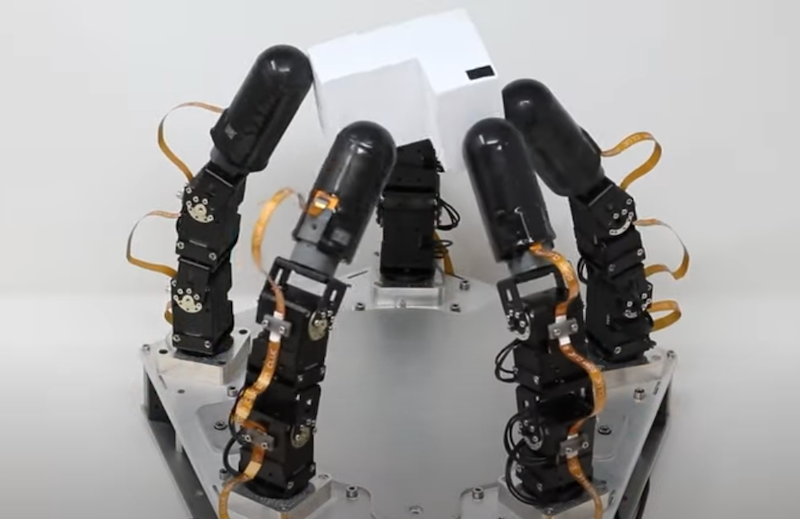
Nvidia researchers show how training in simulation enables the transfer of complex manipulation skills to a robot hand with project DeXtreme

The human hand is one of the most remarkable outcomes of millions of years of evolution. The ability to pick up all sorts of objects and use them as tools is a crucial differentiator allowing us to shape the world around us.

For robots to work in the everyday human world, the ability to deftly interact with our tools and the environment around them is critical. Without that capability, they will continue to be useful only in specialized domains such as factories or warehouses.

While it has been possible to teach robots with legs how to walk for some time, robots with hands have generally proven to be much trickier to control. A hand with fingers has more joints, and they must move in specific coordinated ways to accomplish a given task. [Read more…] about Reinforcing the value of simulation: Teaching dexterity to a real robot hand

Filed Under: Features, Science Tagged With: control, cube, data, dextreme, experiments, hand, hardware, isaac, learning, network, nvidia, project, real, researchers, robot, robotics, robots, simulation, simulations, task, time, train, training, work

Ritsumeikan University develops ‘soft microfingers’ for robots

November 14, 2022 by Mai Tao

Ritsumeikan University researchers develop a soft robotic microfinger that enables interaction with insects through tactile sensing

Human-robot interactions not only allow robots to interact with humans but also with the environment. Microrobots, for instance, can interact with insects and measure the force exerted by them during flight or walking.

However, this interaction is not direct, with the microrobots measuring insect behavior primarily. Now, researchers from Japan have developed a soft micro-robotic finger that allows humans to directly interact with insects. This could enable human-environment interaction at previously inaccessible scales.

Humans have always been fascinated by scales different than theirs, from giant objects such as stars, planets and galaxies, to the world of the tiny: insects, bacteria, viruses and other microscopic objects. While the microscope allows us to view and observe the microscopic world, it is still difficult to interact with it directly. [Read more…] about Ritsumeikan University develops ‘soft microfingers’ for robots

Filed Under: News, Science Tagged With: allows, bug, developed, direct, directly, force, human-environment, humans, insects, interact, interaction, interactions, konishi, measuring, microfinger, microrobots, microscopic, pill, researchers, ritsumeikan, scales, soft, university

MIT demonstrates reprogrammable materials that ‘selectively self-assemble’

November 3, 2022 by Mark Allinson

By Rachel Gordon, MIT CSAIL

While automated manufacturing is ubiquitous today, it was once a nascent field birthed by inventors such as Oliver Evans, who is credited with creating the first fully automated industrial process, in a flour mill he built and gradually automated in the late 1700s.

The processes for creating automated structures or machines are still very top-down, requiring humans, factories, or robots to do the assembling and making.

However, the way nature does assembly is ubiquitously bottom-up; animals and plants are self-assembled at a cellular level, relying on proteins to self-fold into target geometries that encode all the different functions that keep us ticking. [Read more…] about MIT demonstrates reprogrammable materials that ‘selectively self-assemble’

Filed Under: Features, Science Tagged With: assemble, assembly, automated, chair, computer, csail, cubes, disturbance, magnetic, magnetically, mit, paper, parts, programmed, proteins, researchers, selective, self-assemble, self-assembly, signatures, structures, target

MIT device is converting carbon dioxide to oxygen – on Mars

September 6, 2022 by David Edwards

On the red and dusty surface of Mars, nearly 100 million miles from Earth, an instrument the size of a lunchbox is proving it can reliably do the work of a small tree.

The MIT-led Mars Oxygen In-Situ Resource Utilization Experiment, or MOXIE, has been successfully making oxygen from the Red Planet’s carbon-dioxide-rich atmosphere since April 2021, about two months after it touched down on the Martian surface as part of NASA’s Perseverance rover and Mars 2020 mission.

In a study published today in the journal Science Advances, researchers report that, by the end of 2021, MOXIE was able to produce oxygen on seven experimental runs, in a variety of atmospheric conditions, including during the day and night, and through different Martian seasons. In each run, the instrument reached its target of producing six grams of oxygen per hour – about the rate of a modest tree on Earth. [Read more…] about MIT device is converting carbon dioxide to oxygen – on Mars

Filed Under: Features, Science Tagged With: air, carbon, earth, instrument, mars, martian, mission, mit, moxie, oxygen, rover, system, time

NCKU researchers develop ‘first’ dual-mode piezotronics-based force sensor

August 23, 2022 by Mark Allinson

With the rise of Internet of Things and Industry 4.0, piezoelectrics, or materials that generate electric charge when a strain is applied to them, are becoming extremely useful as compact and energy-efficient force sensors.

Accordingly, piezotronics has emerged as a new technological frontier with applications in structural health monitoring in civil engineering and human-machine interface devices.

Piezotronic force sensors are typically governed by either a strain-induced “Schottky barrier height (SBH) modulation” or by a “piezo-gating effect” that redistributes the charge carriers in an induced piezoelectric field. [Read more…] about NCKU researchers develop ‘first’ dual-mode piezotronics-based force sensor

Filed Under: News, Science Tagged With: additionally, bottom, carrier, charge, current, depletion, devices, electrode, electrons, force, gauge, induced, liu, pgtft, pgtfts, piezo-gated, piezo-gating, piezoelectric, researchers, simulations, strain, team, top, zno

Washington university develops 3D-printed robotic gripper that can pick up anything, no matter what its geometry

July 29, 2022 by David Edwards

At the beginning of the Covid-19 pandemic, car manufacturing companies such as Ford quickly shifted their production focus from automobiles to masks and ventilators.

To make this switch possible, these companies relied on people working on an assembly line. It would have been too challenging for a robot to make this transition because robots are tied to their usual tasks.

Theoretically, a robot could pick up almost anything if its grippers could be swapped out for each task. To keep costs down, these grippers could be passive, meaning grippers pick up objects without changing shape, similar to how the tongs on a forklift work. [Read more…] about Washington university develops 3D-printed robotic gripper that can pick up anything, no matter what its geometry

Filed Under: Features, Science Tagged With: designed, grasp, gripper, grippers, object, objects, passive, pick, robot, shapes, team

Human-like hands for robots move one step closer with Italian scientist’s invention

July 28, 2022 by David Edwards

An Italian scientist has invented a robotic end effector that could bring the goal of robots having human-like hands one step closer.

Corrado De Pascali and his colleagues on the Italian Institute of Technology have unveiled an end effector which uses tiny, 8-gram actuators to power many different joints in the complex component.

According to report in New Scientist and several other outlets, the actuators – although small – can actually lift “1,000 times their own weight”. [Read more…] about Human-like hands for robots move one step closer with Italian scientist’s invention

Filed Under: News, Science Tagged With: actuators, artificial, closer, component, contract, de, effector, hands, human-like, italian, membranes, muscles, pascali, robots, scientist, step

Soft assistive robotic wearables get a boost from rapid design tool

July 24, 2022 by David Edwards

Scientists created a new design and fabrication tool for soft pneumatic actuators with integrated sensing, which can power personalized healthcare, smart homes, and gaming.

Soft, pneumatic actuators might not be a phrase that comes up in daily conversations, but more likely than not you might have benefited from their utility. The devices use compressed air to power motion, and with sensing capabilities, they’ve proven to be a critical backbone in a variety of applications such as assistive wearables, robotics, and rehabilitative technologies.

But there’s a bit of a bottleneck in creating the little dynamic devices that have advantages like high response rates and power to input ratios. They require a manual design and fabrication pipeline, which translates to a lot of trial and error cycles to actually test and see whether the designs will work. [Read more…] about Soft assistive robotic wearables get a boost from rapid design tool

Filed Under: Features, Science Tagged With: actuator, actuators, assistive, computer, csail, design, devices, human, knitting, machine, mit, movement, paper, pneumatic, pressure, process, robot, scientists, sensing, sensor, soft, team, tool, touch, yarn

  • « Go to Previous Page
  • Page 1
  • Interim pages omitted …
  • Page 11
  • Page 12
  • Page 13
  • Page 14
  • Page 15
  • Interim pages omitted …
  • Page 29
  • Go to Next Page »

Primary Sidebar

Search this website

Latest articles

  • The Hardware Powering the Hybrid Industrial Workforce
  • How to Choose a Robot Vacuum and Mop That Actually Fits Your Home
  • How Modern Software Helps Construction Companies in Qatar Work Smarter and Safer
  • Antivirus vs malware: Why antivirus alone is no longer enough
  • X Square Robot builds a full-stack approach to embodied AI and general-purpose robotics
  • AGIBOT debuts A3 humanoid robot in Europe and launches UK Robot-as-a-Service model
  • What Are the Biggest Challenges in Modern Electronics Manufacturing?
  • What Are the Best AI Tools for Creating Content Faster in 2026?
  • Why Does Quality Wiring Matter More Than Ever in Modern Electronic Devices?
  • Why Are Custom Harness Solutions Essential for Next Generation Technology?

Secondary Sidebar

Latest news

  • The Hardware Powering the Hybrid Industrial Workforce
  • How to Choose a Robot Vacuum and Mop That Actually Fits Your Home
  • How Modern Software Helps Construction Companies in Qatar Work Smarter and Safer
  • Antivirus vs malware: Why antivirus alone is no longer enough
  • X Square Robot builds a full-stack approach to embodied AI and general-purpose robotics
  • AGIBOT debuts A3 humanoid robot in Europe and launches UK Robot-as-a-Service model
  • What Are the Biggest Challenges in Modern Electronics Manufacturing?
  • What Are the Best AI Tools for Creating Content Faster in 2026?
  • Why Does Quality Wiring Matter More Than Ever in Modern Electronic Devices?
  • Why Are Custom Harness Solutions Essential for Next Generation Technology?

Copyright © 2026 · News Pro on Genesis Framework · WordPress · Log in

We use cookies on our website to give you the most relevant experience by remembering your preferences and repeat visits. By clicking “Accept”, you consent to the use of ALL the cookies.
Do not sell my personal information.
Cookie SettingsAccept
Manage consent

Privacy Overview

This website uses cookies to improve your experience while you navigate through the website. Out of these, the cookies that are categorized as necessary are stored on your browser as they are essential for the working of basic functionalities of the website. We also use third-party cookies that help us analyze and understand how you use this website. These cookies will be stored in your browser only with your consent. You also have the option to opt-out of these cookies. But opting out of some of these cookies may affect your browsing experience.
Necessary
Always Enabled
Necessary cookies are absolutely essential for the website to function properly. These cookies ensure basic functionalities and security features of the website, anonymously.
CookieDurationDescription
cookielawinfo-checkbox-analytics11 monthsThis cookie is set by GDPR Cookie Consent plugin. The cookie is used to store the user consent for the cookies in the category "Analytics".
cookielawinfo-checkbox-functional11 monthsThe cookie is set by GDPR cookie consent to record the user consent for the cookies in the category "Functional".
cookielawinfo-checkbox-necessary11 monthsThis cookie is set by GDPR Cookie Consent plugin. The cookies is used to store the user consent for the cookies in the category "Necessary".
cookielawinfo-checkbox-others11 monthsThis cookie is set by GDPR Cookie Consent plugin. The cookie is used to store the user consent for the cookies in the category "Other.
cookielawinfo-checkbox-performance11 monthsThis cookie is set by GDPR Cookie Consent plugin. The cookie is used to store the user consent for the cookies in the category "Performance".
viewed_cookie_policy11 monthsThe cookie is set by the GDPR Cookie Consent plugin and is used to store whether or not user has consented to the use of cookies. It does not store any personal data.
Functional
Functional cookies help to perform certain functionalities like sharing the content of the website on social media platforms, collect feedbacks, and other third-party features.
Performance
Performance cookies are used to understand and analyze the key performance indexes of the website which helps in delivering a better user experience for the visitors.
Analytics
Analytical cookies are used to understand how visitors interact with the website. These cookies help provide information on metrics the number of visitors, bounce rate, traffic source, etc.
Advertisement
Advertisement cookies are used to provide visitors with relevant ads and marketing campaigns. These cookies track visitors across websites and collect information to provide customized ads.
Others
Other uncategorized cookies are those that are being analyzed and have not been classified into a category as yet.
SAVE & ACCEPT