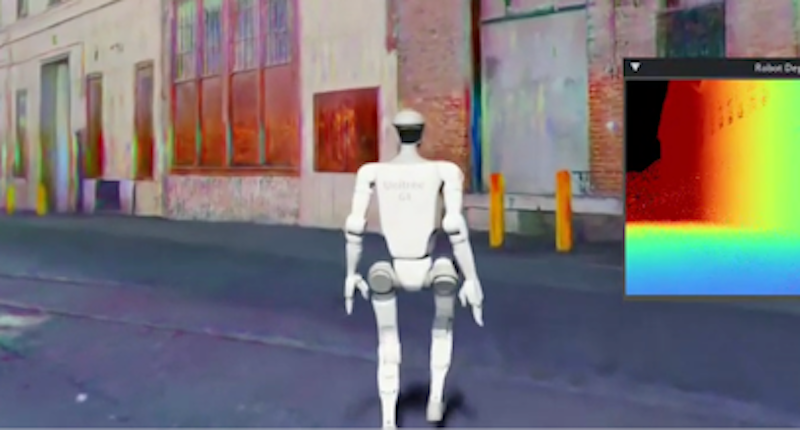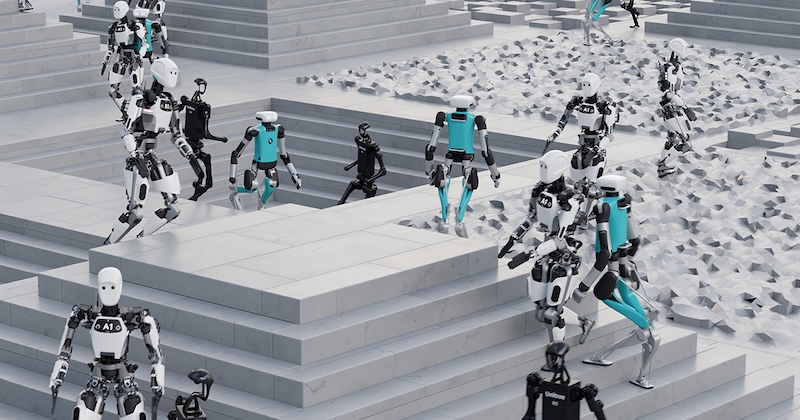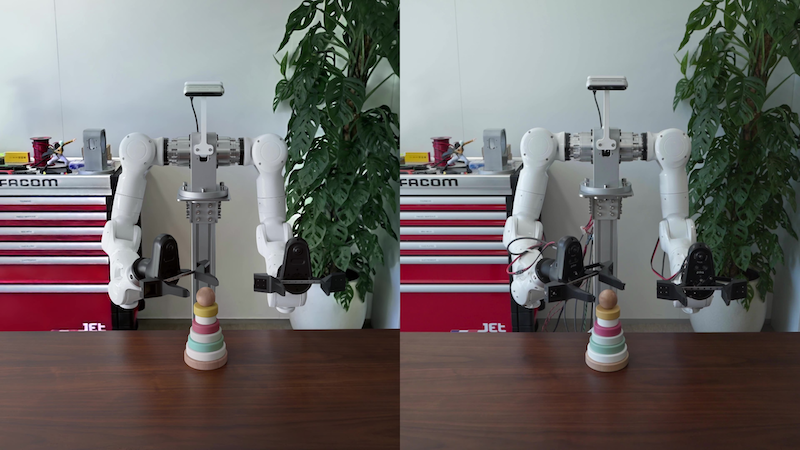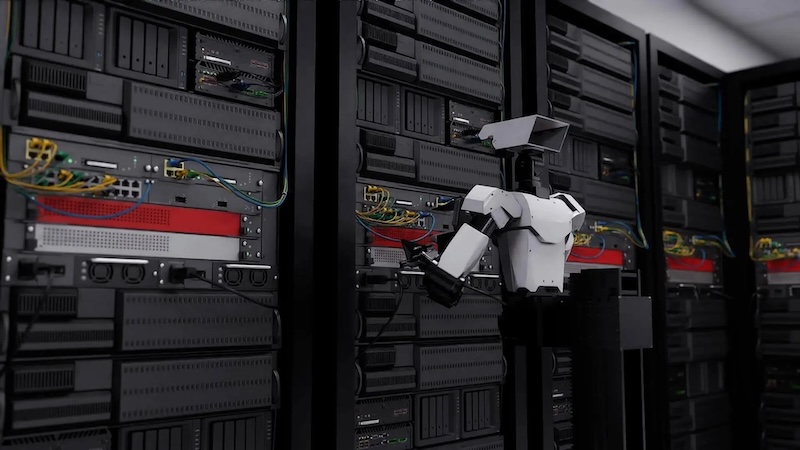
The next leap in robotics won’t come from faster processors or more sophisticated mechanical design. It will come from better data, specifically, from training environments that replicate how the physical world actually behaves. [Read more…] about Why robotics can’t advance without physical AI
robotics simulation
Genesis AI launches simulation platform to accelerate robotics development
Genesis AI has launched Genesis World 1.0, a new robotics simulation platform designed to dramatically reduce the time required to develop, test, and evaluate robotic AI systems.
The company says the platform can compress robotics evaluation cycles from days to minutes by enabling large-scale testing in photorealistic virtual environments rather than relying solely on physical robots.
According to Genesis AI, a robotics foundation model evaluation that would typically require nearly a week of continuous testing on real hardware can be completed in approximately 30 minutes using Genesis World 1.0 running on GPU infrastructure. [Read more…] about Genesis AI launches simulation platform to accelerate robotics development
Lightwheel reports $100 million in Q1 orders for physical AI robotics infrastructure
Lightwheel says it secured approximately $100 million in orders during the first quarter of 2026, reflecting what the company describes as a broader industry shift from robotics experimentation toward real-world deployment infrastructure.
Lightwheel is a robotics infrastructure company that develops simulation, synthetic data, evaluation, and deployment systems for training and scaling physical AI robots in real-world environments.
The company says the orders span simulation, synthetic data generation, evaluation systems, and deployment-oriented robotics infrastructure designed to support physical AI applications at industrial scale.
According to Lightwheel, the demand is being driven not simply by interest in robotics hardware or AI models, but by the growing need for systems capable of training, validating, and deploying robots reliably in real operating environments. [Read more…] about Lightwheel reports $100 million in Q1 orders for physical AI robotics infrastructure
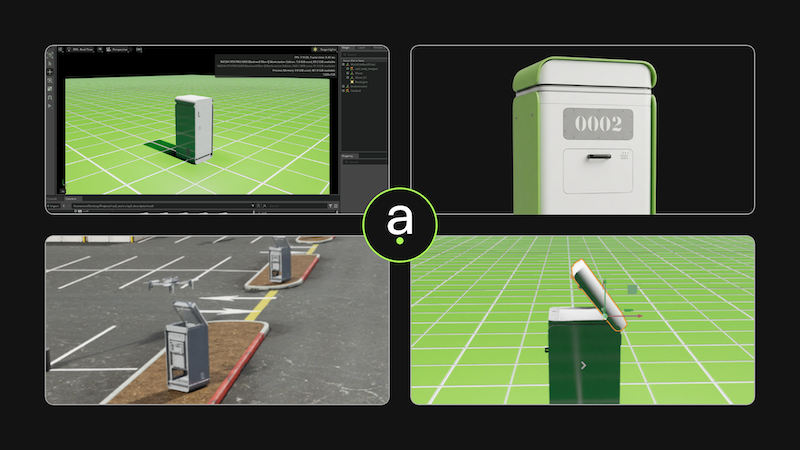
Arrive AI using Nvidia Isaac Sim and Blackwell GPUs to develop autonomous drone delivery network
Arrive AI, an autonomous delivery infrastructure company, says it is accelerating its artificial intelligence and robotics development using Nvidia Isaac Sim and high-performance GPU workstations powered by Nvidia Blackwell architecture.
The company is leveraging simulation-driven AI training to rapidly improve computer vision systems used in real-world automation, robotics, and autonomous delivery environments. [Read more…] about Arrive AI using Nvidia Isaac Sim and Blackwell GPUs to develop autonomous drone delivery network
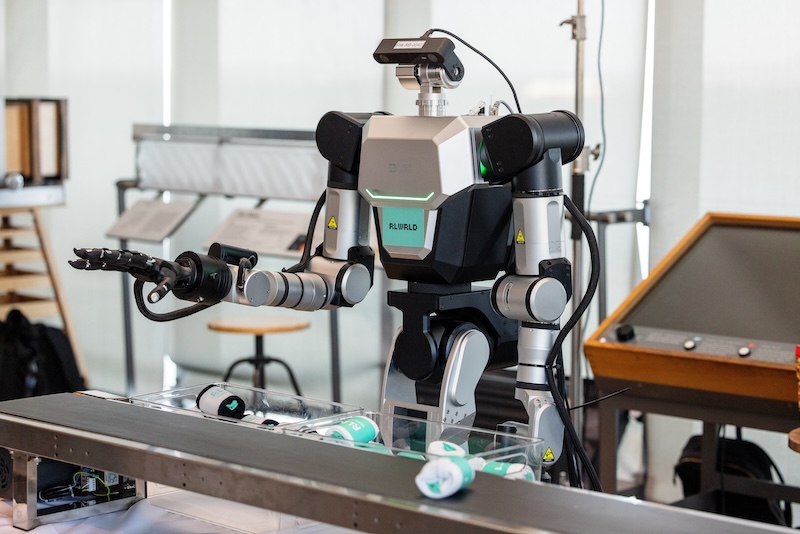
RLWRLD unveils ‘dexterity-first’ foundation model for humanoid robots
RLWRLD, a physical AI company developing robotics foundation models for dexterous manipulation, unveiled RLDX-1 at “Dexterity Night in SF”, introducing a model designed to help humanoid robots perform contact-rich tasks such as grasping, pouring and tool use.
The company also reported benchmark results across humanoid tabletop, kitchen manipulation and real-world coffee-pouring evaluations, and said the model runs across multiple robot embodiments including WIRobotics’ Allex humanoid, Franka Research 3 and OpenArm.
At the launch event, Amit Goel, head of robotics ecosystem and edge AI product at Nvidia, took the stage and said: “RLWRLD is one of the core partners in the physical AI ecosystem we are building at Nvidia.” [Read more…] about RLWRLD unveils ‘dexterity-first’ foundation model for humanoid robots
Achieving Dataset Parity to Close the Robotics Training Gap
It was in 1954 when the world witnessed its first real industrial robot, Unimate, a machine built to perform repetitive factory operations.
Fast forward to 2026: today robots like Unitree GD01 are being trained to learn adaptive mobility, AI decision-making, and terrain navigation.
In just half a century, robotics have evolved from immobile programmable arms into intelligent mobile systems capable of seeing and interacting with the physical environments around them. [Read more…] about Achieving Dataset Parity to Close the Robotics Training Gap
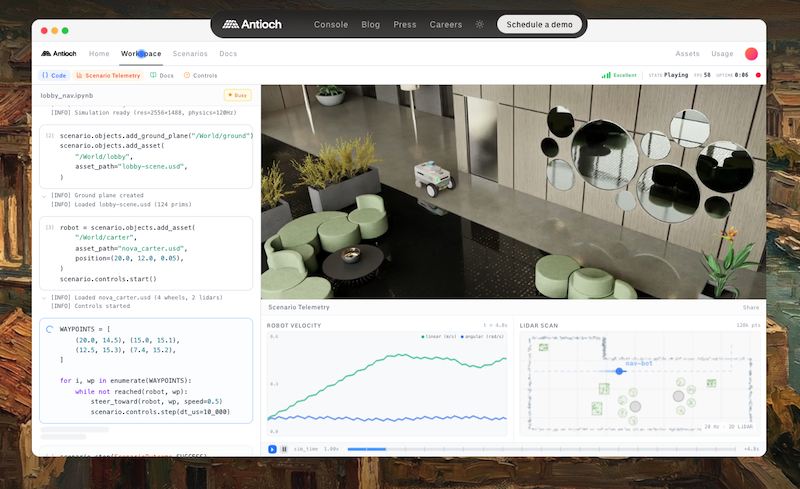
Antioch raises $8.5 million to accelerate simulation-based development of autonomous systems
Antioch, a cloud simulation platform focused on robotics and autonomous systems, has raised $8.5 million in funding as it seeks to shift development and testing away from physical environments and into software-based simulation.
The investment round was led by A* and Category Ventures, with participation from MaC Venture Capital, Abstract, Box Group, Icehouse Ventures, and angel investors including Shyam Sankar and Adrian Macneil.
Founded in May 2025 and headquartered in New York, Antioch aims to reduce reliance on costly and time-consuming real-world testing by enabling robotics teams to develop and evaluate autonomous systems in simulated environments. [Read more…] about Antioch raises $8.5 million to accelerate simulation-based development of autonomous systems
Nebius teams with Nvidia to build cloud for robotics and physical AI
Nebius, the AI cloud company, has announced it is collaborating with Nvidia to accelerate physical AI development with an end-to-end platform purpose-built for the full robotics lifecycle, from simulation and training to real-world deployment at scale.
Combining Nebius’s global AI cloud infrastructure with the Nvidia Physical AI Data Factory Blueprint, an open reference architecture for massive data generation and evaluation, Nebius will provide robotics developers and enterprises an agent-driven environment that addresses the two fundamental barriers to physical AI at scale: infrastructure and tooling fragmentation, and the lack of high-quality training data for rare, unpredictable scenarios that determine real-world success.
“Physical AI is going to be one of the defining technology shifts of this decade, and the teams building it today are being held back by infrastructure and tooling that was never designed for those workloads, ” said Evan Helda, head of physical AI at Nebius. [Read more…] about Nebius teams with Nvidia to build cloud for robotics and physical AI
EY launches physical AI platform and opens new EY.ai Lab with Nvidia support
EY has unveiled a new physical AI platform developed with Nvidia technologies, opened a dedicated EY.ai Lab in Georgia, and appointed its first EY global physical AI leader, marking a major expansion of the firm’s robotics and automation strategy.
The company says the new platform is designed to give enterprises a structured way to implement and manage “an AI system executed by robots, drones, smart-edge devices and more.”
Built using Nvidia Omniverse libraries, Nvidia Isaac and Nvidia AI Enterprise, the system supports digital twins, robotics simulation and advanced AI workloads across industrial, energy, consumer and health sectors. [Read more…] about EY launches physical AI platform and opens new EY.ai Lab with Nvidia support
Google DeepMind releases new world model with ‘vast space’ to train robots and autonomous systems
Google DeepMind has unveiled Genie 3, the latest version of its generative world model, describing it as a step forward in creating more intelligent and adaptable simulation environments – including those for robotics applications.
Although the company’s announcement focuses heavily on advancements in video prediction and general AI learning, Genie 3 has direct relevance for robotics developers who rely on high-fidelity, physics-aware simulation systems to train and test autonomous systems.
Described as a “world model,” Genie 3 can generate realistic interactive environments directly from a single image prompt and a short textual description, such as “driving down a highway at sunset” or “walking in a rainy city”. [Read more…] about Google DeepMind releases new world model with ‘vast space’ to train robots and autonomous systems