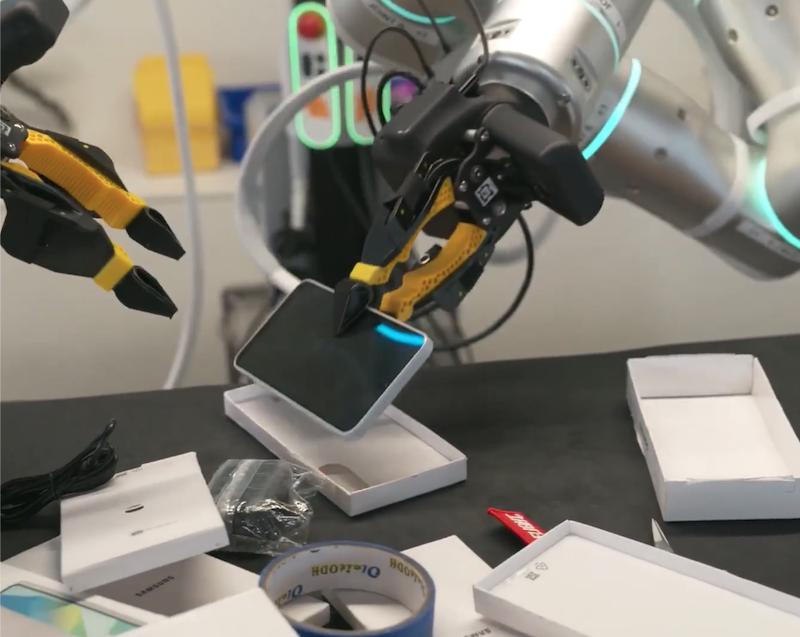
Generalist AI, a startup developing foundation models for robotics, has raised $400 million in new funding as it seeks to accelerate the development of what it calls “physical AGI” – artificial general intelligence capable of operating in the physical world through robots.
The funding round values the company at approximately $2 billion and brings its total capital raised to more than $500 million.
The round was led by Radical Ventures, with participation from 8VC, Union Square Ventures, Hanabi Capital and Norwest. Existing investors including Nvidia’s NVentures, Boldstart Ventures, Spark Capital, Bezos Expeditions and NFDG also participated.
New angel investors include AI researcher Fei-Fei Li, Xiaomi co-founder Bin Lin and entrepreneur Naval Ravikant.
The company says the new capital will be used to expand its robot-learning models, physical data collection infrastructure, computing resources and commercial deployments.
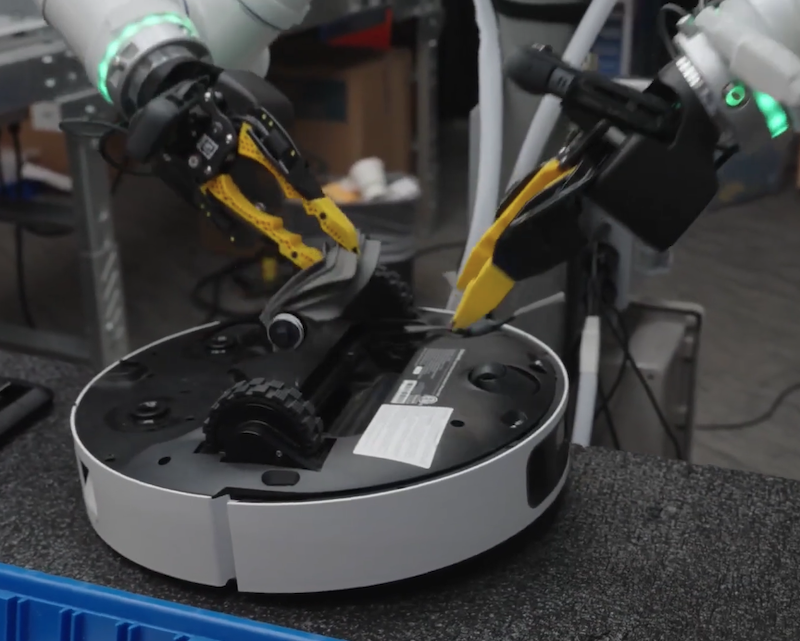
The funding follows the release of Generalist AI’s GEN-1 model in April. According to the company, the system demonstrated 99 percent reliability across a range of dexterous manipulation tasks, executed tasks up to three times faster than previous state-of-the-art systems, and showed an ability to learn new physical skills and adapt to changing conditions.
The company previously introduced GEN-0 in November, which it says demonstrated scaling laws in robotics by showing that larger models trained on increasing amounts of real-world data could produce more capable robotic systems.
Generalist AI is part of a growing group of companies attempting to build foundation models for robotics that can operate across multiple robot types and environments rather than being limited to a single machine or task.
The company argues that future robotic intelligence will need to work across a wide range of platforms, including humanoid robots, industrial robotic arms, warehouse robots and autonomous systems.
In a blog post announcing the funding, Generalist AI said: “The future of robotics is bigger than any single robot.”
The company added that it sees a feedback loop emerging in which larger datasets produce more capable models, enabling robots to perform more useful work and generate additional real-world data to train future systems.
The latest investment comes amid increasing investor interest in physical AI and robotics foundation models, a sector that has attracted significant funding over the past two years as advances in generative AI begin to be applied to machines operating in the physical world.
