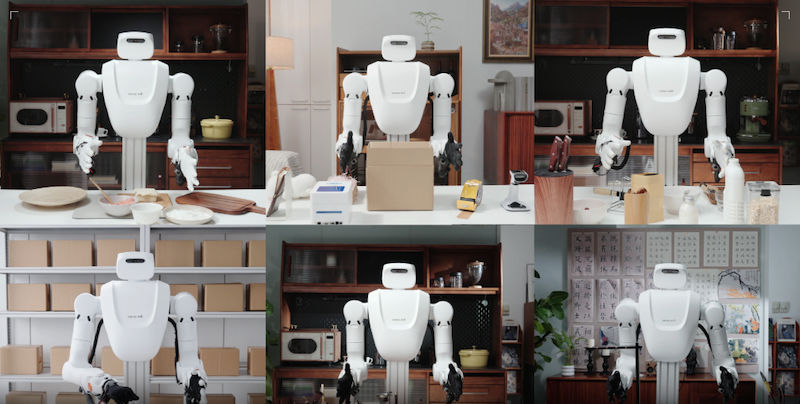
Nature Will, a physical AI lab dedicated to building physical AGI, has announced the launch of Natura-1, a 50-billion-parameter physical general foundation model for dexterous hand control and zero-shot instruction following in advanced robotics applications.
Pre-trained on over 1 million hours of egocentric human data, the Natura-1 combines instruction following with the ability to manipulate to changing task conditions and sustained actions over extended interactions, bringing the versatility of the hand within reach of a model that connects human intent to physical action.
With the rapid advancements in general AI and large language models, AI models developed for physical applications represent the next frontier in technological progress.
Natura-1 showcases that generalization and fine physical control can be learned together in a foundation model for dexterous hands, applicable to any field where fine or delicate manipulations are required as part of the creation process.
Built on a 50 billion parameter mixture-of-experts model trained jointly on language, images, video, and action, Natura-1 operates at a 100-millisecond control loop to unify language, vision, and high-degree-of-freedom action that connects language-directed behavior with the physical control.
Ning Ding, CEO of Nature Will, says: “We believe general models that can handle every task must exist, and that those models must utilize dexterous hands.
“Natura-1 is our first step towards models that scale from human experience, building infrastructure that enables us to create the model from the ground up and that allows it to scale to any application.
“The Natura-1 is a 50-billion-parameter mixture-of-experts model with dexterous manipulation, long-horizon execution, and zero-shot instruction following, making it truly capable of scaling human experience into purposeful action.”
The model represents Nature Will’s first physical foundation model that is capable of general-purpose dexterous manipulation using real hardware, acting as a breakthrough in the development of general foundation models made to interact in the real world.
Designed to scale, the model autonomously executes sustained, continuous workflows and follows complex natural language instructions, enabling it to reason through spatial constraints, multi-object relationships, and negative conditions.
