
OpenAI has filed a patent application for an ear-worn device that could enable users to communicate with artificial intelligence systems without typing or speaking aloud.
The technology is designed to detect small physical movements inside the ear canal as a person silently forms words, converting those movements into text or instructions that can be processed by computers, language models and AI agents.
The patent application, titled “In-Ear Silent-Speech Detection System”, was published by the US Patent and Trademark Office on November 19, 2026.
It names Douglas Stuart Brodie and Daniel Boothe as the inventors and OpenAI OpCo as the applicant. An initial provisional application was submitted in May 2025, followed by the full application in May 2026.
The publication came shortly before researchers at ETH Zurich announced the development of InvisiSpeech, a miniature tooth-mounted sensor designed to enable people to communicate with AI systems through silent speech, as previously reported by Robotics & Automation News.
While the two technologies use different sensing methods, both seek to provide an alternative to conventional keyboards, touchscreens and voice interfaces.
How silent-speech earbuds would work
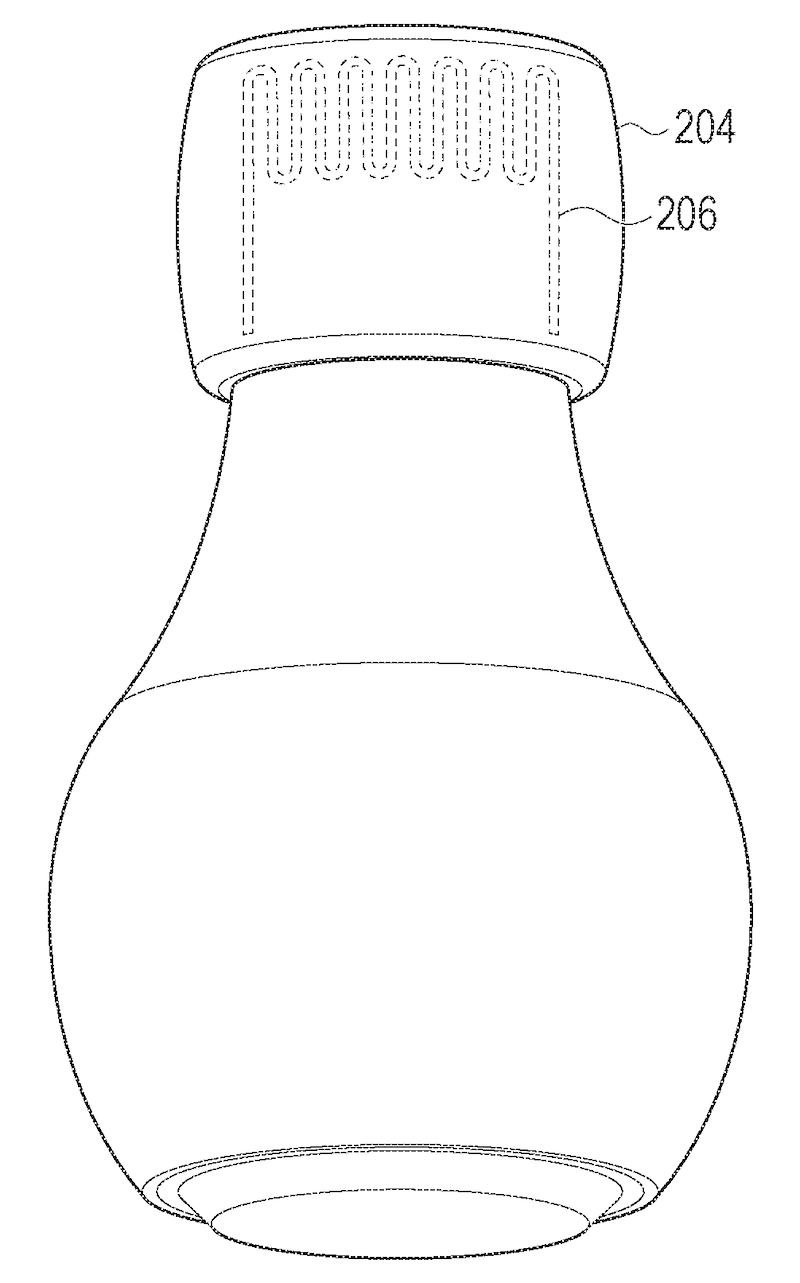
OpenAI’s proposed system takes advantage of the physical relationship between the jaw and the ear canal.
Silent articulation still involves muscular and joint movements. Because the joint connecting the lower jaw to the skull is located close to the ear canal, these movements can alter the shape of the canal.
The application describes several possible sensing technologies for measuring these changes, including accelerometers, gyroscopes and strain gauges, as well as sensors that measure pressure or vibration.
Machine learning algorithms would interpret the measurements to identify the words being formed by the wearer.
The resulting information could be processed within the ear-worn device or transmitted wirelessly to a separate computing system, such as a smartphone.
The application also describes methods of training the speech recognition system using data collected from individual wearers, whose anatomical characteristics and speech patterns may differ.
Communicating with AI without speaking
Among the potential applications identified in the document are interactions with language models and AI agents.
Silently expressed instructions could be used to compose messages, create documents, manage schedules or retrieve information.
The system could potentially provide an alternative input method for AI assistants such as ChatGPT, enabling people to interact with them in situations where speaking aloud would be impractical or undesirable.
For example, users could ask questions, request information or issue instructions while travelling on public transport, attending a meeting or working in a shared office.
The application also describes a system in which two people wearing compatible devices could communicate with each other through silent speech, with their words converted into audible speech delivered through the other person’s earpiece.
A similar approach could potentially enable two-way conversations with AI assistants, combining silent-speech recognition with existing speech synthesis technologies.
From tooth-mounted sensors to earbuds
OpenAI’s patent application is part of a wider area of research into new methods of human-computer interaction.
The InvisiSpeech technology developed at ETH Zurich uses a small device attached to a back tooth to detect vibrations produced when its wearer silently forms words with their tongue.
In tests involving 15 participants, the technology achieved a recognition accuracy of up to 91.5 percent across 50 predefined commands in English.
The researchers are working towards enabling more extensive conversations with AI systems, with users receiving audible responses through earphones.
Neither the ETH Zurich technology nor the ear-worn system described by OpenAI requires a direct connection to the brain. Both rely on measuring physical activity associated with speech rather than interpreting neural signals.
Beyond conventional voice interfaces
Recent improvements in speech recognition and AI have made voice an increasingly practical alternative to typing.
Silent-speech interfaces could extend the use of natural language to environments in which conventional voice recognition is unsuitable, while potentially providing greater accessibility for some people with speech impairments.
However, questions remain about how reliably ear-worn sensors could distinguish speech-related movements from other activities such as eating, walking or turning the head.
OpenAI’s application does not provide speech recognition accuracy figures or details of battery life, processing speeds or commercial availability.
The patent application remains pending, and it is not yet clear whether OpenAI intends to incorporate the technology into a commercial hardware product.
Main image: AI-generated illustration of what the OpenAI earbud might look like.
