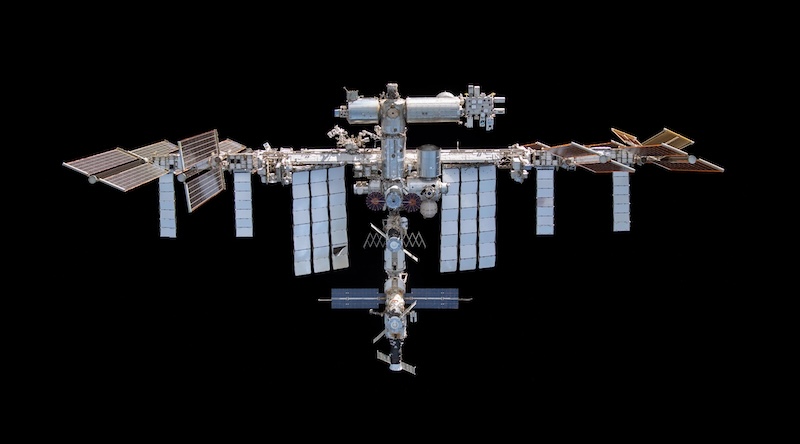
ISS National Laboratory has launched the 2026 Orbital Edge Accelerator, a new startup program designed to help deep-tech companies accelerate research, commercialization, and fundraising through access to the International Space Station.
The accelerator will select six startups, with each company eligible to receive up to $750,000 in venture funding alongside the opportunity to conduct ISS National Lab-sponsored in-orbit research projects.
According to the ISS National Lab, the program combines venture investment, orbital testing opportunities, mentorship, and commercialization support to help startups shorten development timelines that would otherwise take years using conventional laboratory and field testing.
Applications for the 2026 cohort close on May 26.
Using the ISS as a deep-tech development platform
The Orbital Edge Accelerator is designed to position low Earth orbit as an operational R&D environment rather than simply a destination for space missions.
The ISS National Lab says participating startups will gain access to:
- Venture funding of up to $750,000 per company
- ISS National Lab-sponsored flight projects
- Mentorship from industry and spaceflight experts
- Commercialization support
- Technical guidance for orbital research and testing
The organization says in-orbit testing missions can represent several million dollars in equivalent commercial mission value once launch services, astronaut support, engineering integration, and mission operations are considered.
The accelerator focuses on deep-tech sectors where microgravity research may provide advantages, including:
- Robotics
- Advanced manufacturing
- Artificial intelligence
- Materials science
- Biotechnology
- Space infrastructure
More than 110 startups have already flown ISS projects
According to the ISS National Lab, more than 110 startups have previously conducted projects aboard the International Space Station through its various commercialization and research initiatives.
The organization says those companies have collectively raised more than $2.7 billion following their participation in ISS-related programs.
The ISS National Lab also highlighted the most recent accelerator cohort, stating that all six startups graduating from the program last November secured between $1 million and $10 million in funding prior to their planned spaceflight activities.
Officials say the program is increasingly functioning not only as a technical validation platform, but also as a signal to venture investors that participating companies have passed a significant scientific and operational review process.
Sven Eenmaa says: “There is no comparable acceleration capability in the space industry.”
The ISS National Lab says Orbital Edge reflects a broader shift in how startups approach advanced R&D, using orbital testing environments to compress product development, validation, and commercialization timelines.
The organization has not yet announced the six startups selected for the 2026 accelerator cohort.
