By Tim Tetzlaff, global head of digital transformation, DHL Supply Chain
Years ago, peak season was defined by relatively predictable demand surges, such as Black Friday or the Christmas shopping rush. Supply chain operations could rely on historical data, anticipate recurring patterns, and schedule labour and capacity accordingly. Today, that traditional concept of a single, well-defined holiday peak is dissolving.
In a volatile, uncertain, complex and ambiguous (VUCA) global environment, shaped by shifting trade policies and geopolitical disruptions, peaks can occur at any time. As a result, static operating models designed around fixed seasonal calendars can no longer keep pace.
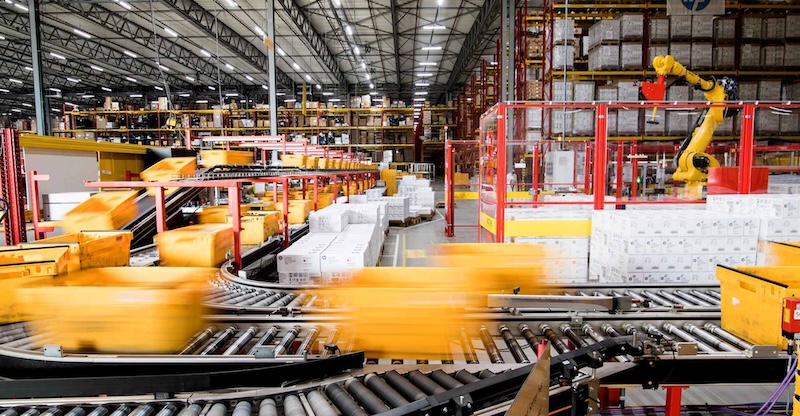
For businesses, the ability to respond to fluctuations is critical. Robotics and automation play an increasingly important role in helping to build resilience by unlocking additional capacity and accelerating response times.
However, finding the right formula is rarely straightforward. Businesses are often caught between the latest headlines centred on fully autonomous warehouses and humanoid robots, and the practical challenge of integrating technology across product catalogues and locations.
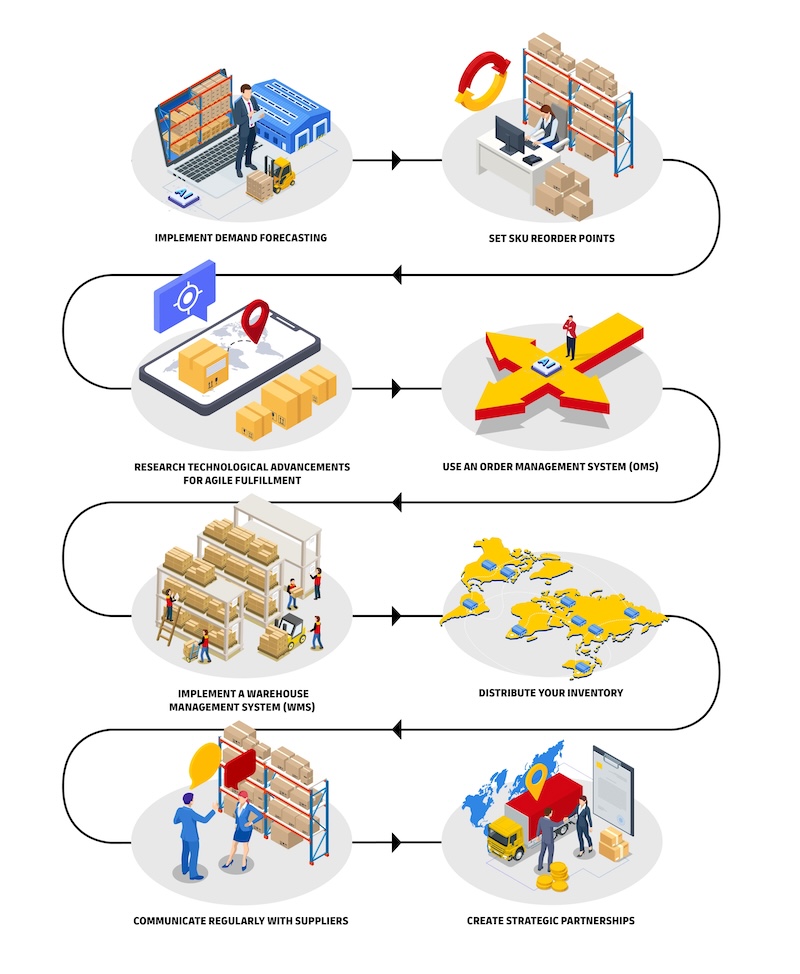
The goal in this environment is to achieve flexible autonomy by dynamically orchestrating the best mix of human, robotic and automated resources, while maintaining what we call flexible stability.
This means establishing a solid, standardised foundation across core systems and automation interfaces, giving operations built-in stability and the freedom to rapidly deploy new tools, redistribute resources and adapt without friction.
Managing peak at scale
Demand spikes and peak volumes are where that balance is tested the most, drastically reducing the margin for error. Bridging the divide between what’s possible with technology and what will work in the warehouse means orchestrating the human workforce, physical automation and digital intelligence into one responsive network.
At DHL Supply Chain, we currently operate over 9,000 collaborative robots globally, having added roughly 1,000 units over the past year. To handle volume spikes in peak season, we temporarily expand our active robot fleet by 30 percent, adding short-term capacity without expanding physical warehouse footprints.
Since scaling began, these systems have picked over 1.5 billion items – with the milestone one-billionth item being a pink beanie. This acceleration in technology deployment has happened alongside workforce expansion, with over 40,000 colleagues hired in the same period.
By taking on physically demanding, repetitive tasks, collaborative technology expands overall operational capacity while creating opportunities for employees to transition into higher-skilled roles.
End-to-end workflows
Realising the full potential of this hybrid workforce requires looking beyond isolated pockets of automation. A high-speed picking robot delivers little value if orders bottleneck at the packing bench, just as visibility dashboards tracking only picking, packing or unloading in silos cannot deliver meaningful operational control.
As such, live operations need integrated, dock-to-dock visibility and actionability across the entire warehouse flow to orchestrate throughput effectively.
In beauty e-commerce fulfillment, for instance, autonomous mobile robots (AMRs) transport items through warehouse aisles directly to packaging cells.
By linking AMRs with automated box builders and box closers, and core Warehouse Management (WMS) and Labour Management Systems (LMS), 3PLs can continuously optimize the end-to-end process and set hardware and workforce allocation based on real-time order visibility.
While standardised quality checks will soon be handled routinely by computer vision and AI, the human contribution is shifting toward higher-level execution. Our view is that the future of working with digital and physical AI is not just about keeping a “Human in the Loop” (HITL) or “Human on the Loop” (HOTL), but ensuring the Human is in the Lead.
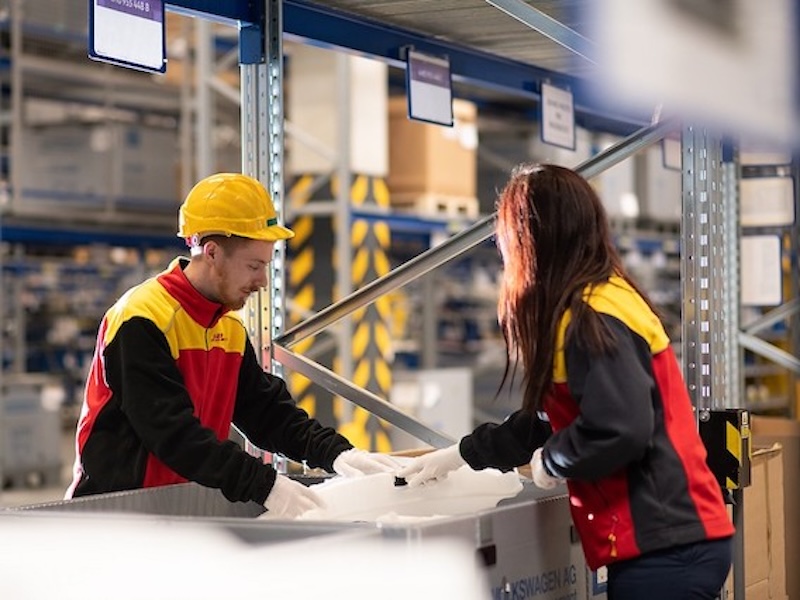
Colleagues drive end-to-end performance, manage the broader flow of the system, troubleshoot issues and handle delicate presentation wrapping and co-packing that automated grippers cannot perform.
This orchestration also provides the operational flex required when unscheduled surges occur. When a viral trend recently drove an unexpected spike for Jellycat plush toys at a UK facility, an entire warehouse floor had to be adapted immediately.
As non-standard plush items can be more difficult to pick with robotics, having flexible, integrated processes allowed us to rapidly establish a dedicated manual handling space without disrupting core throughput.
Scaling these capabilities across thousands of operations relies on blueprint reusability. Rather than treating every facility or customer as a bespoke project, we start with a solid, proven foundation of pre-connected building blocks.
These handle the vast majority of core requirements, before tailoring to sector-specific needs. For example, by establishing a standardised automation blueprint, we took a setup configured for a European retail customer and replicated that exact architecture for an industrial client in another market.
This blueprint approach reduced total deployment and system integration effort by 30 percent while providing built-in resilience and future-proof flexibility.
Grounding physical AI in operational reality
Having this foundation in place does more than speed up rollouts today. It dictates how we evaluate and adopt the next wave of innovation. This is essential as market attention shifts heavily towards Physical AI.
While this term dominates current industry conversation, AI is already present across the warehouse floor, from computer vision and path optimisation to machine-learning grippers.
The next step for Physical AI lies in expanding these capabilities to complex, highly unstructured tasks that have historically resisted automation, for example, e-commerce returns processing.
Returns remain one of the most manual and labour-intensive stages of logistics. Colleagues need to open returned packages, individually inspect garments and determine whether an item can be repackaged or restored to inventory. Over the next three to five years, emerging physical world models combined with dexterous robotic arms with wrist-mounted cameras will begin automating these intricate handling steps.
While currently in pilot phases, these systems will soon allow operations to inspect, sort, and repackage returned goods at pace, transforming one of the supply chain’s biggest operational bottlenecks.
In addition to being a manual bottleneck, returns handling represents an ideal place to start advancing physical AI because it is both narrow and data-rich. Rather than attempting to achieve warehouse-wide automation, reverse logistics focuses on a targeted, highly repetitive operational process with high volumes of handling data.
By anchoring early Physical AI deployment in a focused, data-heavy environment, we can train and refine models rapidly, then transfer those learnings to broader adjacent tasks such as item picking, custom wrapping, and co-packing to maximise operational impact.
The capacity and agility to cope with peak season and sudden spikes will not be built by simply chasing the latest technology. It is developed through standardised, repeatable technology blueprints that seamlessly connect physical automation, software, and human expertise.
By establishing this integrated foundation, supply chain operations can absorb both anticipated holiday surges and unexpected market volatility with confidence.

About the author: Tim Tetzlaff is global head of digital transformation at DHL Supply Chain, where he focuses on accelerating the adoption of robotics, artificial intelligence and automation across the company’s global logistics operations. His work involves developing scalable technology solutions, collaborating with innovation partners and integrating emerging technologies to improve supply chain efficiency, productivity and resilience.
