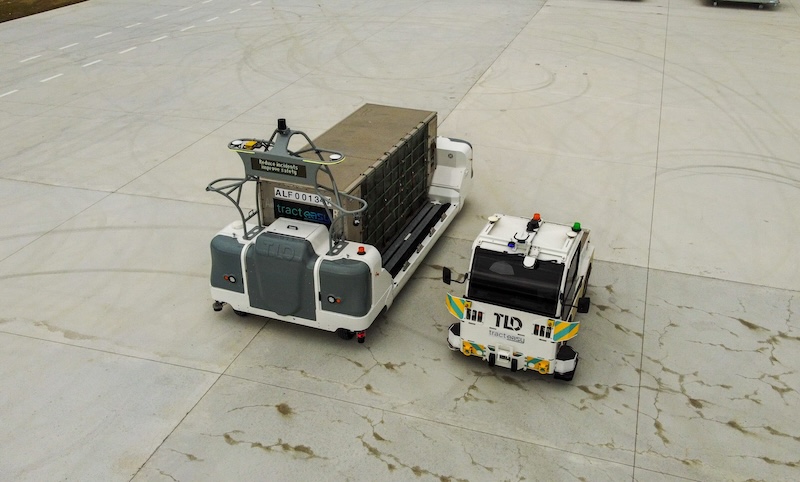
After almost a decade of collaboration, the companies behind one of the more established autonomous vehicle programs in airport ground operations have brought their activities together under a single name: TLD Robotics.
The new company was formally launched in September 2026, following ALVEST Group’s acquisition of autonomous driving technology developer EasyMile.
Bringing together EasyMile, TractEasy and TLD’s existing driverless vehicle activities, TLD Robotics represents a consolidation of technology, manufacturing and operational expertise that has been developing since 2017.
Although the announcement was made at GSE Expo Europe in September, its significance extends beyond the creation of another robotics company.
It reflects a broader change in the autonomous vehicle industry, particularly in airports, logistics facilities and industrial environments, where the emphasis is gradually shifting from demonstrating autonomous technology to making it a dependable part of everyday operations.
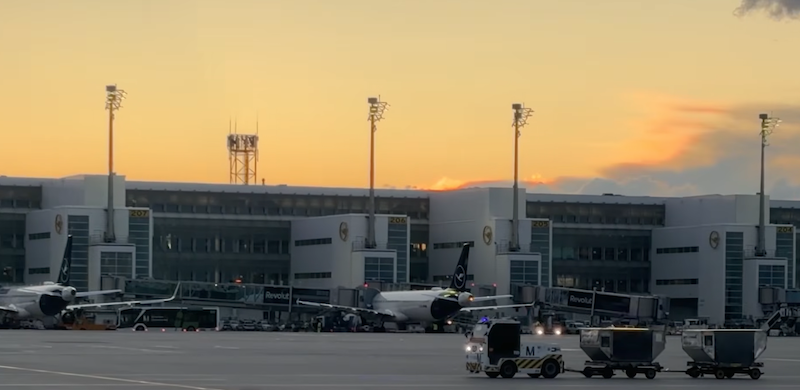
For TLD Robotics, that transition has been nearly a decade in the making.
From experimental technology to commercial operations
The relationship between TLD and EasyMile began in 2017, when autonomous ground support equipment was still largely associated with experimental projects and limited trials.
Airports presented an attractive opportunity for automation. Their ground operations involve repetitive movements of baggage, cargo and equipment along relatively predictable routes, often within controlled environments.
However, these environments are not necessarily simple.
Airport vehicles must operate around aircraft, service equipment, workers and other traffic, while meeting demanding safety and operational requirements.
The collaboration between TLD and EasyMile sought to address these challenges by combining autonomous driving software with purpose-built industrial vehicles.
That relationship eventually led to the creation of TractEasy, a joint venture focused on commercializing autonomous towing and material transport operations.
Over the following years, the business expanded into airports and industrial facilities across several international markets.
By the time TLD Robotics was launched, the combined operation had accumulated more than 50,000 autonomous missions across more than 35 sites in 10 countries, according to the company.
These included more than 15 airport operations and more than 20 industrial installations.
Some facilities were already operating around the clock, providing experience of autonomous vehicles working within active commercial environments rather than controlled demonstrations.
Richard Reno, chief executive officer of TLD Robotics, said the business had grown considerably since its early collaboration.
“When TLD and EasyMile began working together in 2017, autonomous GSE was still seen as a future concept,” said Reno.
“We saw the opportunity in structured environments like airports and logistics hubs early and have turned that vision into a proven business. Since creating TractEasy three years ago, we have scaled tenfold.
“With TLD Robotics bringing the same vehicles, teams and proven deployment record under one name, backed by a strong industrial base, we now have the platform and ambition to scale another 10x over the coming years.”
Why bringing everything together matters
One of the persistent challenges in industrial autonomous vehicle projects is the need to integrate technologies from several suppliers.
The vehicle itself may come from one manufacturer, the autonomous driving software from another, and the fleet management system from a third.
Integrating these elements can introduce additional engineering work, particularly when autonomous vehicles must interact with existing traffic management systems, operational procedures and safety infrastructure.
The formation of TLD Robotics is intended to simplify this process by bringing vehicle development, autonomous software, fleet management, manufacturing and customer support under one organization.
The new business combines EasyMile’s autonomous driving technology with TLD’s vehicle manufacturing capabilities and the operational experience accumulated through TractEasy.
It also incorporates supervision software, including expertise from XOPS, to coordinate autonomous missions and integrate vehicles into airport operating environments.
The technology portfolio covers several interconnected functions.
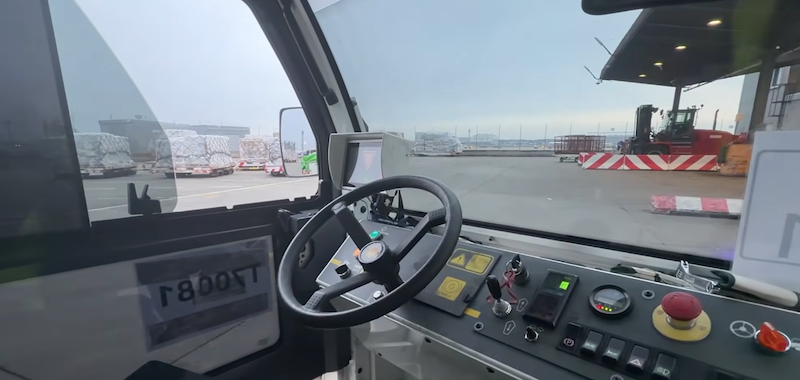
Onboard software enables vehicles to perceive their surroundings, navigate routes and respond to changing conditions.
Fleet supervision systems coordinate multiple vehicles, manage assignments and help optimize movements across operational areas.
Purpose-built autonomous towing tractors and cargo-handling vehicles provide the physical platforms, while integrated engineering teams develop the software and hardware as a complete system.
The company also benefits from TLD’s manufacturing and service network, which includes 12 factories across seven countries.
For customers, the intended advantage is a single supplier responsible for the technology and its continuing operation, rather than a collection of separate equipment and software providers.
Whether this approach translates into lower integration costs and improved operational performance will depend on individual installations, but the consolidation addresses a practical concern for organizations considering larger autonomous vehicle fleets.
A growing international operating base
The companies brought together under TLD Robotics already have experience with a range of major industrial and aviation customers.
These include dnata, BMW Group’s Dingolfing manufacturing facility, Daimler Truck, Bosch, John Deere, Munich Airport, Narita Airport, Japan Airlines and Lufthansa Cargo.
Their applications illustrate the similarities between airport ground operations and industrial material handling.
Both involve moving goods and equipment repeatedly between defined locations, often over long operating hours and within environments shared with conventional vehicles and personnel.
In automotive manufacturing, autonomous towing vehicles can transport components and materials between production and logistics areas.
At airports, similar technology can move baggage carts and cargo trailers between terminals, sorting facilities and aircraft servicing areas.
The underlying autonomous driving requirements have much in common, although airport operations introduce additional considerations involving aircraft movements, restricted zones and ground handling procedures.
The international spread of these operations has also given the business experience of different operating conditions and regulatory environments.
That experience is likely to become increasingly important as customers move beyond individual autonomous vehicles toward larger fleets integrated into established logistics processes.
The company reported that its fleet had been tripling annually at the time of the September announcement, putting its expansion more than a year ahead of earlier projections.
Such growth figures reflect the company’s reported progress, although the longer-term commercial significance will depend on sustained adoption and the economics of operating autonomous fleets.
The wider shift toward driverless ground operations
The creation of TLD Robotics comes at a time when autonomous vehicle technology is becoming more specialized.
Much of the public discussion surrounding autonomous driving continues to focus on passenger cars and robotaxis.
However, airports, warehouses, factories and logistics centers offer a different route to commercialization.
Vehicles operating in these environments typically follow defined tasks, travel at relatively low speeds and work within areas where access and traffic can be managed.
These characteristics can make certain autonomous applications easier to introduce than general-purpose driving on public roads.
They do not eliminate the technical and safety challenges, but they allow developers to concentrate on specific operational requirements.
For airport operators, the potential benefits include greater consistency in repetitive transport tasks, improved equipment utilization and reduced dependence on workers for routine vehicle movements.
Labor availability is another consideration, particularly in operations that run continuously or require staff to work irregular shifts.
Environmental performance is also part of the discussion, especially where autonomous vehicle programs are combined with the introduction of electric ground support equipment.
Nevertheless, the transition from conventional vehicles to fully driverless operations involves more than replacing a human driver with software.
Organizations must establish how autonomous vehicles interact with existing traffic, how exceptions are handled, how operations are supervised and how equipment is maintained.
These operational questions become more significant as the number of autonomous vehicles increases.
TLD Robotics is positioning its integrated structure as a way to address those requirements throughout the life of an installation.
ALVEST looks to the long term
The establishment of TLD Robotics also reflects the wider strategy of its parent company, ALVEST Group.
Through TLD, the group already has an established presence in airport ground support equipment manufacturing.
Bringing autonomous driving technology more directly into that business creates opportunities to incorporate driverless capabilities into future vehicle platforms and offer customers more comprehensive automation services.
Valentin Schmitt, president and chief executive officer of ALVEST, described autonomy as an increasingly important part of the group’s long-term development.
“Automation is the future of our business,” said Schmitt. “Every operator we work with faces the same pressures: safety, labor availability, cost and decarbonization. Autonomy addresses them all and is a natural extension of our Leaner & Greener strategy.
“ALVEST brings the long-term ambition, industrial strength and financial capacity to deploy at scale. Our customers are not buying a pilot; they are investing in decades of operations – and that is the timeframe ALVEST is built for.”
The emphasis on long-term operations is significant.
Autonomous vehicles used in industrial and airport environments are capital equipment expected to remain in service for years, supported by maintenance, software updates and replacement parts.
Customers therefore need confidence not only in the autonomous driving technology but also in the manufacturer’s ability to support the equipment over its operating life.
By placing TLD Robotics within an established industrial group, ALVEST is seeking to provide that continuity while expanding its autonomous vehicle business.
Existing commercial commitments and operations previously associated with TractEasy have continued under the TLD Robotics name.
Beyond the pilot phase
Perhaps the most interesting aspect of the TLD Robotics announcement is what it suggests about the development of autonomous industrial vehicles.
When TLD and EasyMile began collaborating in 2017, the central question was whether autonomous towing vehicles could perform useful work safely and reliably in complex operating environments.
Nearly a decade later, the questions are increasingly commercial and organizational.
How many vehicles can one operation support? How should autonomous fleets interact with conventional equipment? What infrastructure is required? Who takes responsibility for maintenance, software and operational performance?
These are the kinds of questions that arise when technology begins moving from experimentation into routine industrial use.
The consolidation of EasyMile, TractEasy and TLD’s driverless activities does not, by itself, resolve those challenges.
It does, however, bring together the capabilities needed to address them within a single organization.
For airports and industrial operators considering autonomous material transport, that could prove more important than another demonstration of a driverless vehicle.
The next stage of autonomous ground operations may be defined less by whether the vehicles can drive themselves and more by whether suppliers can deliver, integrate and support complete systems reliably over many years.
That is the opportunity TLD Robotics is now seeking to capture.
