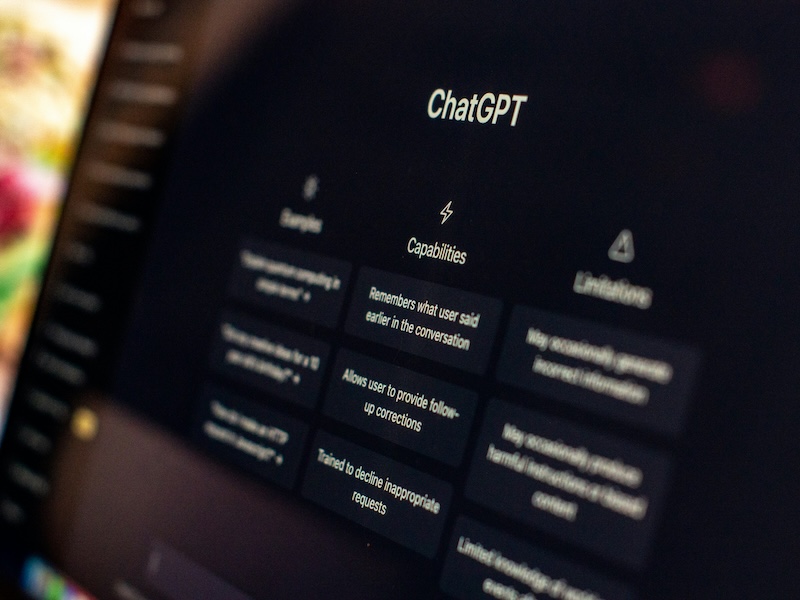
It often feels like the more deadlines compress and documentation piles stack up, the longer code reviews take. These days, demand is stronger than ever, and the expectation that you can do it faster than ever means that the promise of AI assistance sitting right there in a browser tab is hard to resist.
The problem is that “right there in a browser tab” usually means ChatGPT, and ChatGPT means OpenAI’s servers, and OpenAI’s servers means your proprietary motion control algorithms or your client’s confidential information is no longer entirely yours.
In 2023, Samsung engineers made headlines after accidentally leaking confidential semiconductor code and internal meeting transcripts by pasting them directly into ChatGPT. Samsung responded by banning the tool internally. Most robotics firms haven’t had their moment yet, and some haven’t learned from the tech giant’s mistakes.
What’s actually leaving the building
Density of the day to day workload is the biggest problem. Debugging, drafting client integration specs, summarising months of competitive research, pulling together documentation from internal test results. All of them have obvious reasons to reach for an AI assistant, and all of them are working with information that would be genuinely damaging in the wrong hands.
Besides, AI is changing client expectations of what a “fast turnaround” really is.
OpenAI’s terms of service state that prompts can be used to improve their models unless users actively opt out through enterprise settings, which is something that many employees on free or standard accounts simply don’t have access to. The gap between “the policy exists” and “the team knows about it and has configured it correctly” is where most of the exposure happens.
Liability question marks
Passing client data through a consumer AI product without explicit authorisation can constitute a breach of contract or a violation of NDA terms that the firm signed before the project started.
There’s also the sector-specific angle. Companies building robots for healthcare or critical infrastructure are subject to data regulations that apply regardless of whether the data leakage was intentional. “An engineer used a free chatbot” is not a defence that tends to go particularly far.
The exposure tends to be invisible right up until it isn’t. No alert goes off when an engineer pastes a wiring schematic into a chatbot. The firm finds out when the client finds out, or when a competitor’s product looks remarkably familiar.
The (surprisingly) obvious fix
Switching to a ChatGPT alternative built around privacy-first architecture changes the risk profile substantially. Without these platforms utilising user data for training purposes, engineers still get the productivity benefits they’re looking for without the negative side effects.
The implementation argument tends to be simpler than the security argument. “We switched because our legal team flagged it” is an easier internal conversation than trying to explain to engineers why their workflow needs to change.
Main image by Emiliano Vittoriosi on Unsplash
