Automation is no longer a future promise. It is a present-day hiring engine. Across factories, warehouses, energy grids, and research labs, companies are deploying robots and intelligent systems at a pace that demands a steady supply of skilled engineers.
The trouble is simple to state and hard to solve. The machines are arriving faster than the people who design, build, and maintain them.
This gap is not a temporary blip. It is a structural mismatch between what employers need and what the education system can deliver. Demand is compounding. Supply is moving in a straight line. When those two curves diverge, the result is a labor shortage that touches every corner of the technology economy.
The Widening Gap Between Jobs and Graduates
The numbers tell a consistent story. Roles tied to robotics, mechatronics, controls, and software engineering are expanding quickly. Yet the number of qualified candidates entering these fields each year has not kept the same rhythm.
According to the U.S. Bureau of Labor Statistics, employment across engineering occupations is projected to grow steadily through the decade, with thousands of openings expected every year. Many of those openings will go unfilled.
Part of the pressure comes from automation itself. As more businesses adopt automated systems, they need more engineers to integrate that equipment, write the control logic, and keep everything running. Each new robot on a line is not a replacement for a worker so much as a magnet for several new technical roles around it.
Demand also spreads beyond traditional manufacturing. Agriculture, construction, logistics, healthcare, and space all now compete for the same narrow pool of talent. The competition raises salaries, which is good for engineers, but it leaves smaller firms and emerging sectors scrambling.
Why Schools Can’t Keep Up
Universities are not standing still. They are launching new programs and expanding capacity. Still, several stubborn factors keep them from matching the speed of industry.
Curriculum Moves Slower Than Technology
A four-year degree takes four years. The tools, languages, and platforms used in automation can shift dramatically in that same window. By the time a curriculum is approved, taught, and completed, parts of it may already feel dated. Schools that revise their programs constantly face real friction, from faculty review cycles to accreditation rules.
A Shortage of Instructors
You cannot train engineers without engineers to teach them. Many of the most capable specialists choose industry roles that pay far more than academic positions. That pulls talent out of the classroom and limits how many students a program can take on. The bottleneck is not student interest. It is teaching capacity.
Equipment and Lab Costs
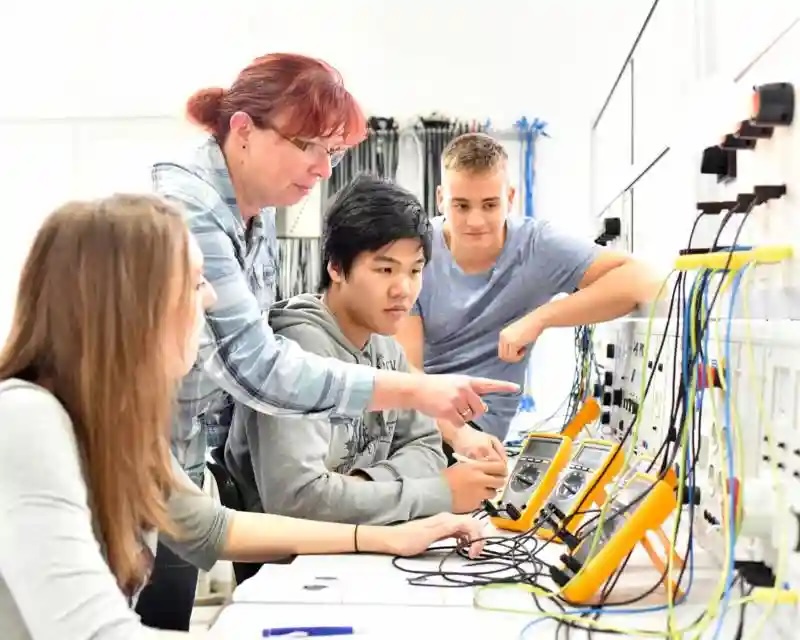
Hands-on training requires real hardware. Robotic arms, sensors, controllers, and testing rigs are expensive to buy and maintain. Budgets at many institutions simply cannot stretch to give every student meaningful lab time. Students who graduate without practical exposure often need extra training once they are hired, which slows their ramp into productive work.
The Cost Barrier to STEM Careers
There is another reason the pipeline runs thin, and it has little to do with classrooms. STEM degrees are expensive. Engineering programs in particular tend to run longer, require costly materials, and leave less room for part-time work because the coursework is so demanding. For many capable students, the obstacle is not ability. It is affordability.
This matters for the whole industry. When the price of entry climbs, talented people choose other paths, and the workforce shrinks before it ever forms. Closing the engineering gap therefore depends partly on making STEM education financially reachable.
How STEM Loans Work
Financing a technical degree usually starts with federal aid. Federal student loans offer fixed rates, flexible repayment options, and protections that many borrowers value, and they should generally be the first stop.
You can review current federal options through Federal Student Aid. For many students, though, federal aid does not cover the full cost of an engineering education, especially at private institutions or for graduate work.
That is where private financing enters the picture. STEM loans are a category of student lending aimed at people pursuing science, technology, engineering, and math fields. They work much like other student loans. A lender reviews your credit profile, or that of a co-signer, and offers a loan amount, an interest rate, and a repayment term.
The funds cover tuition and related costs, and you repay the balance over time, often with the option to defer payments until after graduation.
Some lenders tailor their terms to STEM students because these graduates tend to earn strong starting salaries, which can translate into competitive rates. Borrowers comparing private loans for STEM programs should look closely at the interest rate, whether it is fixed or variable, the repayment timeline, and any co-signer requirements before signing.
The key is to treat borrowing as a calculated decision rather than a default one. Exhaust grants, scholarships, and federal aid first. Then weigh private options against the expected return of the degree.
Engineering and automation careers often carry high earning potential, which can make responsible borrowing a sound investment in a future field. Even so, the right amount to borrow is the amount you can comfortably repay, not the maximum a lender will approve.
Closing the Gap
No single fix will solve a shortage this large. The path forward runs through several efforts at once.
Faster, More Flexible Training
Apprenticeships, bootcamps, and certificate programs can move quickly and produce job-ready talent in months rather than years. They do not replace deep engineering degrees, but they fill many roles that surround automated systems. Employers increasingly accept these credentials because they value demonstrated skill over a specific diploma.
Industry and Education Partnerships
When companies work directly with schools, both sides benefit. Firms can donate equipment, sponsor labs, and send working engineers to teach. Schools, in turn, shape graduates who arrive ready to contribute.
These partnerships shorten the gap between learning and doing. Reports from the World Economic Forum consistently highlight reskilling and employer-led training as central to closing technology talent gaps.
Broadening the Pipeline
The talent shortage also reflects a missed opportunity. Many capable people never consider engineering because they assume it is closed to them, financially or otherwise. Outreach, mentorship, and accessible funding can draw in candidates who would otherwise be overlooked. A wider pipeline is a deeper pipeline.
The Road Ahead
Automation will keep expanding. That much is settled. The open question is whether the workforce can grow fast enough to support it. The answer depends on choices made across education, industry, and policy in the years just ahead.
Solving the shortage means attacking it from every direction at once. Faster training, stronger partnerships, and more accessible financing each play a part.
None is sufficient alone. Together, they can begin to close the distance between the machines being installed and the engineers needed to run them. The industry that gets this right will not just keep pace with automation. It will define what comes next.
