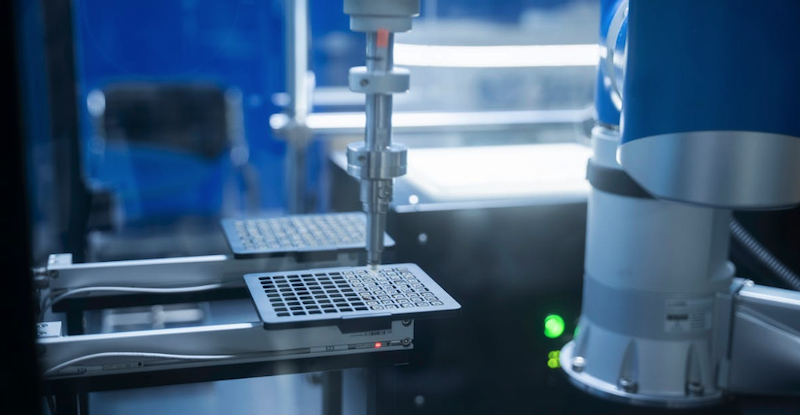
If you’ve ever wondered what actually goes into building an aircraft engine part or a robotic joint that works perfectly every single time, the answer almost always comes back to precision machining.
It’s not the flashiest topic in manufacturing, but it’s quietly responsible for why so many modern technologies can exist at all. CNC machining has evolved dramatically over the past decade, and shops like XTJ CNC in Carmel, Indiana are a good example of where things stand today.
This piece covers what precision machining looks like now, how it connects to robotics and automation, and what’s coming next.
What is Precision Machining?
So basically, precision machining is a process where you take a raw piece of material and cut away everything that isn’t the part you need. That’s the simple version.
What makes it genuinely impressive is how accurate modern CNC machines have gotten. We’re not talking about getting close, we’re talking tolerances at the nanometer scale, on metals, plastics, ceramics, composites, whatever you’re working with.
Newer machines run five or six axes simultaneously, which means they can get to angles and internal features that older setups just couldn’t reach. A few things that make this possible:
- 5-axis and 6-axis CNC machines that don’t need multiple setups to handle complex geometry
- Real-time process monitoring so the machine can catch a problem mid-cut rather than after the part is ruined
- Advanced toolpath software that figures out the most efficient cutting path before anything even starts
XTJ CNC in Carmel, Indiana builds parts using all of this, including things like aerospace brackets, robotics gears, and electronic enclosures. When you’re making something that goes inside a patient or inside a jet, there’s no acceptable margin for error.
And honestly, waste goes down too when your toolpaths are planned properly, which helps with both cost and material efficiency.
Driving Innovation in Robotics and Automation
Spending time in a modern machining shop is kind of eye-opening if you haven’t been in one recently. Robotic arms handle the loading and unloading. Tools change out on their own. Parts get inspected automatically. A lot of shops, including XTJ CNC, run production overnight with no one physically present.
For automotive and electronics manufacturers who need huge volumes of accurate parts on tight schedules, this isn’t a nice-to-have anymore.
What’s changed things even more is AI and machine learning getting baked into the machines themselves. These CNC systems are reading vibration data, torque levels, temperature changes in real time and making their own adjustments based on what they’re seeing.
If a cutting tool starts wearing down faster than expected, the system picks up on it. Setup times have gotten much shorter. Consistency from part to part has improved a lot.
Industry 4.0 connectivity ties everything together. Machines send live data to dashboards, so whoever’s monitoring things can see exactly what’s happening on the floor without walking over. Thermal drift, the kind of thing that used to quietly ruin a batch of parts, gets caught before it becomes a problem.
Lights-out production, running overnight or through weekends without staff, is something XTJ CNC actually does regularly to get parts out faster.
Precision Machining in Future Technologies
Precision machining keeps evolving and a few directions in particular seem worth paying attention to.
Hybrid machining is one of them. It mixes CNC cutting with additive manufacturing, so you can 3D print a near-net shape first and then machine it to final tolerances. The advantage is you can build in internal features that would be unreachable if you tried to machine them afterward.
For aerospace engineers shaving weight off structures, or medical device designers working on implants shaped for a specific patient, hybrid machining solves problems that used to have no clean solution.
Ultra-precision machining is also pushing into materials that used to be a real headache, smart ceramics and high-performance composites that conventional tooling would chew through or crack.
Working at micrometer or nanometer tolerances makes these materials usable for things like advanced optical systems, next-gen sensors, and even hardware for quantum computing.
AI is changing how programs get written for these machines. Generative AI tools can now put together complex toolpath programs on their own, working out the best part orientation and tool motion for the job. At shops like XTJ CNC, this means less time programming and shorter cycle times overall.
Digital twins add to this by letting engineers simulate exactly how a physical machine will behave during a run, including how it drifts and wears, so they can solve problems before any real parts are cut.
Sustainability is becoming a bigger part of how shops operate day to day. Minimum-quantity lubrication, recycled alloys, and smarter material usage are cutting waste and reducing costs at the same time, and producing better parts in the process.
About XTJ CNC
- Business: XTJ CNC
- Spokesperson: Hafiz Pan
- Position: Director of Operations
- Phone: +1 218 527 7419
- Email: hafiz@cncpartsxtj.com
- Location: 506 S Rangeline Rd, Carmel, IN 46032, USA
- Website: http://xtjcnc.com
Frequently Asked Questions about Precision Machining and Innovation
What is precision machining and how does it work?
It’s a subtractive manufacturing process where CNC equipment cuts material away from a workpiece to create a finished part. Modern systems hit nano-scale tolerances and use multi-axis movement to reach complex geometry. Real-time monitoring keeps everything on track, and the process produces very little wasted material when done properly.
How does precision machining contribute to innovation in industries like aerospace and robotics?
These industries need parts that perform exactly as designed, every single time. Precision machining is what makes that level of repeatability possible at production scale. A lot of the advanced systems being built in aerospace and robotics simply couldn’t exist without it.
What role do AI and automation play in modern precision machining?
AI-driven CNC systems read live sensor data during cutting and adjust their own parameters based on what they find. This catches issues early and keeps parts consistent without constant human oversight. Robotic automation handles the physical work like part loading, tool changes, and inspection, so production can run continuously.
How is hybrid machining shaping the future of precision manufacturing?
Hybrid machining combines additive and subtractive processes in one workflow. You can build internal features through 3D printing that would be inaccessible to a cutting tool, then machine the exterior to final tolerances. It opens up geometries that weren’t previously buildable, especially useful for lightweight aerospace parts and custom medical implants.
Why is sustainability becoming important in precision machining?
Waste costs money, and shops are under real pressure to reduce it. Minimum-quantity lubrication cuts coolant use, optimized toolpaths reduce scrap, and recycled alloys lower the environmental cost of raw material. Most of these changes also improve part quality, so it’s not a compromise.
What technologies enable predictive maintenance in precision machining?
IoT sensors on the machines capture live performance data that flows into monitoring systems. Digital twins build virtual models of specific machines and use historical data to predict how they’ll behave. Together these catch early signs of trouble like thermal drift or tool degradation before anything goes wrong on the production floor.
