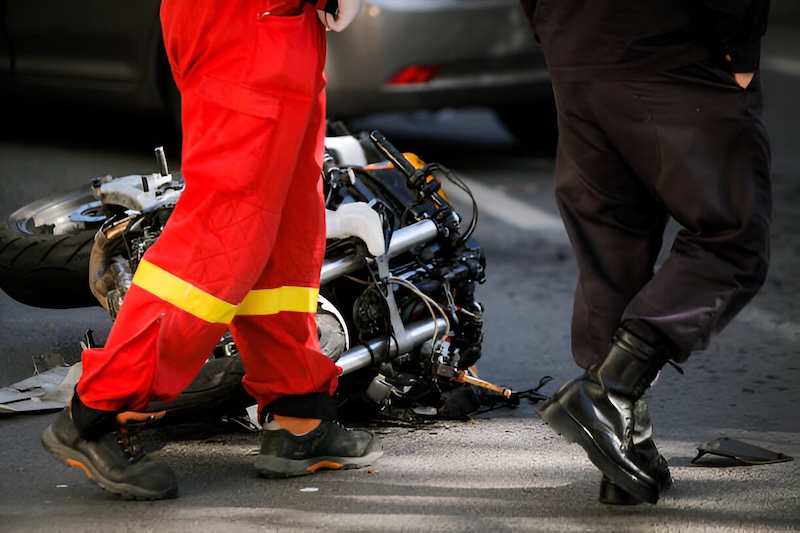
California’s roads are known for their constant movement, from crowded urban freeways in Los Angeles to winding coastal highways traveled by commuters, tourists, and motorcycle enthusiasts alike.
With year-round riding weather and some of the busiest traffic conditions in the country, motorcycles remain a common sight across the state.
However, the freedom and convenience riders experience on California roads also come with serious risks when collisions occur.
Motorcycle accidents often lead to severe injuries that affect far more than immediate medical treatment, leaving victims facing long recoveries, financial uncertainty, and difficult insurance negotiations.
Because every crash involves different injuries, liability issues, and insurance limitations, settlement outcomes can vary dramatically from one case to another. Understanding what influences compensation is critical for injured riders trying to protect their future.
That is why many people researching the average motorcycle accident settlement in California also seek experienced legal guidance to better understand how the details of their case may impact the value of a potential claim.
What Settlement Ranges Actually Look Like
There’s no fixed payout chart, but you do start to see patterns once you look at enough cases.
Minor injury claims often land somewhere between $10,000 and $50,000. These usually involve surface injuries or fractures that heal without long-term impact. Medical treatment is limited, and recovery doesn’t stretch for months.
Moderate injury claims fall in the $50,000 to $250,000 range and often involve surgery, extended rehab, or missed work that disrupts daily life. At this point, the claim starts reflecting more than just medical bills.
Severe injury cases shift the conversation entirely. Spinal damage, traumatic brain injuries, or permanent disability can push settlements past $250,000 and into seven figures. Long-term care costs alone can drive those numbers up fast.
Wrongful death claims can reach several hundred thousand to several million dollars. These cases depend on income loss, family impact, and how clear the liability is.
Still, these are ranges, not promises. Two similar crashes can end with very different outcomes, and that’s where things get interesting.
What Really Moves the Settlement Number
If you strip everything down, settlements are driven by risk. The stronger the case, the more pressure on the insurer to pay fairly.
Injury severity leads the conversation. A short ER visit doesn’t carry the same weight as multiple surgeries or ongoing therapy. The more an injury disrupts someone’s life, the more value it brings to the claim.
Fault and liability matter just as much. California follows comparative fault rules, which means compensation gets reduced if the rider shares responsibility. Even a small percentage can noticeably change the final number.
Insurance coverage limits can quietly cap a case. You might have significant damages, but if the at-fault driver carries minimal coverage, recovery becomes more complicated unless other policies are involved.
Then there’s evidence. Photos, witness accounts, helmet use, and police reports all shape how believable and strong the claim looks. Weak evidence gives insurers room to argue. Strong evidence closes that door quickly.
Legal representation makes a huge difference. Cases handled without legal support often resolve faster, but usually for less. That’s not a coincidence.
Why Motorcycle Claims Feel Different
Motorcycle accidents don’t play out like typical car crashes. Riders don’t have much protection, so injuries tend to be more serious. That alone raises the stakes.
But there’s another layer that people don’t talk about enough: perception. Riders are sometimes viewed as risk-takers, even when they’re not at fault. That bias can creep into how claims are evaluated. A well-prepared case helps counter that. It shifts the focus back to facts instead of assumptions.
A Few Real-World Snapshots
Let us take a closer look:
A rider gets clipped by a car changing lanes. He walks away with a fractured wrist and some road rash. Medical bills stay relatively low. The case settles around $30,000 to $40,000.
Now, take a different scenario. Another rider suffers a spinal injury that requires surgery and months of rehab. Medical costs climb quickly, and daily life changes. That claim might settle closer to $700,000 or more.
In a fatal crash involving a commercial vehicle, the numbers can go even higher. Loss of income, family impact, and liability all combine to push settlements into the millions.
Same category of accident. Completely different financial outcomes.
How California Law Shapes These Cases
California allows lane splitting, which adds a layer of complexity. It’s legal, but it still has to be done safely. If a rider is seen as reckless while splitting lanes, that can reduce compensation. Helmet use is another factor. Riders are required to wear DOT-approved helmets. If they don’t, and a head injury occurs, it can weaken parts of the claim.
Timing also matters more than people think. In most cases, there’s a two-year window to file a claim. Miss it, and the opportunity to recover damages is gone.
So Why Do Settlements Vary So Much?
If you’re looking for a simple formula for motorcycle settlements, you won’t find one. These cases are built on details: injuries, evidence, fault, and negotiation strategy. On the surface, accidents might look similar. But once you dig into injuries, evidence, insurance coverage, and how the claim is handled, the differences add up fast.
If there’s one takeaway here, it’s this: the early steps matter more than people expect. A rushed claim can leave money on the table. A well-prepared one puts you in a stronger position from the start. That gap can be massive. The difference between a rushed settlement and a well-built case can easily mean tens or hundreds of thousands of dollars.
