Europe’s autonomous vehicle sector is entering a potentially important phase, with carmakers, technology companies and mobility operators advancing a growing number of robotaxi, automated driving and autonomous freight programs across the region.
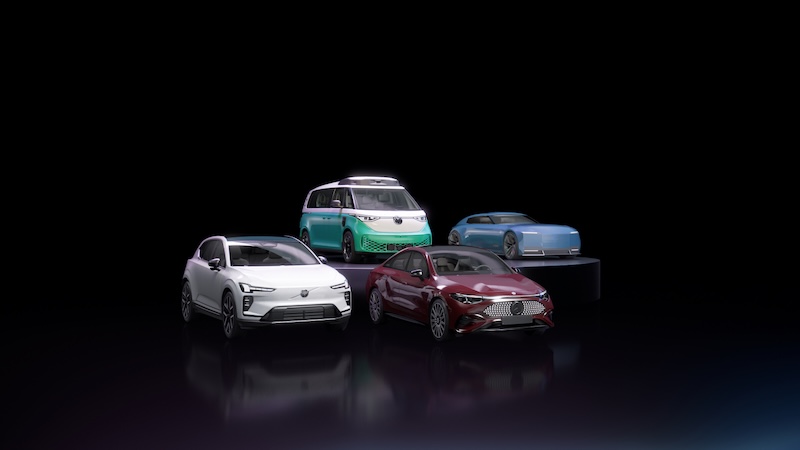
Several of those projects were highlighted at Nvidia’s GTC Berlin event, where companies including Bolt, Lucid, Mercedes-Benz, Volkswagen Commercial Vehicles, Volvo Cars and Einride outlined plans involving higher levels of vehicle automation.
Perhaps the most ambitious is Bolt’s planned European robotaxi program. The mobility company intends to begin gathering real-world driving data in Madrid in 2027, subject to regulatory approval, as it prepares for a proposed European rollout involving at least 25,000 level 4-capable future Lucid vehicles.
Germany is expected to be another priority market.
The program uses Nvidia’s Hyperion computing platform and Alpamayo autonomous-driving software, which Bolt plans to adapt for European roads and combine with its own fleet-management technology and local operations.
Volkswagen Commercial Vehicles, meanwhile, is developing an autonomous version of its ID. Buzz electric van for use by autonomous-driving developers and mobility operators. Its ID. Buzz AD platform is being presented with Nvidia Hyperion as a common computing and sensor architecture capable of supporting different autonomous-driving systems.
Mercedes-Benz is pursuing both level 3 and level 4 technology. The company says its MB.DRIVE ASSIST PRO system, developed with Nvidia, is expected to receive approval for urban point-to-point driver assistance in Germany.
Volvo Cars is also adopting Nvidia’s Hyperion and Alpamayo technologies for future automated-driving systems.
The activity extends beyond passenger vehicles. Swedish autonomous trucking company Einride is developing its next-generation autonomous driving system using the same computing architecture, while Tier IV and the Technical University of Munich plan to use it in work on autonomous public transport in Germany.
The projects illustrate the variety of approaches now emerging in Europe. Some manufacturers are concentrating on increasingly capable driver-assistance systems, while others are working towards level 4 vehicles designed to operate without continuous human supervision within defined conditions.
Safety validation is consequently becoming an increasingly important part of autonomous vehicle development. Nvidia used the Berlin event to introduce Halos SAFE, a framework intended to connect simulation, software and hardware testing, road testing and fleet monitoring to produce measurable safety evidence.
Nvidia founder and CEO Jensen Huang said: “Robotaxis are the first mass-market application of robotics and physical AI, reinventing how people and goods move.”
Whether robotaxis become a mass-market application as quickly as their developers expect remains uncertain. But the expanding number of European projects suggests the region is becoming an increasingly significant testing ground for autonomous mobility – particularly as companies begin moving from development programs towards regulated operation on public roads.
