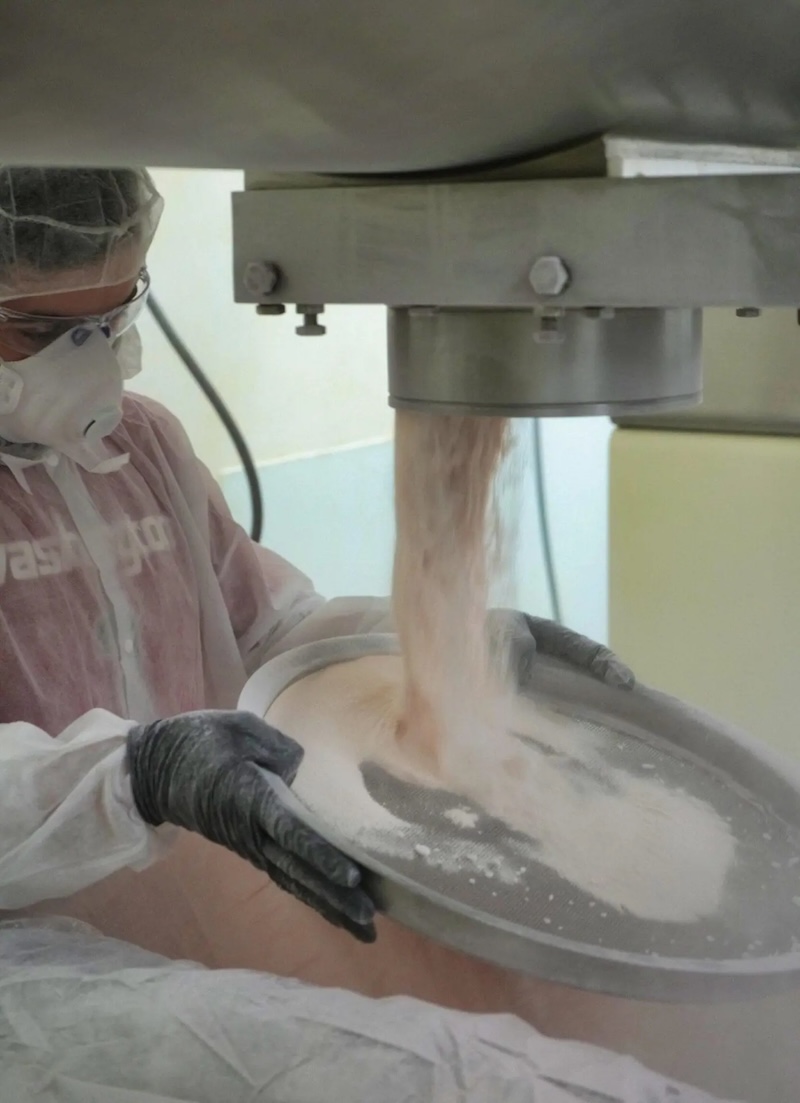
Automation has redefined supplement manufacturing, with state-of-the-art filling lines now setting higher standards of quality and efficiency. These systems bring advanced technologies, but also introduce new protocols and expectations for quality assurance.
This article explores the ways automated filling lines are raising the bar for supplement manufacturing, highlighting breakthroughs, best practices, and critical controls in today’s competitive marketplace.
The rise of automation in supplement manufacturing has fundamentally transformed how products are made, packaged, and evaluated for quality.
As a powder supplement manufacturer, adopting automated filling lines means embracing technologies that deliver highly precise fill weights at increased speed, which is now an industry standard.
For teams managing custom powder supplement manufacturing, automation not only supports consistency and scalability but also enables manufacturers to meet rigorous GMP standards and market expectations for clean-label, third-party-tested supplements.
These advancements in filling lines allow for faster throughput, yet every improvement introduces fresh quality assurance challenges that manufacturers must overcome to excel.
The impact of automation on quality standards
Modern automated filling lines deliver precise dosing, minimizing the risk of human error and ensuring every supplement container meets label claims.
For a supplement powder manufacturer, technologies such as gravimetric dosing, real-time sensors, and servo-driven augers help maintain tight control over consistency, which is critical for both compliance and consumer trust.
Automated lines also support quick changeovers between different SKUs, meeting demands for small-batch and high-volume runs without sacrificing output quality.
As throughput increases, so do the expectations from regulators and customers. The fast pace of modern lines means that any process deviation, such as calibration drift in a checkweigher, can create quality concerns across dozens or even hundreds of units within minutes.
For this reason, robust protocols, including continuous sensor monitoring and automated reject systems, have become standard for a powder manufacturer focused on reliable, third-party-tested products. These measures not only reduce risk, they establish the foundation for heightened QA in a high-throughput environment.
Beyond precision and consistency, automated filling lines enable manufacturers to implement sophisticated environmental controls that were impractical with manual operations.
In custom powder manufacturing environments, climate-controlled filling zones maintain optimal temperature and humidity levels, preventing moisture absorption in hygroscopic powders and ensuring ingredient stability throughout the packaging process.
These controlled environments work in tandem with automated systems to preserve product potency and extend shelf life, particularly for sensitive formulations containing probiotics, enzymes, or delicate botanical extracts.
The integration of environmental monitoring with filling automation creates a comprehensive quality ecosystem where every variable affecting product integrity is tracked, controlled, and documented automatically.
Technological advances in filling and monitoring
The success of automated filling lines relies on the integration of advanced equipment and real-time data acquisition. Gravimetric dosing systems control fill weights to tight tolerances, while volumetric filling can offer flexibility for less demanding specifications.
In nutrition powder co-manufacturing, intelligent sensors are critical – monitoring everything from humidity and particulate levels to fill weight drift – enabling manufacturers to respond immediately to deviations and prevent non-compliant products from reaching the market.
Vision inspection systems and inline checkweighers add further layers of protection by continuously verifying container integrity, fill weights, and correct labeling.
For example, if a dust management sensor detects an anomaly or a checkweigher finds an out-of-range fill, automated controls can halt production or divert suspect units for review.
This proactive approach underpins excellence in both custom powder supplement manufacturing and large-scale co-manufacturing settings, where quality is validated and documented in real time. Many brands also rely on a custom powder manufacturer to align inspection parameters with unique formulation behaviors.
Streamlined documentation and continuous improvement
One of the transformative aspects of automation is its impact on documentation and audit readiness. Electronic batch records capture every process change, sensor alarm, and QA intervention as it happens, eliminating the reliance on paper logs.
For a supplement powder manufacturer, this systematized documentation accelerates both traceability and regulatory compliance, making it easier to respond to audits and demonstrate the integrity of each production run.
Analytics-driven platforms further enhance automated supplement manufacturing by tracking trends and identifying risks proactively. Techniques like statistical process control (SPC) allow teams to detect process drift, such as a change in average fill weight, prompting timely investigation or recalibration.
In nutrition powder co-manufacturing, these data-driven practices help refine operations continuously, supporting efficiency, minimizing batch rejection, and maintaining the high quality that automated filling lines make possible in the modern supplement manufacturing landscape.
For brands pursuing custom powder manufacturing at scale, partnering with a powder manufacturer can also strengthen continuous-improvement cycles through standardized KPIs and validated corrective actions. As regulatory expectations evolve, a custom powder manufacturer can use audit findings to tune controls without slowing production.
