The autonomous driving company is moving beyond self-driving cars and into the broader world of Physical AI
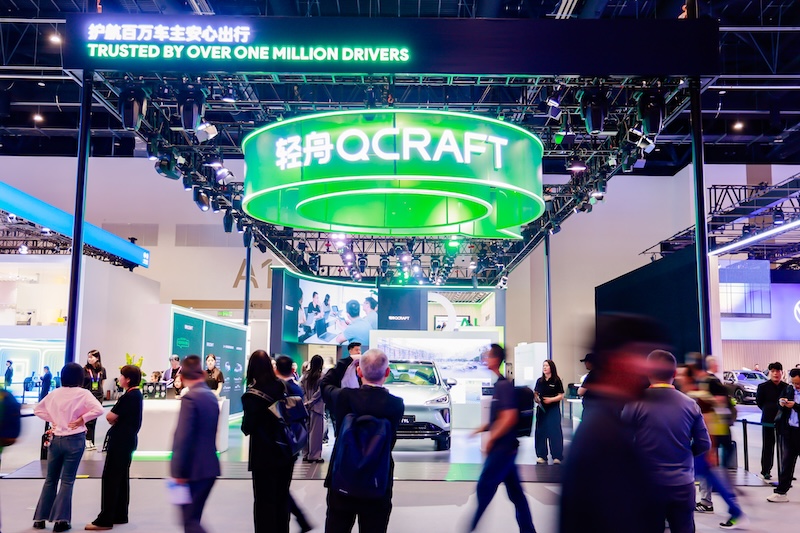
QCraft, one of the major providers of autonomous driving technology to OEMs, used this year’s Beijing Auto Show to unveil what it calls the QCraft Physical AI Model. This was a signal that the company sees its future not just in autonomous vehicles, but in a wider category of AI systems that interact with the physical world.
CEO Dr. James Yu framed the pivot in sweeping terms, arguing that the industry is entering a new phase. Where the last decade focused on teaching AI to drive, the next will be defined by Physical AI: systems that can perceive, reason about, and act in real-world environments.
It’s a thesis shared by a growing number of companies in robotics and autonomy, but QCraft is betting that its technical foundation gives it a head start.
World Models Meet Reinforcement Learning
At the core of the announcement was QCraft’s unified architecture combining World Models with Reinforcement Learning. The approach works on two levels: in the cloud, an upgraded World Model generates rare and dangerous driving scenarios such as wrong-way cyclists, sudden pedestrian appearances, extreme weather by using natural language commands.
On the vehicle side, a World Behavior Model fuses a Vision-Language-Action (VLA) model with RL algorithms, creating what the company describes as full-chain integration from perception to action.
The practical idea is straightforward: run millions of training cycles in simulation, then transfer that learned capability to real cars. QCraft argues this is not an incremental algorithm improvement but a fundamentally different R&D approach.
QPilot MAX: The Production Play
The more immediately tangible announcement was QPilot MAX, a city-level Navigate on Autopilot (NOA) solution running on a 500+ TOPS computing platform. QCraft says the system is already deployed across 25 production models from China’s largest OEM automotive manufacturer, with another 50 models expected this year.
The company is leaning hard on safety metrics to differentiate. QPilot MAX’s Automatic Emergency Braking system reportedly has a false activation rate of just one per 500,000 kilometers, which is well below the industry average.
The company claims it helps users avoid roughly 146,000 potential accidents annually. Yu pointed to insurance premiums as the ultimate proof point: if the system genuinely makes driving safer, he argued, that should show up in what drivers pay.
Robotaxis, Robovans, and Last-Mile Logistics
QCraft also shared updates on its L4 programs. Its Robotaxi solution uses production-grade vehicle configurations rather than sensor-heavy custom build. This approach echoes the company’s philosophy of prioritizing AI capability over hardware. On the logistics side, QCraft showcased the QC-1, a robot designed for final-100-meter delivery from vehicle to doorstep.
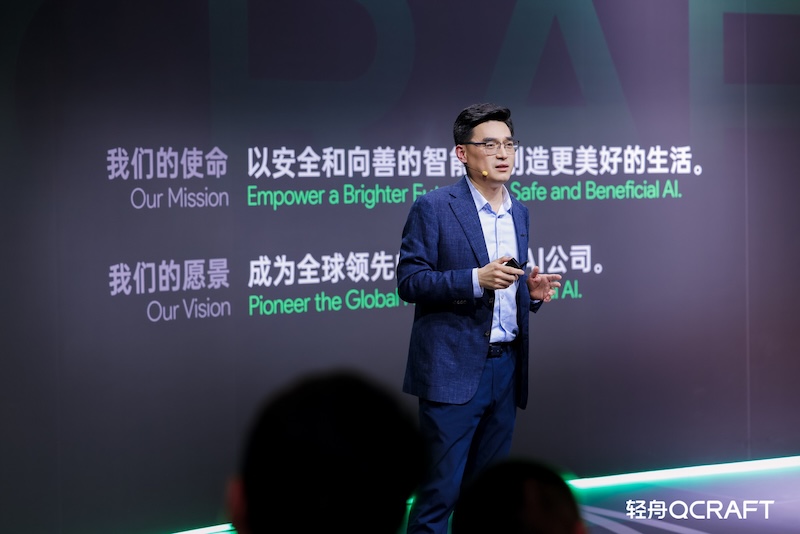
The company rounded out its Beijing appearance with a new mission statement – “Empower a Brighter Future with Safe and Beneficial AI” – and noted that while it was presenting in Beijing, its vehicles were simultaneously undergoing road testing in Munich and Paris.
