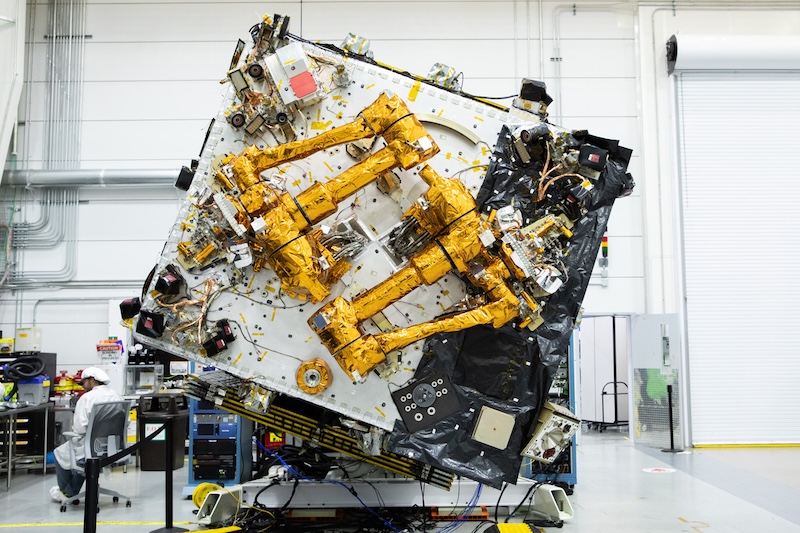
Defense Advanced Research Projects Agency (DARPA) and its industry partners are preparing for the launch of a robotic satellite servicing mission designed to demonstrate on-orbit maintenance and upgrade capabilities for spacecraft operating in geosynchronous orbit.
The mission, known as Robotic Servicing of Geosynchronous Satellites (RSGS), is scheduled for launch in summer 2026 and represents one of the most ambitious attempts so far to commercialize robotic satellite servicing technologies.
At the center of the mission is the Mission Robotic Vehicle (MRV), a spacecraft equipped with a highly dexterous robotic servicing system capable of performing tasks such as satellite inspections, repairs, relocation, upgrades, and anomaly resolution while in orbit.
The program is focused on geosynchronous orbit (GEO), where hundreds of commercial, military, and government satellites operate approximately 36,000 kilometers above Earth.
DARPA is leading development of the robotic servicing technologies in collaboration with the Naval Research Laboratory and National Aeronautics and Space Administration, while SpaceLogistics, a subsidiary of Northrop Grumman, is responsible for system integration.
During a recent program update, RSGS Program Manager James Shoemaker emphasized the importance of combining government-developed robotics technology with existing commercial spacecraft infrastructure.
“The RSGS program is a government-private partnership for the next wave of satellite servicing,” said Shoemaker.
“This upcoming demonstration is about proving the commercial viability of on-orbit servicing in GEO, creating a capability that will be available for both commercial industry and the US government.”
The long-term goal of the RSGS program is to shift the satellite industry away from the traditional model of treating spacecraft as disposable assets once fuel supplies are depleted or hardware issues emerge.
Instead, robotic servicing systems could allow satellites to be upgraded, repositioned, repaired, or extended operationally while remaining in orbit.
Supporters of the technology argue that robotic servicing could significantly improve the resilience and sustainability of space infrastructure while reducing costs associated with replacing satellites.
The mission also reflects growing interest across the aerospace industry in autonomous robotic systems capable of operating in complex orbital environments with limited or no human intervention.
If successful, RSGS could help establish a commercial market for robotic servicing missions while opening the door to future in-space assembly, manufacturing, and infrastructure maintenance programs.
