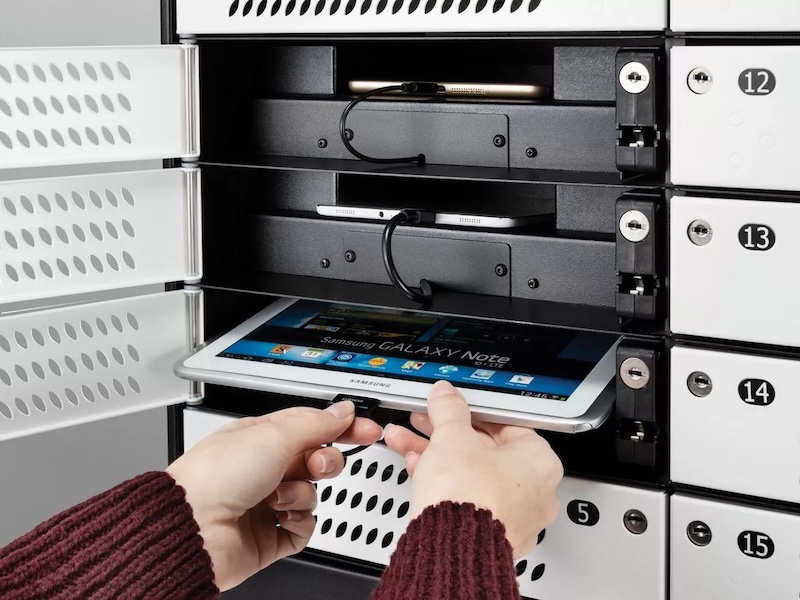
The lockers that many of us are familiar with are pretty low-tech. Essentially consisting of rows of simple boxes or cages that can only be secured with a padlock, it’s tricky to actually use these lockers effectively, especially in retail settings.
There are a number of recent technological innovations that have made to lockers in the retail sector that have resulted in them bring a whole lot more adaptable and, as a result, useful.
Below, we explore a range of different contexts in which these lockers can be of instrumental importance, from click-and-collect services to asset control.
Click-and-collect
Click-and-collect services have become increasingly common in a range of different retail sectors. Customers can conveniently make an order in the comfort of their own home, browsing options online, and then pick it up at a convenient moment.
Smart lockers allow shops to store the order in a convenient location, where the customer can then come and access it at their own convenience.
These lockers can either be located in-store, or at other convenient locations like car parks, stations, or in other shops that have extended opening hours.
Key-control
Smart lockers are also exceptionally useful for managing keys. Whether that’s in a hotel or a car dealership, keys can be stored in lockers, and then taken out or returned by those with access authority whenever they want.
This can also be very useful in retail settings, allowing employees to access various keys without having to first go through their manager. Access can be provided, restricted and changed remotely via an app, meaning that no one has more or less access to sensitive areas than they actually need.
Personal storage
These lockers can also be used for personal storage purposes. Whether for customers to store their bags before entering a shop or for employees to store belongings during a shift, having a locker that doesn’t require a separate lock and that can be remotely accessed and tracked by management can be very useful.
If you’re considering investing in such a solution, you’ll first need to assess the number of lockers you’ll likely need, and the level of security necessary to secure these belongings.
Asset control
In a wide range of retail environments, you’ll also find that intelligent lockers can be used to protect and control a number of employee assets.
From handheld scanners to laptops, these assets often need to be shared between employees across shifts, and you need a convenient, secure way of facilitating this.
Asset lockers from providers like Traka are specifically designed to cater to these kinds of tasks, and can be highly effective. It’s important to choose a solution with functionality that’s adapted to the assets you’re managing.
Retail lockers can help to cut costs, increase efficiency and decrease asset losses in a wide range of sectors.
It’s worth taking a step back and assessing the assets that are currently located in your premises on a daily basis, so that you can determine what needs protecting and which kinds of solutions could be useful in achieving those goals.
