• Skip to primary navigation
  • Skip to main content
  • Skip to primary sidebar
  • Skip to secondary sidebar
  • About
    • Contact
    • Privacy
    • Terms of use
  • Shop
    • Cart
    • Checkout
    • My Account
  • Advertise
    • Advertising
      • Buy ad space
    • Case studies
    • Design
    • Email marketing
    • Features list
    • Lead generation
    • Magazine
    • Press releases
    • Publishing
    • Sponsor an article
    • Webcasting
    • Webinars
    • White papers
    • Writing
  • Subscribe to Newsletter

Robotics & Automation News

Where Innovation Meets Imagination

  • Home
  • News
  • Features
  • Editorial Sections A-Z
    • Agriculture
    • Aircraft
    • Artificial Intelligence
    • Automation
    • Autonomous Vehicles
    • Business
    • Computing
    • Construction
    • Culture
    • Design
    • Drones
    • Economy
    • Energy
    • Engineering
    • Environment
    • Health
    • Humanoids
    • Industrial robots
    • Industry
    • Infrastructure
    • Investments
    • Logistics
    • Manufacturing
    • Marine
    • Material handling
    • Materials
    • Mining
    • Promoted
    • Research
    • Robotics
    • Science
    • Sensors
    • Service robots
    • Software
    • Space
    • Technology
    • Transportation
    • Warehouse robots
    • Wearables
  • Press releases
  • Events

robotics and automation

Robbyant open-sources LingBot-VLA model as a ‘universal brain’ for robots

March 13, 2026 by Sam Francis

Robbyant, an embodied AI company within Alibaba affiliate Ant Group, has announced the open-source release of LingBot-VLA, a vision-language-action (VLA) model designed to serve as a “universal brain” for real-world robotics, which “helps reduce post-training costs and accelerate the path to scalable deployment”, according to the company.

So far, LingBot-VLA has been successfully adapted to robots from leading manufacturers, including Galaxea Dynamics and AgileX Robotics, demonstrating strong cross-morphology transfer capabilities across diverse robot platforms.

The model’s performance was evaluated on the GM-100 benchmark, a comprehensive evaluation suite open-sourced by Shanghai Jiao Tong University that comprises 100 real-world tasks. [Read more…] about Robbyant open-sources LingBot-VLA model as a ‘universal brain’ for robots

Filed Under: Artificial Intelligence, Features Tagged With: Ant Group robotics AI, automation news, embodied AI robotics, LingBot VLA model, Robbyant robotics AI, robot foundation models, robotics and automation, robotics and automation news, robotics news, universal robot brain AI, vision language action robots

HighRes and Opentrons showcase ‘industry’s first’ AI agent-to-agent lab automation workflow

March 13, 2026 by Sam Francis

HighRes, a laboratory automation and orchestration software provider, and Opentrons Labworks, a laboratory robotics company building the physical infrastructure for AI-driven autonomous science, have agreed a strategic partnership to co-develop “the industry’s first AI agent-to-agent laboratory workflow”.

Together, the companies are introducing a new model for workflow automation that connects intuitive, modular robotics with enterprise-grade orchestration and AI-ready infrastructure. They demonstrated their innovation at the recent Society for Laboratory Automation and Screening event.

This collaboration brings Opentrons’ flexible, high-throughput Opentrons Flex robotic platforms and OpentronsAI, together with the FlexPod Configurable Lab Automation Platform and Cellario, HighRes’ industry-leading scheduling and orchestration software, enabling scientists to adopt automation quickly and scale seamlessly as workflows grow in complexity. [Read more…] about HighRes and Opentrons showcase ‘industry’s first’ AI agent-to-agent lab automation workflow

Filed Under: Health, News, Science Tagged With: agent-to-agent AI workflow, AI lab automation, automation news, autonomous laboratory workflows, HighRes Cellario software, laboratory automation robotics, Opentrons Flex robot, robotic lab automation systems, robotics and automation, robotics and automation news, robotics news

MIPS and Inova partner to create new robotics reference platform for physical AI systems

March 13, 2026 by Sam Francis

MIPS, a developer of compute technologies for autonomous edge platforms, has partnered with German semiconductor company Inova Semiconductors to create a new robotics control reference platform aimed at accelerating the development of humanoid robots and other physical AI systems.

The platform combines MIPS’ RISC-V-based processors with Inova’s high-speed data communication technology to provide a scalable architecture for robotics applications that require real-time control, AI processing, and secure connectivity.

According to the companies, the platform is designed as a custom system-on-chip (SoC) solution capable of supporting the full “sense-think-act-communicate” chain required for advanced robotic systems. [Read more…] about MIPS and Inova partner to create new robotics reference platform for physical AI systems

Filed Under: Artificial Intelligence, Computing, News Tagged With: APXpress data interconnect, automation news, humanoid robot processors, Inova Semiconductors, MIPS RISC-V processors, physical ai robotics, robotics and automation, robotics and automation news, robotics compute platform, robotics edge AI hardware, robotics news

Cyngn on track to sell more robots in this quarter than in all of 2025

March 13, 2026 by Sam Francis

Cyngn says it is continuing to see “commercial momentum” for its autonomous vehicle solutions, driven by expanding customer deployments, increased utilization across existing sites, and accelerating sales activity entering 2026.

According to Marty Petratis, Cyngn’s VP of sales, the company is on track to sell more in Q1 of 2026 than all of last year based on current bookings and pipeline, although the company doesn’t provide unit sales figures.

Cyngn has seen a steady build in customer demand as enterprise manufacturers move from pilots into production deployments of its DriveMod Tugger. These deployments typically begin by automating a single repetitive material transport route within a facility. [Read more…] about Cyngn on track to sell more robots in this quarter than in all of 2025

Filed Under: News, Warehouse robots Tagged With: automation news, autonomous material handling robots, cyngn autonomous vehicles, DriveMod Tugger, factory logistics automation, industrial autonomous vehicles, manufacturing automation vehicles, Nvidia Isaac Sim robotics, robotics and automation, robotics and automation news, robotics news

7 Board Questions on AI Risk for Robotics Firms

March 13, 2026 by Sam Francis

Robotics companies are scaling AI faster than most boards are scaling oversight. Autonomous systems now make real-time decisions in physical environments where errors can cause injury, regulatory scrutiny, and shareholder claims.

Directors who ask sharper questions before expansion can protect enterprise value while still supporting innovation. Each section below highlights a board-level question worth asking before approving broader deployment of AI-enabled robotics.

1. Who Owns Model Risk?

Model risk should never drift between engineering, compliance, and product teams. Boards need a clearly identified executive or committee responsible for validation, monitoring, retraining decisions, and escalation protocols.

According to the National Institute of Standards and Technology, effective AI risk management depends on defined governance structures and continuous oversight.

Robotics companies should be able to show documented ownership of model lifecycle decisions. They should also regularly report to the board that treats AI risk with the same seriousness as financial controls.

2. How Do We Verify Data Provenance?

Training data shapes how robots move, decide, and react in real-world environments. Directors should ask where data originates, how usage rights are documented, and what safeguards prevent biased or corrupted datasets from entering production systems.

AI oversight does not exist separately from corporate governance. Board responsibilities are shaped by the state whose corporate law governs the board, which makes experienced local counsel an important part of technology risk oversight.

In jurisdictions such as Delaware, these responsibilities are interpreted through Delaware corporate governance law, which shapes how boards supervise emerging risks like AI.

Working with a legal team that understands both governance frameworks and emerging technology risk helps ensure AI-related discussions, committee structures, and disclosures reflect active and informed supervision.

3. Is There a Documented Safety Case?

A credible safety case explains why an autonomous system is safe within defined operational limits. Directors should expect clarity around environmental assumptions, system constraints, and known failure modes.

The World Economic Forum has emphasized responsible AI governance frameworks that prioritize accountability and safety. For robotics firms, that translates into independent validation, scenario testing, and documented evidence that supports deployment decisions rather than relying solely on internal confidence.

4. Can Humans Override the System?

Human-in-the-loop controls only work if they function during stress and system degradation. Directors should understand how override mechanisms perform during sensor failure, connectivity loss, or unexpected environmental inputs.

Management teams should be prepared to demonstrate the following:

  • Clear triggers requiring human intervention
  • Real-time visibility into system decision logic
  • Logged override events preserved for review

Board scrutiny of override design reinforces a culture where safety and accountability outweigh speed-to-market pressure.

5. What is the Incident Response Plan?

Every robotics firm needs a tested plan for AI failure. Directors should ask who leads response efforts, how customers are notified, and how regulators are engaged if an incident occurs.

Rapid, transparent response procedures can reduce enforcement risk. And they can signal responsible governance when something goes wrong.

6. Are Audit Trails and Logs Sufficient?

Autonomous systems make layered decisions that may be difficult to reconstruct without proper logging. Boards should confirm that teams can trace data inputs, model versions, and outputs tied to any specific event.

Strong audit trails support internal investigations and external inquiries. They also demonstrate that explainability and accountability are embedded in system architecture rather than added after an incident.

7. How Are Cybersecurity and Suppliers Managed?

Connected robots expand the attack surface for malicious actors. Directors should ask how frequently penetration testing occurs, how software updates are authenticated, and how vulnerabilities are disclosed internally.

Supplier diligence deserves equal focus. Third-party hardware and software components can introduce systemic weaknesses, so vendor vetting, contractual safeguards, and ongoing monitoring should receive board-level visibility.

Strengthening Board Oversight of AI Risk for Robotics Firms

Scaling autonomy without disciplined oversight invites preventable exposure. Boards that systematically address ownership, data governance, safety validation, cybersecurity, and regulatory alignment create durable guardrails for growth.

If your organization is evaluating its approach to AI risk for robotics firms, experienced governance counsel can help align board processes with fiduciary expectations and emerging technology realities. And if this article was helpful, check out our other content.

Filed Under: Business, Robotics Tagged With: AI oversight board governance, AI risk management framework, AI risk robotics, automation news, autonomous systems safety, robotics and automation, robotics and automation news, robotics cybersecurity risk, robotics governance, robotics news

What are Biosafety Cabinets?

March 13, 2026 by Sam Francis

Picture a glass-fronted workstation that behaves a bit like an invisible shield. Air flows in carefully controlled patterns, almost choreographed, to keep hazardous particles from escaping while also protecting whatever sample sits inside.

That airflow matters. A lot.

Air is pulled inward through the cabinet’s front opening, forming a barrier that prevents stray microbes or hazardous aerosols from drifting out toward the operator or the surrounding room.

At the same time, filtered air flows downward over the work surface. Think of it as a gentle sterile “air curtain.” It sweeps contaminants away from samples so the materials you’re working with remain clean.

In short? The cabinet protects three things simultaneously: the person working, the experiment itself, and the wider laboratory environment. A neat trick for a metal box with a fan and filters.

Choosing the right cabinet is not trivial

Labs don’t just grab whichever unit is on sale that month. Selection depends on a few practical questions.

What kind of organisms are involved?
How dangerous are they?
Will chemicals or radioactive compounds be used alongside the biological work?

These questions tie into something called risk groups, which run from relatively harmless microbes to truly nasty pathogens.

Roughly speaking:

  • Risk Group 1-3 organisms: standard biosafety cabinets usually do the job
  • Risk Group 4 agents: that’s the serious territory. Think maximum containment systems
  • Experiments involving volatile chemicals or radionuclides: special airflow designs are needed

Different cabinet classes exist precisely because no single design fits every situation.

The different classes of biosafety cabinets

Not all cabinets are created equal. Some are fairly basic. Others resemble miniature containment vaults.

Class I

This is the simplest design you’ll encounter. Air is pulled inward and then filtered before being exhausted. It protects the person operating the cabinet and the lab environment.

What it doesn’t do particularly well is protect the sample itself from contamination.

Still, for work involving lower risk microorganisms, it’s perfectly adequate.

Class II

Now we’re talking about the workhorse of modern laboratories. If you step into a university research facility or hospital microbiology lab, chances are high you’ll see one of these humming away.

Class II cabinets protect everything: the user, the room, and the sample.

Here’s how they manage that balancing act:

Roughly 70 percent of the air inside the cabinet recirculates as filtered downward airflow. The remaining portion is exhausted after passing through high-efficiency filters. That combination maintains sterile conditions inside while preventing hazardous particles from escaping.

Most labs rely on Type A2 cabinets, the most common configuration.

Occasionally, when toxic chemicals are involved, these cabinets are connected to exhaust ducts to keep fumes moving out of the workspace.

Class II Type B2

This variant takes things a step further. Instead of recirculating air inside the cabinet, all air is exhausted after filtration.

Nothing cycles back through the workspace.

Because of that design, Type B2 cabinets are often used when biological work is combined with toxic chemicals. No recirculation means less chance of hazardous buildup.

Some safety engineers even argue they’re the safest version of Class II cabinets, simply because the full-exhaust system acts like a built-in safety net.

Class III

This is the heavy-duty containment option. The “space suit” of bio safety cabinet.

Everything inside is completely sealed off. Operators manipulate materials through glove ports built into the cabinet wall. Air entering and leaving the system is heavily filtered, often more than once.

These cabinets are typically reserved for work involving the most dangerous pathogens known. The kind of organisms that make epidemiologists lose sleep.

A quick note on biosafety levels

Laboratories themselves are categorized by biosafety levels, which define how dangerous the materials being handled are.

There are four main levels.

  1. BSL-1 is the lowest tier. Harmless microbes used in teaching labs usually fall here. Basic precautions, handwashing sinks, and common sense are generally enough.
  2. BSL-2 involves pathogens that can cause disease but are manageable with standard safety practices. Think organisms like certain hepatitis viruses or Salmonella.
  3. BSL-3 laboratories deal with pathogens capable of causing serious illness, often transmitted through the air. Tuberculosis bacteria, for instance, belong here. Specialized ventilation and strict procedures become essential.
  4. Then there’s BSL-4. Rare facilities. Extreme containment. These labs handle agents such as hemorrhagic fever viruses where vaccines or treatments may not exist. Workers typically wear full-body positive-pressure suits, and Class III cabinets often form part of the containment system.

Filters: the unsung heroes

If the cabinet is the fortress, the filters are the gatekeepers.

There are two types dominate modern biosafety cabinets.

  • HEPA filters, which capture 99.99 percent of particles around 0.3 microns in size.
  • And ULPA filters, which are even finer, trapping about 99.999 percent of particles down to roughly 0.12 microns.

ULPA filters are often described as roughly ten times more efficient than standard HEPA filters. Not that HEPA is weak. It’s already incredibly effective.

But when dealing with biological hazards, “almost perfect” sometimes isn’t quite perfect enough.

Design details matter more than you’d think

You might assume all cabinets look roughly the same. Front window. Steel work surface. Maybe a control panel.

Yet small design choices can make a surprising difference.

For instance, airflow enters through a grille near the front of the cabinet. If a researcher accidentally blocks that grille with their arms or equipment, airflow can become disrupted. That, in turn, weakens the protective barrier.

Manufacturers try to reduce that risk with clever tweaks, like raised armrests or curved air grilles that discourage obstruction.

Controls and alarms

Older cabinets were almost laughably simple. Flip a switch. Fan starts. Light turns on.

Modern units are smarter.

Some now include digital microprocessor systems that monitor airflow velocity, sash position, filter performance, and other parameters. If something drifts out of safe operating range, alarms kick in.

Windows, trays, and ergonomics

Many cabinets use tempered safety glass that stays largely intact if shattered, reducing the chance of hazardous exposure. Some windows tilt forward slightly rather than standing perfectly vertical, which reduces glare and makes long work sessions easier on the eyes.

Inside the cabinet, the work surface can be a single solid tray or multiple removable panels.

Single trays contain spills better. Multi-piece trays are easier to lift out and clean.

Like so many things in lab design, it’s a trade-off.

And yes, ergonomics count

Researchers may spend hours inside a biosafety cabinet. Poor design can quickly turn that into an uncomfortable experience.

Good cabinets consider things like:

  • Control panels placed where both seated and standing operators can reach them
  • Bright but glare-free lighting inside the work area
  • Quiet blowers, ideally under about 67 decibels
  • UV lamps positioned so they don’t shine directly into someone’s eyes

Little details. They matter after the fourth hour of repetitive pipetting.

A few practical safety habits

Owning a biosafety cabinet doesn’t magically make work safe. Proper use still matters.

A few rules that experienced lab workers repeat endlessly:

  • Don’t confuse biosafety cabinets with laminar flow hoods. They serve different purposes.
  • Never ignore alarms. If the cabinet complains, something’s wrong.
  • Avoid using open flames inside the cabinet.
  • Don’t turn it into a storage shelf.
  • Keep airflow unobstructed whenever possible.

Also important: certification. Cabinets should be tested regularly, usually once a year, to confirm that airflow patterns and filters are still performing properly.

Because when containment fails, the consequences can escalate quickly.

Filed Under: Research, Science Tagged With: automation news, biosafety cabinets, biosafety level labs, Class II biosafety cabinet, HEPA filtration laboratories, lab airflow containment, laboratory containment systems, laboratory safety equipment, robotics and automation, robotics and automation news, robotics news

Tesollo launches compact humanoid robotic hand aimed at growing high-DoF robotics market

March 13, 2026 by Sam Francis

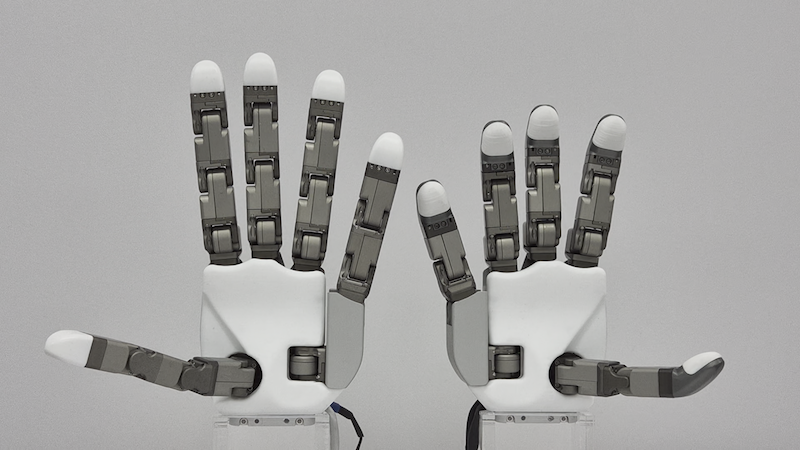
Tesollo, a specialist in robotic grippers, has launched a new compact humanoid robotic hand designed to expand adoption of high-degree-of-freedom manipulation systems in humanoid robots.

The new device – called the DG-5F-S – is a miniaturized, lightweight version of the company’s existing DG-5F-M robotic hand and is intended to make advanced robotic manipulation easier to integrate into a wider range of humanoid platforms.

The robotic hand is built on a five-finger architecture with 20 degrees of freedom (DoF), enabling precise grasping and dexterous manipulation required for humanoid robots operating in complex environments. [Read more…] about Tesollo launches compact humanoid robotic hand aimed at growing high-DoF robotics market
Filed Under: Components, Humanoids, News Tagged With: automation news, dexterous robot hands, DG-5F-S robotic hand, high DoF robotic hand, humanoid robot manipulation, humanoid robotic hand, humanoid robotics hardware, robotics and automation, robotics and automation news, robotics news, Tesollo robotic grippers

Technical perspective: From freeze to flow – new EU regulation redefines robotics software qualification 

March 13, 2026 by Sam Francis

By Sjoerd van der Zwaan, chief product officer, Solid Sands

The new EU Regulation 2023/1230 is set to enter force on 20 January 2027, replacing the long-standing Machinery Directive 2006/42/EC.

The implications for machinery manufacturers are profound because the regulation extends the scope of machine safety to include software-driven, autonomous, and AI-enabled systems.

As a result, the need to qualify machine software and its toolchain as part of a continuous, lifecycle-based process comes into sharp regulatory focus. [Read more…] about Technical perspective: From freeze to flow – new EU regulation redefines robotics software qualification 

Filed Under: Features, Industry Tagged With: AI machine safety regulation, automation news, cyber resilience act machinery, EU AI Act robotics, EU Regulation 2023/1230, industrial robot compliance, machinery regulation software, robotics and automation, robotics and automation news, robotics news, robotics software safety, software toolchain qualification

Corvus Robotics installs ‘fully autonomous’ drone-based inventory system at Dermalogica global headquarters

March 13, 2026 by Sam Francis

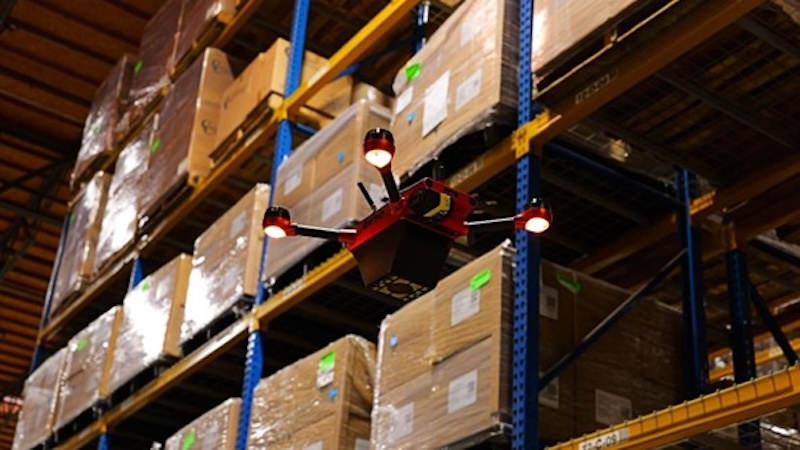
Corvus Robotics has installed of its Corvus One autonomous inventory management system at Dermalogica’s global headquarters and primary distribution center in Carson, California. The facility manufactures and distributes professional-grade skincare products to retail, wholesale, and e-commerce channels worldwide.

Operating live inside the Dermalogica warehouse, the Corvus One drone system performs fully autonomous aerial inventory scans outside of active picking hours. The system images the warehouse 52 times per year, representing a 600 percent increase in inventory imaging frequency compared to prior manual cycle counting processes.

Before deployment, inventory counting required a dedicated cycle counter and could take up to two months to complete a full pass through the facility. With Corvus One, Dermalogica has repurposed approximately 120 labor hours per month, reallocating that time to higher-value operational work. [Read more…] about Corvus Robotics installs ‘fully autonomous’ drone-based inventory system at Dermalogica global headquarters

Filed Under: Drones, News, Warehouse robots Tagged With: AI warehouse inventory management, automation news, autonomous warehouse drones, Corvus Robotics drone system, Dermalogica distribution center, drone warehouse automation, inventory scanning robotics, robotics and automation, robotics and automation news, robotics news, supply chain automation, warehouse inventory drones

Hexcel materials used in ‘business aviation’s first all-composite wing’ on Dassault Falcon 10X

March 13, 2026 by Sam Francis

Advanced composites manufacturer Hexcel says it supplied key structural materials for the wing of Dassault Aviation’s newly unveiled Falcon 10X, a next-generation ultra-long-range business jet featuring what the company describes as “business aviation’s first all-composite wing”.

The aircraft was rolled out at Dassault’s Bordeaux-Mérignac facility in France before an audience of more than 400 customers, partners, and aviation industry leaders, marking a major milestone in the Falcon 10X development program.

Hexcel was selected in 2022 to provide structural prepreg composite materials for the entire wing of the aircraft, highlighting the growing importance of lightweight carbon-fiber composites in modern aircraft design. [Read more…] about Hexcel materials used in ‘business aviation’s first all-composite wing’ on Dassault Falcon 10X

Filed Under: Aircraft, Materials, News Tagged With: advanced composites aerospace, aerospace materials technology, automation news, business aviation technology, carbon fiber prepreg, composite aircraft wing, Dassault Falcon 10X, Hexcel composites, robotics and automation, robotics and automation news, robotics news

  • « Go to Previous Page
  • Page 1
  • Interim pages omitted …
  • Page 61
  • Page 62
  • Page 63
  • Page 64
  • Page 65
  • Interim pages omitted …
  • Page 143
  • Go to Next Page »

Primary Sidebar

Search this website

Latest articles

  • FORT Robotics extends physical AI safety platform with Nvidia Halos
  • Fieldwork Robotics secures SEED Innovations investment to scale berry harvesting robots
  • Multi-robot demo showcases new UK’s Plymouth subsea test range
  • Tech company AVI-SPL launches autonomous Dallas-Houston freight operations with Volvo Autonomous Solutions
  • RoboDK unveils CAM software that cuts robotic machining deployment time ‘by up to 40 percent’
  • Richtech Robotics launches 24/7 interactive livestream featuring AI robot ADAM
  • Cognibotics selected for €6.5 million in EU accelerator funding
  • CS2 Skin Marketplace Comparison: Which Platform Offers the Best Prices and Security?
  • How Automation is Changing Employee Performance Tracking and Recognition
  • What Can Delay a Car Accident Settlement and How an Attorney Helps

Secondary Sidebar

Latest news

  • FORT Robotics extends physical AI safety platform with Nvidia Halos
  • Fieldwork Robotics secures SEED Innovations investment to scale berry harvesting robots
  • Multi-robot demo showcases new UK’s Plymouth subsea test range
  • Tech company AVI-SPL launches autonomous Dallas-Houston freight operations with Volvo Autonomous Solutions
  • RoboDK unveils CAM software that cuts robotic machining deployment time ‘by up to 40 percent’
  • Richtech Robotics launches 24/7 interactive livestream featuring AI robot ADAM
  • Cognibotics selected for €6.5 million in EU accelerator funding
  • CS2 Skin Marketplace Comparison: Which Platform Offers the Best Prices and Security?
  • How Automation is Changing Employee Performance Tracking and Recognition
  • What Can Delay a Car Accident Settlement and How an Attorney Helps

Copyright © 2026 · News Pro on Genesis Framework · WordPress · Log in

We use cookies on our website to give you the most relevant experience by remembering your preferences and repeat visits. By clicking “Accept”, you consent to the use of ALL the cookies.
Do not sell my personal information.
Cookie SettingsAccept
Manage consent

Privacy Overview

This website uses cookies to improve your experience while you navigate through the website. Out of these, the cookies that are categorized as necessary are stored on your browser as they are essential for the working of basic functionalities of the website. We also use third-party cookies that help us analyze and understand how you use this website. These cookies will be stored in your browser only with your consent. You also have the option to opt-out of these cookies. But opting out of some of these cookies may affect your browsing experience.
Necessary
Always Enabled
Necessary cookies are absolutely essential for the website to function properly. These cookies ensure basic functionalities and security features of the website, anonymously.
CookieDurationDescription
cookielawinfo-checkbox-analytics11 monthsThis cookie is set by GDPR Cookie Consent plugin. The cookie is used to store the user consent for the cookies in the category "Analytics".
cookielawinfo-checkbox-functional11 monthsThe cookie is set by GDPR cookie consent to record the user consent for the cookies in the category "Functional".
cookielawinfo-checkbox-necessary11 monthsThis cookie is set by GDPR Cookie Consent plugin. The cookies is used to store the user consent for the cookies in the category "Necessary".
cookielawinfo-checkbox-others11 monthsThis cookie is set by GDPR Cookie Consent plugin. The cookie is used to store the user consent for the cookies in the category "Other.
cookielawinfo-checkbox-performance11 monthsThis cookie is set by GDPR Cookie Consent plugin. The cookie is used to store the user consent for the cookies in the category "Performance".
viewed_cookie_policy11 monthsThe cookie is set by the GDPR Cookie Consent plugin and is used to store whether or not user has consented to the use of cookies. It does not store any personal data.
Functional
Functional cookies help to perform certain functionalities like sharing the content of the website on social media platforms, collect feedbacks, and other third-party features.
Performance
Performance cookies are used to understand and analyze the key performance indexes of the website which helps in delivering a better user experience for the visitors.
Analytics
Analytical cookies are used to understand how visitors interact with the website. These cookies help provide information on metrics the number of visitors, bounce rate, traffic source, etc.
Advertisement
Advertisement cookies are used to provide visitors with relevant ads and marketing campaigns. These cookies track visitors across websites and collect information to provide customized ads.
Others
Other uncategorized cookies are those that are being analyzed and have not been classified into a category as yet.
SAVE & ACCEPT