Teradar, a developer of terahertz (THz) vision technology, has entered a paid technical evaluation program with a major German automotive manufacturer to assess its sensing technology for future advanced driver assistance systems (ADAS) and autonomous driving platforms.
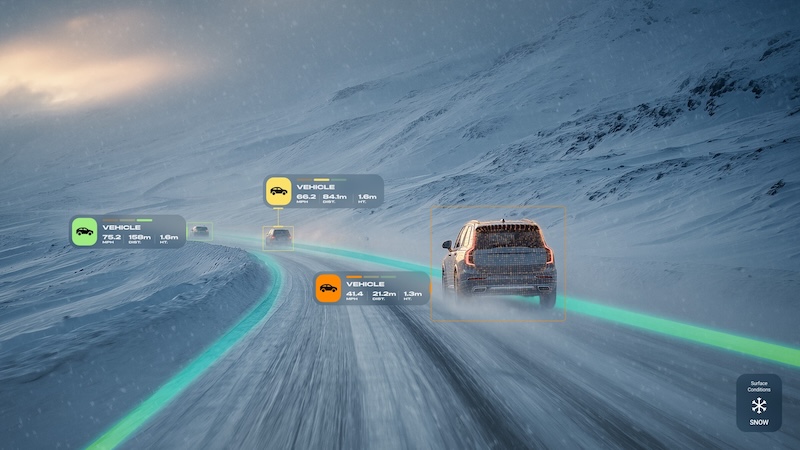
The evaluation will focus on scenarios where existing sensing technologies such as cameras, radar, and lidar can struggle, including adverse weather conditions and complex edge cases involving small objects at long range.
As part of the program, the automaker will invest engineering resources and provide access to specialist testing facilities to evaluate Teradar’s Summit terahertz vision sensor under controlled rain and fog conditions.
The companies will test Summit’s ability to detect hazards such as a fallen motorcyclist at distance, identify stationary vehicles in dense fog, and distinguish multiple objects in close proximity, such as a person changing a tire beside a disabled vehicle.
According to Teradar, the evaluation results will help inform the automaker’s sensing strategy for future ADAS and autonomous driving platforms. A successful outcome could lead to Teradar participating in the manufacturer’s formal supplier selection process.
The announcement follows earlier track testing in Germany, where Teradar says Summit demonstrated its ability to operate in simulated adverse weather conditions and complex multi-object environments while meeting the sensing requirements of current vehicle platforms.
Matthew Carey, CEO and co-founder of Teradar, says: “Moving into this next phase is the ultimate market validation for us and will provide valuable data as we help solve the real-world problems facing the progression of safe or autonomous driving.
“We look forward to the opportunity to show our strong edge-case performance and believe that this will unlock additional engagements as more automakers evaluate Summit for their next-generation platforms.”
Teradar develops solid-state terahertz vision sensors designed to provide high-resolution imaging in challenging weather and lighting conditions. The Boston-based company was founded by researchers from MIT and Stanford and is targeting applications in automotive, defense, and other sectors requiring advanced perception technologies.
What is terahertz sensing?
Terahertz (THz) sensing uses electromagnetic waves that sit between microwaves and infrared light in the electromagnetic spectrum.
Very approximately:
- Radar: millimeter waves (long wavelength)
- Terahertz: much shorter wavelength
- Infrared
- Visible light (cameras)
- Lidar: uses laser light (typically near-infrared)
Because terahertz wavelengths are much shorter than radar’s, they can produce much higher-resolution images while still penetrating some materials that cameras and lidar struggle with.
Think of it as trying to combine some of radar’s “see through bad weather” capability with something approaching the image quality of lidar.
