Autonomous trucks have dominated discussion around the future of freight transportation for much of the past decade, attracting billions of dollars in investment and extensive media attention. Yet another mode of transport – freight rail – is quietly undergoing its own transformation.
Matt Soule, founder and CEO of Parallel Systems, believes autonomous rail could become one of the most significant developments in logistics.
A former SpaceX engineer who spent 13 years helping develop advanced aerospace systems, Soule founded the Los Angeles-based company with the goal of reimagining rail freight using autonomous, battery-electric technology.
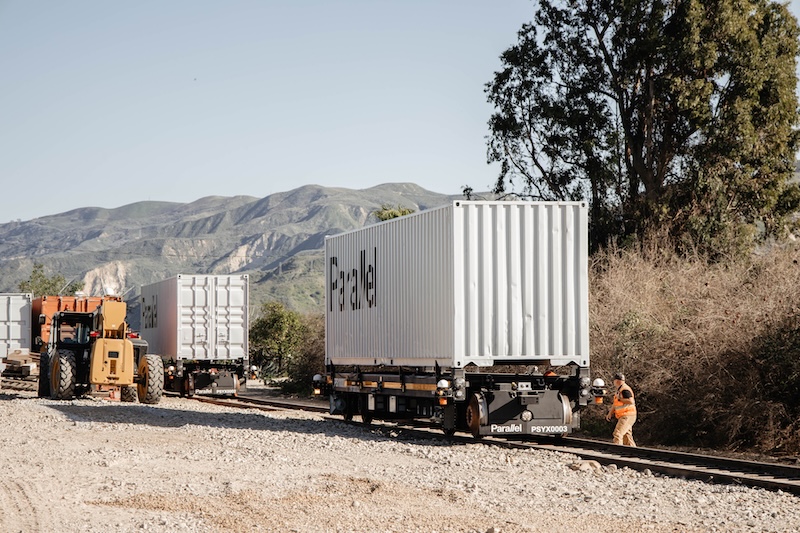
Rather than relying on traditional diesel locomotives pulling long trains, Parallel Systems has developed self-propelled autonomous rail vehicles that can operate in smaller platoons.
The company says the approach offers greater flexibility, lower operating costs, and zero-emission transportation while making rail a viable option for shorter freight routes that have historically been dominated by trucks.
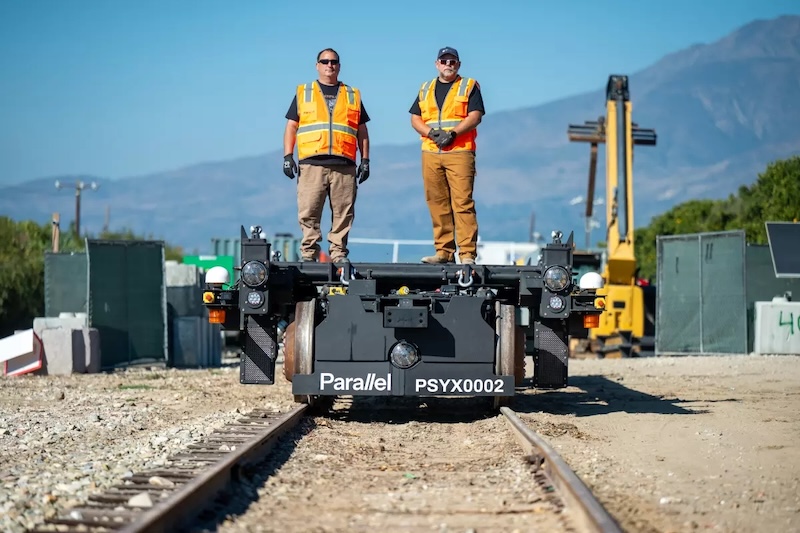
The company has raised more than $100 million and is currently conducting commercial testing with Genesee & Wyoming Railroad in Georgia under the oversight of the Federal Railroad Administration.
The program represents one of the most advanced real-world demonstrations of autonomous rail technology currently under way in the United States.
In this interview with Robotics & Automation News, Soule discusses why freight rail is reaching a technological turning point, how autonomous railcars differ from conventional trains, and why he believes rail could capture more than $100 billion worth of freight currently moved by trucks.
He also outlines his vision of a future logistics network where autonomous trucks, robotic warehouses, AI-driven routing systems, and autonomous rail vehicles operate as a coordinated ecosystem.
According to Soule, these technologies will form a highly synchronized transportation network in which goods move continuously through supply chains with minimal friction.
Perhaps most notably, he argues that autonomous freight systems are much closer to mainstream deployment than many observers realize, pointing to Parallel’s growing order backlog and ongoing commercial operations as evidence that the industry is already moving beyond the experimental stage.
Interview with Matt Soule

Robotics & Automation News: Autonomous trucking has received enormous attention over the past few years, but autonomous freight rail has remained relatively under the radar. Why do you think rail automation has been overlooked despite the scale of the opportunity?
Matt Soule: In fact autonomous rail has been receiving considerable attention and interest, both from the rail industry, policymakers and media.
The rail industry is now at a crossroads where industry growth is needed that can’t be satisfied with existing technology. To service more customers freight rail companies must improve service frequency and flexibility.
There is also increased demand by ports for rail to play a larger role in ground transportation, and AV and EV technology has been scaled and matured by the automotive sector that Parallel is leveraging.
R&AN: Parallel Systems describes itself as developing the world’s first autonomous battery-electric freight rail system. In simple terms, how does your approach differ from a conventional freight train?
MS: Parallel Systems differs from conventional freight rail by using autonomous, battery-electric, and self-propelled railcars that move freight in smaller, flexible “platoons” rather than relying on large, diesel-powered locomotives to pull long trains. Vehicle movements and platoons are orchestrated by centralized software.
This technology eliminates the need for manual coupling, enables faster, cleaner, and more on-demand transportation, and features superior braking and sensing.
R&AN: One of the most interesting aspects of your platform is the idea of smaller, self-powered autonomous rail vehicles rather than one large locomotive. Why is that model better suited to modern logistics and supply chain demands?
MS: The Parallel Systems model is better suited to modern logistics because it replaces rigid, massive train schedules and infrequent service with flexible, on-demand, and zero-emission freight “packets”.
Modern supply chains – driven by e-commerce – demand speed, predictability, and sustainability. Traditional rail excels at moving bulk goods over thousands of miles, but it is too slow and inflexible for today’s fast-moving retail and manufacturing networks.
R&AN: You’ve argued that rail could potentially compete with trucking on shorter freight routes for the first time. How significant could that shift be for ports, warehouses, and regional distribution networks across the US?
MS: We see this as an opportunity to shift over $100 billion from the $800 billion trucking industry to the $80 billion rail industry. In the process, this will reduce trucking volume out of ports by 30 percent while adding new, low cost transportation solutions to serve warehouses and distribution centers.
R&AN: The logistics sector is increasingly moving toward automation – autonomous trucks, robotic warehouses, AI-driven routing, and now autonomous rail. How do you see these technologies fitting together over the next decade?
MS: Over the next decade, these technologies will converge into a highly synchronized, autonomous “conveyor belt” ecosystem where data and physical goods flow continuously with minimal human friction.
Instead of operating in isolated silos, AI routing engines will manage the networks, robotic warehouses as the “nodes”, and autonomous trucks and rail as the coordinated “muscles”. This integrated network will transform supply chains.
Instead of reacting to orders after they are placed, AI routing software will serve as the system architect. Ultimately, this multi-layered network transitions the entire logistics sector from a “push” system (where goods are moved in large batches and sit in storage) to a “pull” system (where individual items glide continuously through the network in a steady stream).
This structural shift drastically reduces cycle times, minimizes warehouse footprint requirements, and reduces capital tied up in sitting inventory.
R&AN: Parallel’s vehicles use cameras, lidar, advanced braking systems, and continuous sensing technology. What have been the biggest technical or regulatory challenges in bringing autonomous rail systems into real-world testing with the FRA?
MS: The biggest challenge for us has been designing and sourcing a performative powertrain at a competitive price point. We’ve taken this problem head on, leveraged the electric powertrain advantages that rail has over trucking, and have solved it with components and technologies that are commercial ready. We now have a safe, fully functioning system that is running on the tracks in Georgia.
R&AN: Your background includes 13 years at SpaceX. Did working in aerospace influence the engineering culture or development philosophy at Parallel Systems?
MS: SpaceX’s culture of ambition and problem solving as technologists first has significantly influenced how we think about our work at Parallel.
The aerospace industry has many tools to manage risk and mission success that have been influential in how the company has approached deploying a new technology safety within a regulated environment and I’ve brought a similar ethos to Parallel Systems.
R&AN: There are ongoing concerns about labor shortages in trucking and logistics, particularly for long-distance freight transport. Do you see autonomous rail as replacing workers, or changing the kinds of jobs people do within the freight industry?
MS: Parallel’s technology will create more jobs in the rail industry to operate new freight services, supervise the technology remotely, and inspect and repair equipment.
The freight industry faces a structural labor crisis – primarily driven by lifestyle preferences – rather than a shortage of available workers. By absorbing the grueling middle-mile journeys, autonomous rail will foster a shift in existing jobs.
The long-distance trucking sector suffers from astronomical turnover rates (often exceeding 90 percent annually) because drivers spend weeks away from their families, living out of sleeper cabs.
- A shift to short-haul drayage: As autonomous rail platoons move containers efficiently between ports and regional micro-terminals, the demand for local drayage drivers will spike.
- Improved job satisfaction: Truck drivers will shift from long, cross-country hauls to regional, localized hub-and-spoke routes. This allows drivers to operate within a tight radius, return home to their families every night, and enjoy a vastly improved quality of life.
R&AN: Looking ahead, how quickly do you think autonomous freight systems could become commercially mainstream? Are we still talking about a distant future, or are we closer than most people realize?
MS: We are much closer than most people realize. Autonomous freight systems are shifting from experimental testing to commercial revenue generation right now.
Parallel is scaling our Generation 3 vehicles to execute full-scale commercial operations with a backlog of over 300 ordered autonomous railcars.
