• Skip to primary navigation
  • Skip to main content
  • Skip to primary sidebar
  • Skip to secondary sidebar
  • About
    • Contact
    • Privacy
    • Terms of use
  • Shop
    • Cart
    • Checkout
    • My Account
  • Advertise
    • Advertising
      • Buy ad space
    • Case studies
    • Design
    • Email marketing
    • Features list
    • Lead generation
    • Magazine
    • Press releases
    • Publishing
    • Sponsor an article
    • Webcasting
    • Webinars
    • White papers
    • Writing
  • Subscribe to Newsletter

Robotics & Automation News

Where Innovation Meets Imagination

  • Home
  • News
  • Features
  • Editorial Sections A-Z
    • Agriculture
    • Aircraft
    • Artificial Intelligence
    • Automation
    • Autonomous Vehicles
    • Business
    • Computing
    • Construction
    • Culture
    • Design
    • Drones
    • Economy
    • Energy
    • Engineering
    • Environment
    • Health
    • Humanoids
    • Industrial robots
    • Industry
    • Infrastructure
    • Investments
    • Logistics
    • Manufacturing
    • Marine
    • Material handling
    • Materials
    • Mining
    • Promoted
    • Research
    • Robotics
    • Science
    • Sensors
    • Service robots
    • Software
    • Space
    • Technology
    • Transportation
    • Warehouse robots
    • Wearables
  • Press releases
  • Events

Machine Vision Systems Are Expanding the Need for Scalable Media Infrastructure

May 26, 2026 by Sam Francis

Machine vision systems are becoming increasingly important across modern industrial environments. Factories, warehouses, logistics centers, robotics platforms, and automated production facilities now rely heavily on cameras, sensors, and AI-assisted visual analysis to improve operational efficiency and decision-making.

These systems help monitor production lines, inspect product quality, track inventory movement, support predictive maintenance, and improve workplace safety. As industrial automation continues expanding, organizations are generating far larger volumes of visual information than they did only a few years ago.

This rapid growth in visual data is creating new infrastructure challenges surrounding storage, organization, accessibility, and long-term media management. For many companies, scalable media infrastructure is becoming just as important as the automation systems generating the data itself.

Industrial Automation Depends Increasingly on Visual Data

Machine vision technologies allow automated systems to interpret visual information in ways that were previously possible only through manual human inspection. Cameras connected to AI-driven software can now identify defects, monitor equipment conditions, verify product assembly, and analyze operational processes in real time.

These systems are widely used across manufacturing, logistics, automotive production, electronics, food processing, and warehouse automation environments. Robotics platforms increasingly depend on visual recognition systems to navigate spaces, identify objects, and respond dynamically to changing conditions.

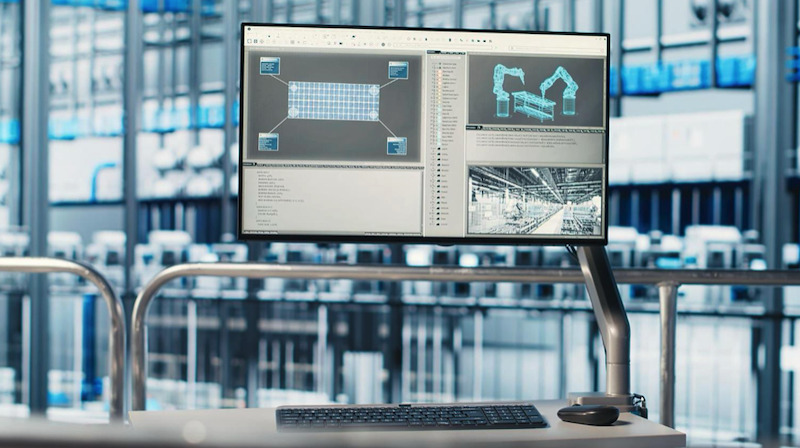
Image credit: DC Studio on Magnific

As these technologies become more advanced, the amount of video and image data generated by industrial systems continues increasing rapidly. High-resolution cameras, continuous monitoring systems, and multi-camera production environments create enormous volumes of visual information that organizations must store and manage efficiently.

What was once considered secondary operational data is now becoming central to automated decision-making and process optimization.

Managing Visual Information Has Become More Complex

The growth of industrial visual data creates operational challenges that many organizations initially underestimate. Video libraries generated by automated systems often contain thousands of hours of footage, inspection recordings, monitoring clips, and training materials spread across multiple departments and facilities.

Without organized infrastructure, locating and analyzing relevant information can become inefficient and time-consuming. This has increased demand for systems capable of organizing video assets through searchable metadata, automated tagging, cloud-based storage, workflow integration, and AI-assisted indexing.

Scalable media infrastructure is particularly important for businesses operating across multiple locations where teams need consistent access to visual records, inspection footage, maintenance documentation, and operational analysis.

In many industries, visual information is no longer treated simply as archived media. It increasingly functions as operational intelligence supporting quality control, automation performance, and long-term process improvement.

AI is Expanding the Role of Media Infrastructure

Artificial intelligence is also changing how organizations interact with industrial video systems. AI-powered tools can now analyze footage automatically, identify anomalies, monitor equipment behavior, and categorize visual data without requiring extensive manual review.

Some systems use computer vision to detect defects on production lines within milliseconds, while others help track worker safety compliance or identify operational bottlenecks inside warehouses and manufacturing facilities.

These technologies become significantly more effective when supported by infrastructure capable of handling large-scale visual data management efficiently. Automated tagging, searchable archives, real-time retrieval systems, and cloud-based collaboration tools increasingly help organizations manage growing visual workloads more effectively.

As industrial AI systems become more sophisticated, media infrastructure itself is evolving into a more active operational component rather than simply serving as passive storage.

Scalability and Accessibility Are Becoming Critical

One major challenge facing organizations involves ensuring that visual information remains accessible across different departments, facilities, and operational systems. Engineers, quality assurance teams, maintenance staff, and management personnel often require access to the same data for different purposes.

Cloud-based infrastructure has therefore become increasingly valuable because it supports centralized access, remote collaboration, scalable storage, and faster retrieval across distributed operations.

This is especially important as automation systems continue expanding globally. Businesses operating multiple production facilities or logistics centers need infrastructure capable of supporting consistent media workflows across large operational networks.

Research and analysis from IEEE continue highlighting the growing role of machine vision, industrial AI, and intelligent automation systems within modern manufacturing and robotics environments.

As these technologies evolve, the supporting infrastructure behind visual data management is becoming increasingly important to long-term operational performance.

Machine Vision Will Continue Driving Infrastructure Growth

Machine vision systems will likely continue expanding as industries pursue greater automation, efficiency, and operational visibility. Advances in AI, robotics, edge computing, and sensor technology are making automated visual analysis more accurate and more widely adopted across industrial sectors.

At the same time, organizations will continue facing increasing pressure to manage larger volumes of visual information efficiently. Storage systems, searchable archives, cloud infrastructure, and AI-assisted media management tools are therefore becoming essential parts of industrial automation strategy.

For many businesses, scalable media infrastructure is no longer simply a support function operating behind the scenes. It is becoming part of the operational foundation that allows modern machine vision systems and automated environments to function effectively at scale.

Main image credit: DC Studio on Magnific

Print Friendly, PDF & Email

Share this:

  • Print (Opens in new window) Print
  • Share on Facebook (Opens in new window) Facebook
  • Share on LinkedIn (Opens in new window) LinkedIn
  • Share on Reddit (Opens in new window) Reddit
  • Share on X (Opens in new window) X
  • Share on Tumblr (Opens in new window) Tumblr
  • Share on Pinterest (Opens in new window) Pinterest
  • Share on WhatsApp (Opens in new window) WhatsApp
  • Share on Telegram (Opens in new window) Telegram

Related stories you might also like…

Filed Under: Components, Computing, Infrastructure, Internet, Technology Tagged With: ai vision systems, AI-powered analytics, automated inspection, automation news, cloud storage, computer vision, edge computing, factory AI, industrial ai, industrial automation, industrial cameras, industrial robotics, machine vision systems, machine vision technology, manufacturing automation, media infrastructure, robotics and automation, robotics and automation news, robotics infrastructure, robotics news, smart factories, video management systems, visual data management, warehouse automation

Primary Sidebar

Search this website

Latest articles

  • The Hardware Powering the Hybrid Industrial Workforce
  • How to Choose a Robot Vacuum and Mop That Actually Fits Your Home
  • How Modern Software Helps Construction Companies in Qatar Work Smarter and Safer
  • Antivirus vs malware: Why antivirus alone is no longer enough
  • X Square Robot builds a full-stack approach to embodied AI and general-purpose robotics
  • AGIBOT debuts A3 humanoid robot in Europe and launches UK Robot-as-a-Service model
  • What Are the Biggest Challenges in Modern Electronics Manufacturing?
  • What Are the Best AI Tools for Creating Content Faster in 2026?
  • Why Does Quality Wiring Matter More Than Ever in Modern Electronic Devices?
  • Why Are Custom Harness Solutions Essential for Next Generation Technology?

Secondary Sidebar

Latest news

  • The Hardware Powering the Hybrid Industrial Workforce
  • How to Choose a Robot Vacuum and Mop That Actually Fits Your Home
  • How Modern Software Helps Construction Companies in Qatar Work Smarter and Safer
  • Antivirus vs malware: Why antivirus alone is no longer enough
  • X Square Robot builds a full-stack approach to embodied AI and general-purpose robotics
  • AGIBOT debuts A3 humanoid robot in Europe and launches UK Robot-as-a-Service model
  • What Are the Biggest Challenges in Modern Electronics Manufacturing?
  • What Are the Best AI Tools for Creating Content Faster in 2026?
  • Why Does Quality Wiring Matter More Than Ever in Modern Electronic Devices?
  • Why Are Custom Harness Solutions Essential for Next Generation Technology?

Copyright © 2026 · News Pro on Genesis Framework · WordPress · Log in

We use cookies on our website to give you the most relevant experience by remembering your preferences and repeat visits. By clicking “Accept”, you consent to the use of ALL the cookies.
Do not sell my personal information.
Cookie SettingsAccept
Manage consent

Privacy Overview

This website uses cookies to improve your experience while you navigate through the website. Out of these, the cookies that are categorized as necessary are stored on your browser as they are essential for the working of basic functionalities of the website. We also use third-party cookies that help us analyze and understand how you use this website. These cookies will be stored in your browser only with your consent. You also have the option to opt-out of these cookies. But opting out of some of these cookies may affect your browsing experience.
Necessary
Always Enabled
Necessary cookies are absolutely essential for the website to function properly. These cookies ensure basic functionalities and security features of the website, anonymously.
CookieDurationDescription
cookielawinfo-checkbox-analytics11 monthsThis cookie is set by GDPR Cookie Consent plugin. The cookie is used to store the user consent for the cookies in the category "Analytics".
cookielawinfo-checkbox-functional11 monthsThe cookie is set by GDPR cookie consent to record the user consent for the cookies in the category "Functional".
cookielawinfo-checkbox-necessary11 monthsThis cookie is set by GDPR Cookie Consent plugin. The cookies is used to store the user consent for the cookies in the category "Necessary".
cookielawinfo-checkbox-others11 monthsThis cookie is set by GDPR Cookie Consent plugin. The cookie is used to store the user consent for the cookies in the category "Other.
cookielawinfo-checkbox-performance11 monthsThis cookie is set by GDPR Cookie Consent plugin. The cookie is used to store the user consent for the cookies in the category "Performance".
viewed_cookie_policy11 monthsThe cookie is set by the GDPR Cookie Consent plugin and is used to store whether or not user has consented to the use of cookies. It does not store any personal data.
Functional
Functional cookies help to perform certain functionalities like sharing the content of the website on social media platforms, collect feedbacks, and other third-party features.
Performance
Performance cookies are used to understand and analyze the key performance indexes of the website which helps in delivering a better user experience for the visitors.
Analytics
Analytical cookies are used to understand how visitors interact with the website. These cookies help provide information on metrics the number of visitors, bounce rate, traffic source, etc.
Advertisement
Advertisement cookies are used to provide visitors with relevant ads and marketing campaigns. These cookies track visitors across websites and collect information to provide customized ads.
Others
Other uncategorized cookies are those that are being analyzed and have not been classified into a category as yet.
SAVE & ACCEPT