The internet in 2026 is not a level playing field. Depending on where your IP address is located, you might see an entirely different version of a website than someone sitting in New York or Chicago.
Prices change. Search results shift. Certain content doesn’t load at all. And if you’re running automated research or data collection, there’s a good chance you’ve already run into CAPTCHAs, rate limits, or outright IP bans.
For businesses trying to operate in or research the US market from abroad, or even domestically at scale, this creates a real problem. The solution that more and more companies are turning to is residential proxies. But before diving into the why, it’s worth answering the obvious question: what is a residential proxy, exactly?
Demystifying the Tech: What is a Residential Proxy?
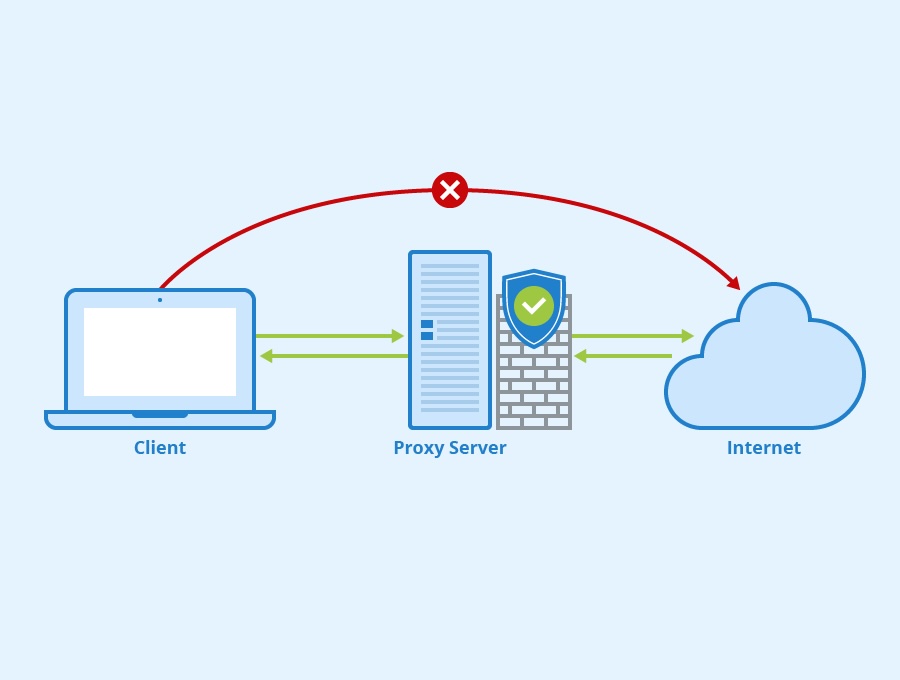
At its core, a proxy is a middleman. When you connect through one, the website you’re visiting sees the proxy’s IP address instead of your own. For readers who need the fuller beginner-level explanation, What is residential proxy is the next logical topic before comparing residential IPs with datacenter IPs.
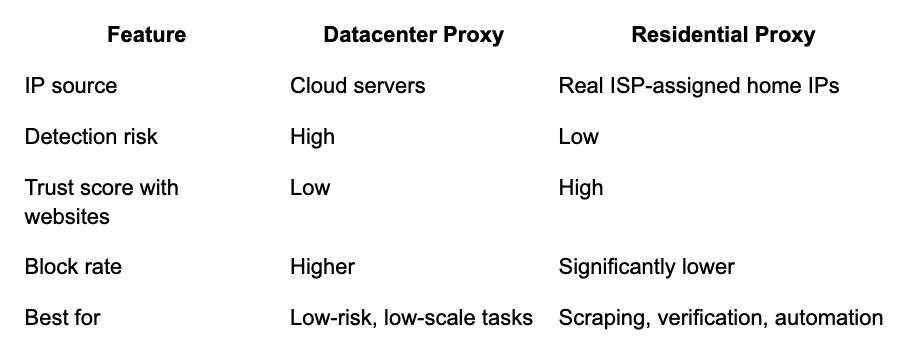
The difference between proxy types comes down to where that IP originates. A datacenter proxy uses an IP address from a cloud server or hosting provider. These are fast and cheap, but websites have gotten very good at spotting them, a datacenter IP doesn’t look like a real person browsing from home, and many platforms block them outright.
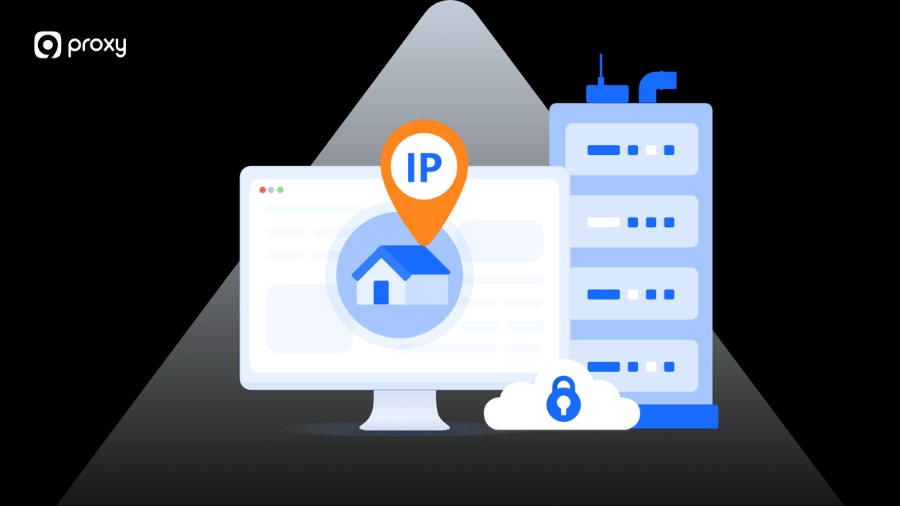
A proxy residential network works differently. It routes your traffic through IP addresses that were assigned by actual Internet Service Providers (ISPs) to real residential users, the kind attached to someone’s home broadband plan. When a website sees that IP, it looks indistinguishable from an ordinary consumer visiting the page.
Here’s a quick comparison of why that matters:
The technical flow looks like this: your request travels from your machine → through the residential proxy network → to the target website. The site responds back through that same chain. The whole process happens in milliseconds, and the target website has no way of knowing the request didn’t originate from a regular home user.
The US Advantage: Why Location Matters
Not all residential proxies are equal in terms of geographic targeting, and if you’re focused on the US market, you specifically need US-based IPs.
Here’s why: major US e-commerce platforms, search engines, and streaming services serve different content, pricing, and ads based on where they think you’re located. A product listed at $49.99 for a US visitor might show a different price, or not appear at all, for someone browsing from Vietnam, Germany, or Brazil.
For any business researching the US market, this means the data you’re collecting without a US IP isn’t an accurate picture of what real American consumers are actually seeing. You’re essentially looking through a distorted lens.
To get clean, accurate US market data, you need to appear as a genuine US resident, which means a legitimate, ISP-assigned US IP address.
5 Reasons Businesses Need US Residential Proxies in 2026
US residential proxies aren’t just for large enterprises with dedicated data teams. From solo founders doing competitive research to mid-sized agencies managing multiple client campaigns, the use cases are broad, and growing. Here are the five areas where businesses are finding the most value.
1. Web Scraping and Market Research
Pulling competitor pricing, product catalogs, or customer reviews at scale is routine for any data-driven business. Without residential proxies, you’ll hit rate limits and CAPTCHAs almost immediately on serious scraping jobs. Residential IPs distribute requests naturally, mimicking organic user behavior and reducing the chance of triggering anti-bot defenses.
2. Ad Verification
If you’re running localized US campaigns, how do you know your ads are actually appearing correctly in Dallas versus Denver? Ad verification requires you to view pages exactly as a local user would. Residential proxies let you check that your creative is rendering properly, your targeting is working, and nobody is running ad fraud on your placements.
3. SEO Monitoring
Google’s search results vary by location, browsing history, and device. To track where your site genuinely ranks for US searchers, you need unbiased SERP data pulled through real US IPs, not personalized results shaped by your own account or location. This is especially important for local SEO campaigns where rankings can differ city by city.
4. Social Media Automation
Running multiple regional social accounts for localized marketing is a legitimate strategy, but platforms like Instagram, TikTok, and X flag suspicious IP patterns aggressively. A cluster of accounts all operating from the same datacenter IP will get flagged fast. Residential IPs give each account a plausible, independent identity.
5. E-commerce and Retail Monitoring
During limited-edition product drops or flash sales, retail sites deploy heavy anti-bot protections. Whether you’re a reseller, a brand monitoring your own authorized sellers, or a retailer tracking competitor pricing in real time, residential proxies are often the only reliable way to operate without getting blocked.
Finding the Best Residential Proxy for Your Needs
Not all providers are created equal, and the market has matured a lot. When evaluating what qualifies as the best residential proxy for your use case, look for these things:
Pool size: A larger pool means less IP reuse and lower detection risk. Providers with millions of IPs across multiple US cities and states give you genuine flexibility.
Targeting granularity: Country-level targeting is the minimum. For serious US operations, you’ll want state-level or city-level targeting so your requests look locally specific.
Session control: Depending on the task, you’ll want either rotating IPs (a new IP for each request, great for scraping) or sticky sessions (the same IP held for a period, better for logins or multi-step workflows).
Uptime and success rates: Look for providers publishing verified uptime metrics and test their IPs against your specific target sites before committing.
One provider that checks these boxes is 9Proxy, which has built a solid reputation for multi-account management and large-scale data extraction. Their pool spans millions of authentic residential IPs across the US, with granular targeting options and both rotating and sticky session support, useful if your workflows involve a mix of scraping and account-based tasks.
Budgeting: How to Buy Residential Proxies Without Overpaying
Residential proxy pricing typically comes in two models:
Pay-per-GB works well if you have predictable, moderate bandwidth needs. You pay for data consumed, not time.
Pay-per-IP or subscription models make more sense for continuous workflows where you need dedicated IPs over time.
If you’re looking for a cheap residential proxy to get started, most reputable providers offer entry-level packages or trial bandwidth. That’s actually the right move, start small, test your target sites, and measure real-world success rates before scaling up your spend. A $10 trial that confirms 90%+ success rates on your key URLs is worth far more than committing to a large plan blindly.
One thing worth being direct about: free proxy lists are a false economy. They’re unreliable, frequently banned, and a legitimate security risk, some harvest your traffic or inject malicious content. When you’re ready to buy residential proxy access, stick to established providers with transparent policies and real customer support.
Conclusion
In 2026, residential proxies have graduated from niche tool to core business infrastructure for any company serious about US market data. Whether you’re doing competitive research, verifying ad campaigns, monitoring SERPs, or running automation at scale, the quality of your proxy layer directly affects the quality of your output.
If your current setup relies on datacenter IPs or you’re flying blind with no proxy strategy at all, now is a good time to reassess. Start with a small test, pick a provider with a clean IP pool and solid targeting options, and build from there. The ROI on accurate, unblocked data access is almost always worth it.
Frequently Asked Questions
Are residential proxies legal to use in the US?
Yes, using residential proxies is legal for legitimate business activities like web scraping, market research, and ad verification, provided you comply with data privacy laws (like CCPA) and the target website’s Terms of Service.
What is the difference between static and rotating residential proxies?
Static residential proxies (sticky sessions) keep you on the same IP address for an extended period, which is ideal for managing accounts. Rotating proxies give you a new IP address for every request, which is ideal for large-scale web scraping.
