By Marcus Schunemann, head of autonomy at Dexory
Warehouses are under growing pressure to do more with less. Labour shortages, rising operating costs and continued supply chain disruption are forcing logistics operators to rethink how goods are stored, tracked and moved.
UK Warehousing Association research shows that recruitment difficulty remains widespread in warehousing, with only 13 percent of employers reporting no difficulty hiring staff and more than half expecting critical skills shortages, indicating a persistent labour gap across the sector.
At the same time, the push towards automation is accelerating. According to McKinsey, warehouse automation adoption is growing at more than 10 percent annually, driven by the need to improve efficiency, resilience and cost control.
However, the most important shift is not simply the deployment of more robots. It is the move from automation to autonomy, where systems can capture data, generate insight and support faster, more accurate decisions in live environments.
From automation to autonomy
Historically, automation in logistics has been limited to controlled and predictable settings. Fixed systems deliver value in stable workflows.
That is beginning to change.
Most warehouse environments are dynamic, with changing inventory, layouts and operational demands. Advances in artificial intelligence, sensing and mobile robotics are enabling more effective operation in complex environments. At the same time, digital modelling technologies are improving how operators understand and manage warehouse operations.
Gartner predicts that by 2030, half of new warehouses in developed markets will be designed as human-optional facilities, supported by robotics and digital twins. This does not signal the removal of people from logistics. It reflects a shift towards systems that can support human decision-making with more accurate and timely data.
Building a real-time view of operations
One of the biggest constraints in warehouse operations is visibility. Many decisions still rely on periodic stock checks, incomplete system data or manual investigation.
Digital twins are beginning to address this challenge.
By combining continuous data capture with virtual models of the warehouse, digital twins provide a real-time view of inventory, storage and movement. This allows operators to detect discrepancies earlier and respond before issues escalate.
Deloitte research indicates that improved inventory visibility can reduce operational inefficiencies and improve fulfilment accuracy, especially in high-volume distribution settings.
More broadly, the ability to maintain accurate, real-time inventory data is directly linked to warehouse performance. Industry studies predict that poor inventory accuracy can significantly increase costs through mis-picks, stockouts and excess safety stock.
Closing the loop between insight and action
The value of autonomy increases when insight leads directly to action.
As real-time data is combined with analytics, warehouse systems can identify issues such as misplaced inventory, congestion or underutilised space as they occur. This enables faster intervention, whether through human decision-making or system-driven recommendations.
Over time, this creates a more responsive operating model. Instead of reacting to problems after they occur, warehouses can move towards continuous optimisation.
McKinsey notes that advanced analytics and automation can significantly improve warehouse productivity and reduce operational costs when deployed effectively.
Scaling without increasing complexity
A persistent challenge in logistics is that growth often brings added complexity. Higher volumes typically require more labour, more oversight and more manual processes.
Autonomous systems offer a way to change that dynamic.
By automating data capture and improving decision-making, organisations can scale operations without a proportional increase in manual intervention. This is particularly important in a constrained labour market.
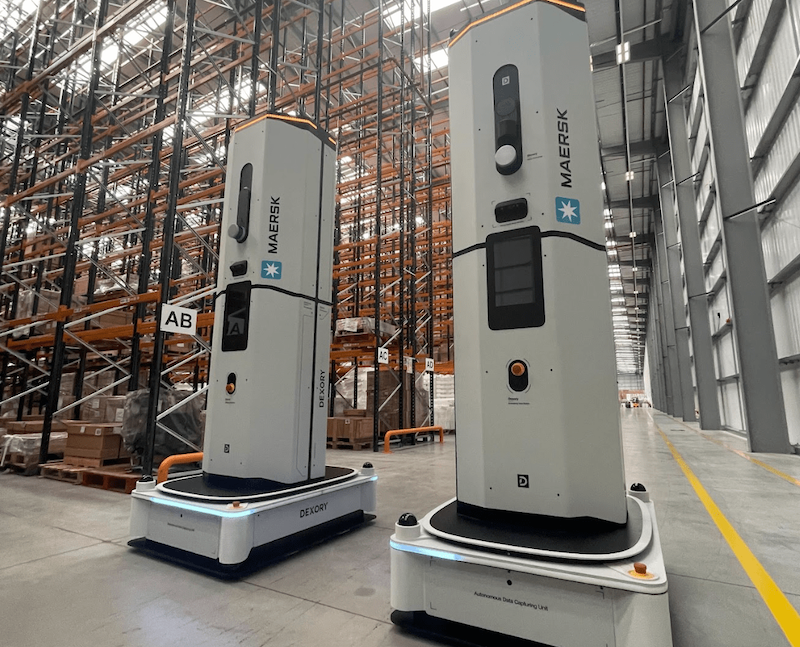
At the same time, newer forms of automation are designed to be more flexible than traditional fixed systems. Autonomous mobile robots, for example, can operate within existing warehouse environments, eliminating the need for large-scale infrastructure changes and making adoption accessible more easily.
Redefining the role of people
Autonomy does not replace people. It changes how they contribute.
As repetitive and physically demanding tasks are automated, workers can focus more on oversight, exception management and continuous improvement. This shift is already visible in facilities where humans and machines operate together, combining physical automation with human judgement.
Safety is also a key factor. Warehousing remains a high-risk environment, with industry data showing that the transportation and storage sector, which includes warehousing and distribution, experiences above-average non-fatal injury rates and around 38,000 workplace injuries each year. Reducing manual handling and improving situational awareness through automation can help mitigate these risks.
A more resilient operating model
Autonomy is not a single step change. It is part of a broader transition towards data-driven logistics.
The organisations seeing the greatest impact are not simply deploying robotics. They are investing in systems that improve visibility, that integrate with existing operations and enable faster, more informed decisions.
In a market defined by volatility and tight margins, that capability is becoming a competitive differentiator.
The future warehouse will not be defined by robots alone. It will be defined by how effectively organisations combine automation, real-time data and human expertise to create more resilient and responsive supply chains.
About the author: Dr. Marcus Scheunemann is head of autonomy at Dexory. He is a robotics and AI specialist with more than 10 years of experience developing autonomous robotic systems, including humanoid and mobile robots. His work focuses on integrating AI, control systems, and machine learning to create efficient, robust robotic solutions for complex real-world environments.
