Industrial environments are undergoing a massive transformation driven by the Industrial Internet of Things. Factories, energy plants, and logistics hubs are now powered by connected sensors, edge devices, and intelligent control systems that continuously exchange data in real time.
The scale of this transformation is significant. By 2025, the number of industrial IoT devices is expected to reach over 152 million globally, with the market projected to grow from $194.4 billion in 2024 to $286.3 billion by 2029.
At the same time, IoT security risks are rising sharply, with over 50 percent of IoT devices having critical vulnerabilities and one in three data breaches now involving IoT components.
This rapid expansion of connected infrastructure is reshaping how organizations think about security. Traditional physical security models are no longer sufficient in environments where machines, sensors, and software continuously interact.
This is where modern access control systems evolve into intelligent, connected security layers within industrial IoT ecosystems.
Understanding the Convergence of Access Control and IIoT
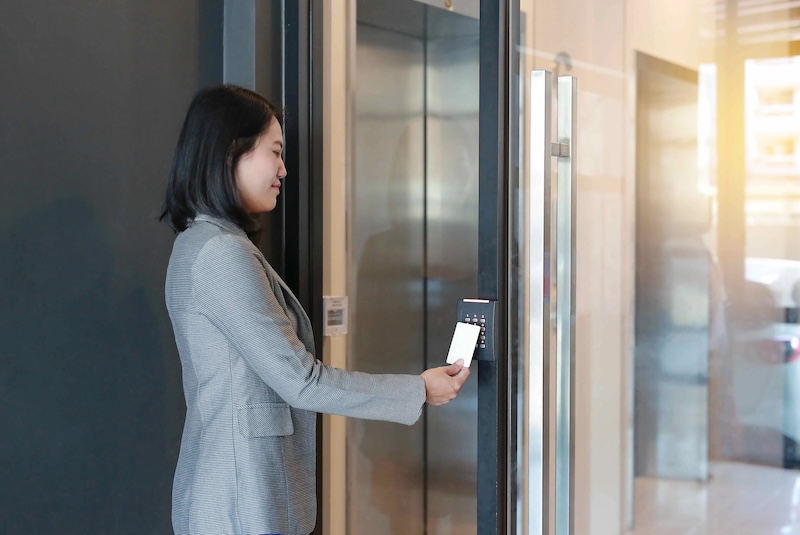
Traditional access control systems were designed to regulate physical entry using credentials such as cards, PINs, or biometrics. These systems operated largely in isolation, with limited integration into broader operational technology.
Industrial IoT introduces a fundamentally different architecture. It connects machines, sensors, controllers, and software platforms into a unified data-driven system. The convergence happens when access control becomes a node within this ecosystem.
Instead of acting as a standalone system, access control integrates with:
- Industrial sensors and PLCs
- Edge computing devices
- SCADA and OT networks
- Cloud-based analytics platforms
This integration transforms access control into a dynamic decision-making system rather than a static gatekeeper.
Architecture of Integrated Security Systems
From an engineering perspective, integrating access control with industrial IoT involves a multi-layered architecture.
Device Layer
This layer includes physical components such as card readers, biometric scanners, IoT sensors, and industrial controllers. These devices generate real-time data related to identity, movement, and environmental conditions.
Edge Layer
Edge computing devices process data locally to reduce latency. For example, an edge gateway can instantly verify access credentials while analyzing contextual data such as time, location, and machine state.
Network Layer
Secure communication protocols connect devices and systems. This layer ensures encrypted data exchange between access control systems and IoT platforms.
Application Layer
Centralized dashboards and analytics engines process aggregated data. This layer enables automation, alerts, and decision-making based on predefined rules or AI models.
Cloud and AI Layer
Advanced analytics, machine learning, and historical data storage reside in the cloud. These systems identify patterns, detect anomalies, and optimize security workflows.
Real-Time Security Automation in Industrial Environments
The true value of integration lies in automation. When access control systems interact with IoT devices, security responses can be triggered automatically without human intervention.
Context-Aware Access Decisions
Access permissions are no longer static. Instead, they adapt based on real-time data such as equipment status, worker location, environmental conditions, and shift schedules.
For instance, a technician may only be granted access to a hazardous zone if machinery is in a safe state and proper safety gear is detected.
Automated Incident Response
Integrated systems can trigger immediate actions when anomalies are detected. These actions may include locking or unlocking specific zones, activating alarms, shutting down equipment, or notifying response teams.
This reduces response time and prevents escalation of incidents.
Continuous Monitoring and Feedback Loops
IoT-enabled access control systems operate in continuous feedback loops. Data collected from sensors and access events is constantly analyzed to refine policies and improve system performance.
Key Integration Technologies
Several technologies enable seamless integration between access control and industrial IoT.
Edge Computing
Edge computing reduces latency by processing data closer to the source. In industrial environments where milliseconds matter, this ensures faster decision-making.
Digital Twins
Digital twins replicate physical environments in virtual models. By integrating access control data, engineers can simulate scenarios and optimize security policies.
AI and Machine Learning
AI models analyze large volumes of data to detect unusual patterns such as unauthorized access attempts or abnormal movement within restricted zones.
API-Driven Integration
Modern systems use APIs to connect access control platforms with IoT devices and enterprise systems. This enables flexible and scalable deployments.
The Role of Unified Platforms in Industrial Security
The integration of industrial IoT with access control systems is most effective when deployed through unified platforms that combine physical security, analytics, and automation.
Platforms like Coram.ai demonstrate how modern access control systems can extend beyond entry management into a fully integrated security ecosystem.
With solutions such as Coram access control, organizations can connect access events with real-time video analytics, IoT sensor data, and automated incident response workflows.
This means that when an access event occurs, it is no longer just logged. It is verified with video, correlated with machine data, and analyzed in real time.
In industrial settings, this allows engineers to detect anomalies faster, prevent unauthorized interactions with equipment, and maintain full operational visibility across facilities.
Benefits for Industrial Automation Professionals
For engineers and automation professionals, integrating access control with IIoT offers several tangible benefits.
Enhanced Operational Safety
By linking access permissions to machine states and environmental data, organizations can prevent unsafe interactions between humans and equipment.
Reduced Downtime
Automated responses minimize disruptions. Unauthorized access or abnormal behavior can trigger immediate containment actions.
Improved Compliance
Industrial sectors require strict adherence to safety and regulatory standards. Integrated systems provide detailed logs, real-time monitoring, and audit-ready reporting.
Data-Driven Decision Making
Access control data becomes part of the broader IoT dataset. This enables organizations to analyze workforce movement, optimize workflows, and improve efficiency.
Challenges in Integration
Despite its advantages, integrating access control with industrial IoT presents several challenges.
Legacy System Compatibility
Many industrial environments rely on outdated infrastructure that lacks connectivity. Integration often requires middleware or phased upgrades.
Cybersecurity Risks
IoT expands the attack surface significantly. Over 50 percent of IoT devices have exploitable vulnerabilities, making security a critical concern.
Network Complexity
Managing communication across multiple systems requires careful architecture planning and segmentation.
Data Management
Handling large volumes of real-time data requires scalable storage, processing, and analytics systems.
Best Practices for Implementation
Organizations should follow structured strategies to ensure successful integration.
Adopt Zero Trust Principles
Every device and user must be continuously verified before access is granted.
Secure Communication Channels
Encryption and authentication protocols are essential to protect data integrity.
Implement Network Segmentation
Separating IoT and IT networks reduces the risk of lateral movement during a breach.
Design for Scalability
Systems must support future growth in connected devices and data volumes.
Use AI for Continuous Optimization
AI-driven analytics can improve threat detection and refine access policies over time.
Future Trends in IIoT Security Automation
The future of industrial security lies in deeper integration and intelligent automation.
Autonomous Security Systems
AI will increasingly automate decision-making and threat response without human intervention.
Edge AI Expansion
More intelligence will move closer to devices, reducing latency and improving reliability.
5G-Enabled Connectivity
Faster and more reliable communication will enhance real-time IoT applications.
Convergence of Cyber and Physical Security
Security strategies will unify digital and physical protection to address evolving threats.
FAQs
1. What is the role of access control in industrial IoT?
Access control regulates physical and logical entry while integrating with IoT data to enable real-time decision-making and automation.
2. How does IoT enhance access control systems?
IoT provides contextual data such as location, machine status, and environmental conditions, allowing smarter and automated access decisions.
3. Which industries benefit most from this integration?
Manufacturing, energy, logistics, and transportation benefit the most due to their reliance on automation and connected infrastructure.
4. What are the key risks in IIoT environments?
Major risks include device vulnerabilities, lack of segmentation, outdated firmware, and weak authentication mechanisms.
5. Is cloud integration required?
Not mandatory, but cloud platforms provide scalability, centralized management, and advanced analytics capabilities.
Conclusion
The integration of access control systems with industrial IoT represents a critical evolution in modern security architecture.
Instead of isolated systems, organizations now operate interconnected environments where access control, sensors, and analytics work together to enable real-time automation and intelligent decision-making.
For engineers and automation professionals, this convergence unlocks new levels of safety, efficiency, and operational visibility.
As industrial ecosystems continue to expand, the ability to integrate security with IoT infrastructure will become a defining factor in building resilient and future-ready operations.
