
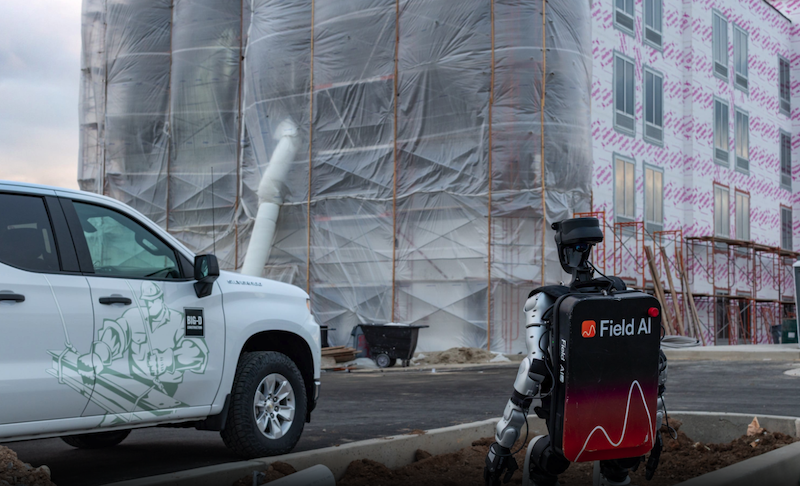
US construction firm Big-D Construction is expanding its use of robotics across multiple projects through a growing partnership with FieldAI, signaling a broader shift toward autonomous systems on active job sites.
The company, which has been testing FieldAI systems for more than two years, is now moving from pilot deployments to wider operational use, with executives suggesting the technology could become standard across future projects.
“I think the opportunity is that every project will have some representation of FieldAI tools.” That’s Shaun Orr, C-level executive and 25-year veteran at Big-D Construction, describing what he sees as the next phase of adoption.
From pilot projects to wider rollout
Construction has historically been one of the most challenging environments for robotics due to constantly changing conditions, unstructured layouts, and limited predictability.
FieldAI’s systems are designed to operate without reliance on fixed maps or GPS, allowing robots to adapt in real time to active job sites. According to the companies, this reduces deployment complexity and enables robots to be integrated directly into ongoing workflows.
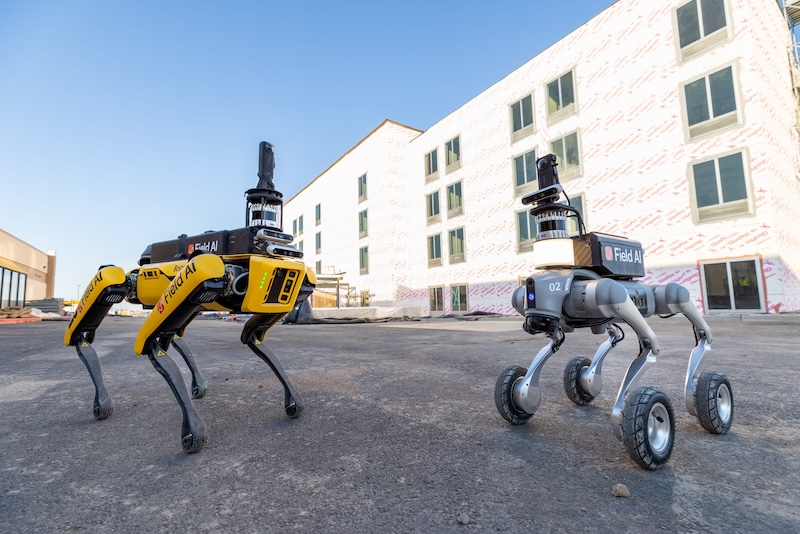
For Big-D, the expansion follows a period of close collaboration between field teams and developers.
“One of the things that I’m most grateful for is that FieldAI really approached this as a partnership and allowed us to participate in the development of that application in our own organization,” Orr said.
“The project team feedback was just overwhelmingly positive. It made the decision to make a bigger investment pretty easy to do.”
Addressing labor and productivity pressures
The move comes as construction firms continue to face persistent labor shortages, which are driving interest in automation.
“We’ve got a big labor crisis in the construction industry,” Orr said. “Everybody feels it. We’ve been in that space for years, and we don’t really anticipate that stopping until 2040 or beyond.”
On site, data collection and monitoring tasks have traditionally required significant manual effort. Bronson Dupaix, a Big-D superintendent, described how teams previously spent hours gathering site data using handheld tools and sensors, reducing time available for higher-level decision-making.
FieldAI robots are now being used to automate parts of that process, including site inspection and issue detection.
“They had one of their robots on the ground that had the schedule and the model attached to it, was real-time walking a project site and identifying problems – missing work, safety issues – and correlating it back to all of the great detail that our people have put into our other platforms,” Orr said. “Seeing it in a way that we just couldn’t see it.”
Growing demand from the field
Interest in the technology is not limited to leadership. According to Big-D, demand is emerging from project teams already using the systems.
“That same superintendent that had the robot on his job for the first time called me last week as I was on the other job site deploying two more robots,” said Chantelle Menlove, a director at Big-D specializing in virtual design and construction. “He said, ‘When can I have it on my job? What do I need to do?’ And he’s really excited about taking it to his next job.”
Toward multi-function, general-purpose robots
Unlike single-purpose construction robots, FieldAI’s approach focuses on combining multiple capabilities – such as inspection, documentation, and material handling – into a single system.
This reflects a broader trend in construction robotics toward more flexible, general-purpose machines that can operate across multiple workflows.
Orr said internal adoption has been stronger than expected.
“Every project will have some representation of FieldAI tools,” he said. “They integrate with our existing platforms today in a way that we are pulling value. And I look at our teams really embracing the technology in a way that was surprising to me. It wasn’t scary. It was more like having a new, great companion join the team.”
Industry implications
The expansion also comes amid growing collaboration between construction firms and robotics providers, including recent partnerships involving companies such as Boston Dynamics.
As systems move from isolated deployments to integrated operational layers, the industry may begin to see more coordinated fleets of robots working across job sites.
Menlove said future applications could extend beyond inspection into more physical tasks.
“The future that I see with robots is that we’re really going to have tools that we’ve never had before,” she said. “Robots doing functions on the job that we only wish we had help with – carrying materials, delivering materials, being a second set of hands on the job.
“I’m really excited to see what each one of these robots and the different types that we’re going to have on our job sites, and how they can all talk together and move together to really make our projects successful.”
For Orr, the message to peers in the industry is direct.
“Maybe what my cohorts hear when I talk to them about it is: you better get it, because we’re going to pass you up.”
