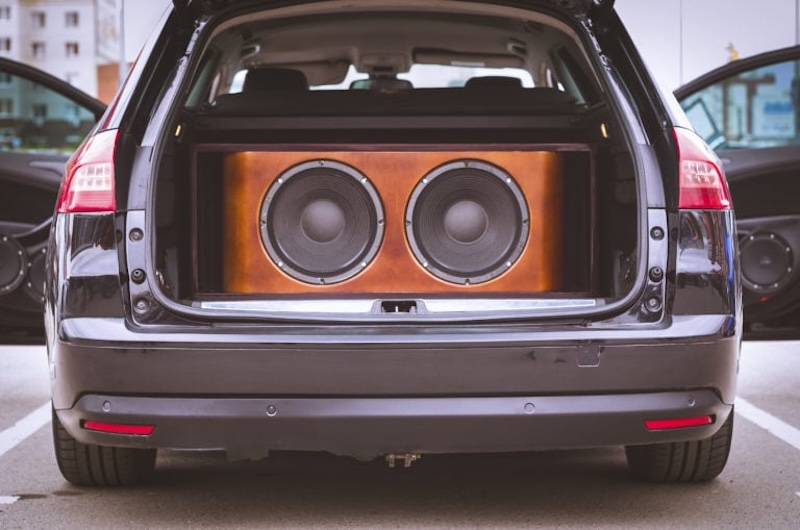
In order for the soundstage to have an immersive feeling within a car, it is important to get the balance of the speaker positioning and sound treatment, as well as the tuning. The design of hatchbacks is unique when it comes to acoustics since low frequencies may be reflected off the back window.
This spatial layout often results in muddy bass notes that easily overwhelm the delicate high frequencies up front. By focusing your efforts on optimizing the front audio environment, you can anchor the music directly on your dashboard.
Studying specialized car audio diagnostics on platforms like the OnTrackAudio blog reveals how precise component isolation transforms a challenging cabin into a pristine listening environment.
The Core Challenge of Hatchback Acoustics
Unlike traditional sedans with isolated trunks, a hatchback treats the entire interior volume as a single, large speaker enclosure. Rear speakers or subwoofers placed in the cargo area bounce sound directly off the steep rear window, creating severe phase cancellation problems.
When these delayed sound waves travel forward, they collide with your front stage, muddying your midbass frequencies and ruining vocal clarity.
To counteract this acoustic phenomenon, car audio enthusiasts must build a dominant front soundstage. Prioritizing premium component speakers in the front doors and dashboard forces your ears to lock onto the primary musical image.
This strategic focus ensures that the rear audio elements function purely as subtle background fill rather than a distracting primary source.
Essential Components for a High-Definition Front Stage
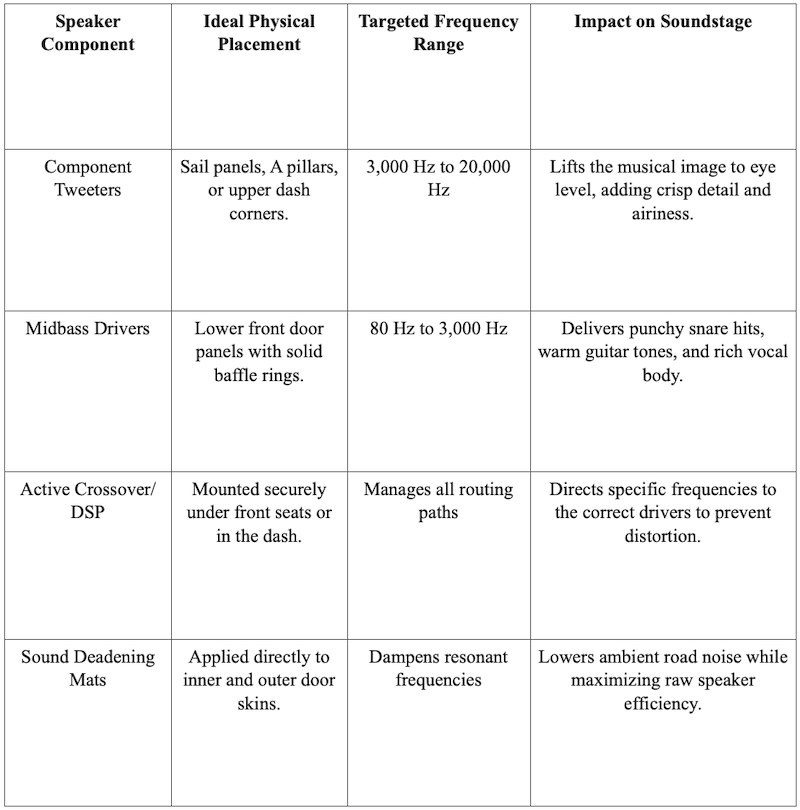
Building a balanced, high-fidelity listening zone up front requires isolating specific audio frequencies using dedicated drivers. The following table outlines the structural elements needed to build a pristine front-stage layout:
Digital Time Alignment and Phase Corrections
After you have properly installed your physical improvements in your audio system, then calibration is what completes this puzzle. Due to the fact that cars are not designed in such a way that the driver sits in the center of the car, the natural placement of the human being will be nearer to the left audio speakers than the right ones.
Connecting your system to a digital signal processor allows you to introduce precise time delays to the closest speakers. Delaying the left side signal ensures that the sound waves from both doors reach your ears at the exact same microsecond. This digital correction tricks your brain into believing the vocalist is performing directly on top of your dashboard.
Furthermore, checking the mobile audio diagnostics guides on the OnTrackAudio blog emphasizes the necessity of testing speaker phase wiring. If one front midbass driver is accidentally wired backward, its cone moves inward while the other moves outward, cancelling out your midbass response entirely.
Front Stage Optimization FAQ
Why shouldn’t I use coaxial speakers in the front doors to achieve a perfect soundstage?
The mounting position of coaxial speakers places the tweeter at the center of the woofer, hence limiting your highs from being directed towards the floor near your ankles. Your whole music sound stage is hence lowered due to the low placement of the speaker compared to a component system where the tweeters are mounted on the pillars.
What should I do to get the right crossover frequency point of my front door speakers and the rear subwoofer?
For an average hatchback cabin, the high-pass filter set to 80Hz for the front door speakers, coupled with a low-pass filter of the same frequency for your rear subwoofer, will produce a smooth transfer. The crossover will help prevent your door speakers from breaking on low bass while maintaining your omnidirectional bass low in the rear.
How can I tell within the shortest time whether my front door speakers are wired out of phase?
Place your car head unit’s balance control to the full left, and carefully notice how punchy your bass is playing before restoring your head unit’s balance control. You’ll notice that if your bass mid.
How does digital time alignment help anchor the center image directly on the steering wheel?
Time alignment delays the signal of the closest speakers by a few milliseconds so the audio packets from all drivers reach your head simultaneously. This calibration eliminates the physical asymmetry of the car interior, creating a stable center image where vocals sound like they originate from the middle of the windshield.
