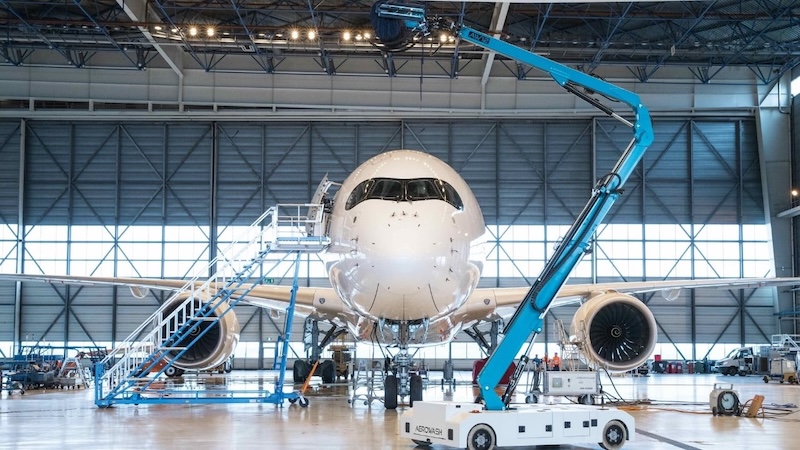
Aerowash has received a positive award notice from International Airlines Group (IAG) following a competitive tender process. The contract covers the supply of aircraft washing robots for British Airways’ operations at London Heathrow Airport.
The next step is to finalize and sign a delivery agreement, which is expected within approximately three weeks. The deal includes several washing robots and is planned to be implemented through a multi-year leasing arrangement.
“This is a real milestone for Aerowash. Being selected by one of the world’s leading airline groups is a strong recognition of our technology and our organization. This once again shows that Aerowash is a leading supplier in this niche segment,” says Niklas Adler, CEO of Aerowash.
International Airlines Group is one of the world’s largest airline groups. In addition to British Airways, the group also includes Iberia, Vueling, Aer Lingus, and LEVEL.
“British Airways at Heathrow will be a strategically important reference. The deal demonstrates our competitiveness in automated aircraft washing and is expected to open up new opportunities both within IAG and in the industry at large,” says Adler.
Niche market
While aircraft-washing robots remain a relatively small segment of the aviation maintenance market, a handful of companies have developed specialized systems to automate the process. One of the best-known competitors is Nordic Dino, a long-established aircraft cleaning robot developed by Aviator Robotics.
Its semi-automatic robotic systems are used by airlines and maintenance organizations to wash both narrow-body and wide-body aircraft, reducing manpower requirements and shortening turnaround times.
The overall market for robotic aircraft exterior cleaning remains highly specialized. Industry estimates suggest that automated aircraft washing systems represent only a small portion of the broader aircraft cleaning market, with relatively few manufacturers worldwide focusing on this type of technology.
Despite its niche status, interest in robotic aircraft cleaning has been growing as airlines look for ways to reduce labor costs, shorten aircraft ground time, and improve safety.
Automated systems can significantly reduce the time required to wash an aircraft while minimizing the need for large crews and heavy equipment traditionally used during manual cleaning operations.
With airlines under increasing pressure to operate more efficiently and reduce environmental impact, technologies such as robotic washing systems are gradually gaining traction across the aviation maintenance sector.
