• Skip to primary navigation
  • Skip to main content
  • Skip to primary sidebar
  • Skip to secondary sidebar
  • About
    • Contact
    • Privacy
    • Terms of use
  • Shop
    • Cart
    • Checkout
    • My Account
  • Advertise
    • Advertising
      • Buy ad space
    • Case studies
    • Design
    • Email marketing
    • Features list
    • Lead generation
    • Magazine
    • Press releases
    • Publishing
    • Sponsor an article
    • Webcasting
    • Webinars
    • White papers
    • Writing
  • Subscribe to Newsletter

Robotics & Automation News

Where Innovation Meets Imagination

  • Home
  • News
  • Features
  • Editorial Sections A-Z
    • Agriculture
    • Aircraft
    • Artificial Intelligence
    • Automation
    • Autonomous Vehicles
    • Business
    • Computing
    • Construction
    • Culture
    • Design
    • Drones
    • Economy
    • Energy
    • Engineering
    • Environment
    • Health
    • Humanoids
    • Industrial robots
    • Industry
    • Infrastructure
    • Investments
    • Logistics
    • Manufacturing
    • Marine
    • Material handling
    • Materials
    • Mining
    • Promoted
    • Research
    • Robotics
    • Science
    • Sensors
    • Service robots
    • Software
    • Space
    • Technology
    • Transportation
    • Warehouse robots
    • Wearables
  • Press releases
  • Events

New MIT-Mecalux study finds ‘AI now embedded in 60 percent of warehouses’

November 28, 2025 by David Edwards

Research from Mecalux and the MIT Intelligent Logistics Systems Lab, based on a survey of 2,000+ logistics leaders, shows rapid automation and AI adoption, 2-3 year payback periods and rising demand for high-skill warehouse roles.

As retailers brace for the annual surge of Black Friday demand, a new study from Mecalux and the MIT Intelligent Logistics Systems (ILS) Lab at MIT’s Center for Transportation and Logistics reveals that the warehouses powering today’s global supply chains have entered a new era of intelligence.

The research, drawing on responses from over 2,000 supply chain and warehousing professionals across 21 countries, shows that artificial intelligence and machine learning are no longer experimental tools but core drivers of productivity, accuracy and workforce evolution.

With more than 9 out of 10 warehouses now using some form of AI or advanced automation, the sector has reached a surprising level of maturity.

Over half of surveyed organisations report operating at advanced or fully automated maturity levels, especially among larger businesses with complex multi-site logistics networks.
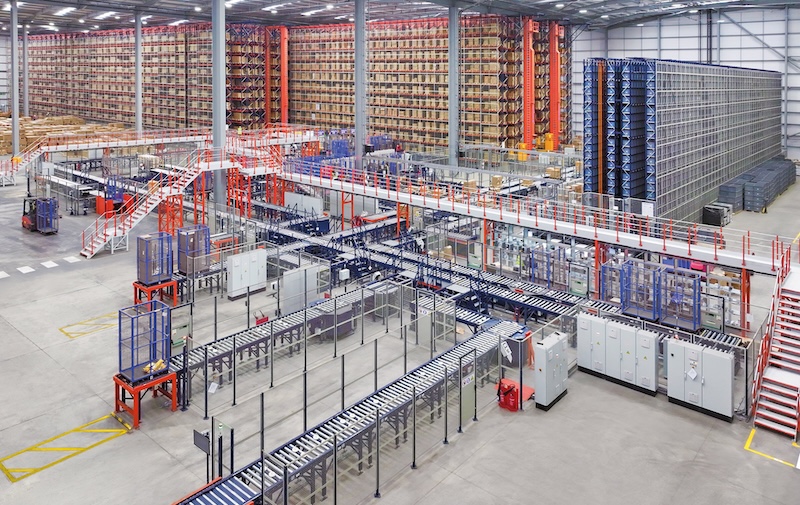
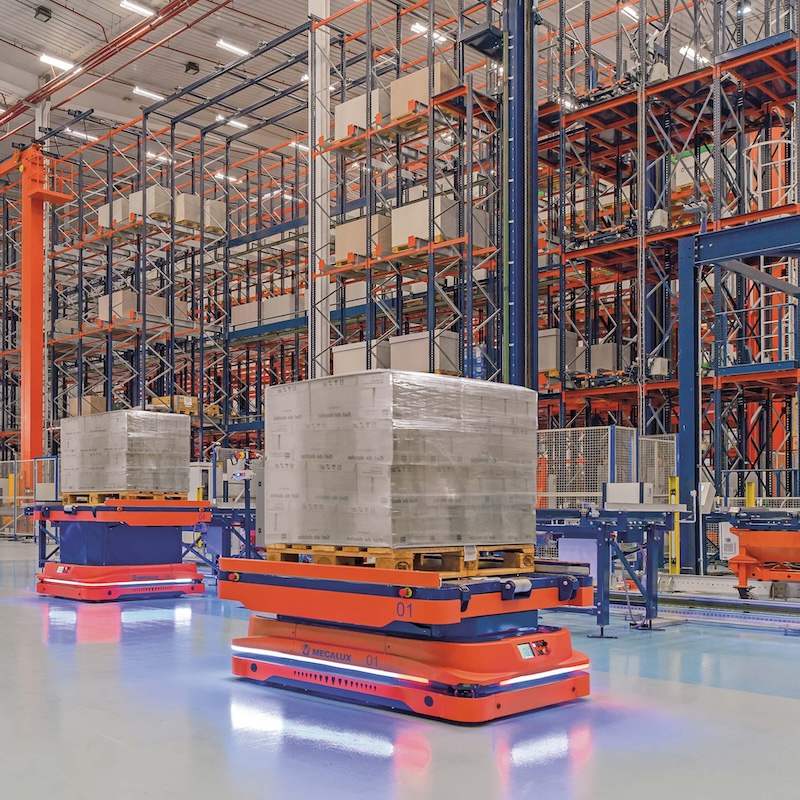
Warehouses have moved well beyond isolated pilots in that AI increasingly supports day-to-day workflows, including order picking, inventory optimisation, equipment maintenance, labour planning and safety monitoring.

“The data show that intelligent warehouses outperform not only in volume and accuracy, but in adaptability,” says Javier Carrillo, CEO of Mecalux. “As peak season approaches, companies that have invested in AI aren’t just faster – they’re more resilient, more predictable and better positioned to navigate volatility.”

The study also finds that AI investments are paying off more quickly than many expected. Most businesses now dedicate between 11 percent and 30 percent of their warehouse technology budgets to AI and machine-learning initiatives, and the typical payback period is just two to three years.

These returns stem from measurable gains in inventory accuracy, throughput, labour efficiency and error reduction. They also reinforce a shift from exploratory spending to long-term capability building.

Cost savings, customer expectations, labour shortages, sustainability goals and competitive pressure all drive these investments, demonstrating that AI’s value extends far beyond automation alone.

Despite this progress, organisations continue to face challenges as they scale AI across their operations.

“The hard part now is the last mile: integrating people, data and analytics seamlessly into existing systems,” says Dr. Matthias Winkenbach, Director of the MIT ILS Lab.

The main barriers include technical expertise, system integration, data quality and implementation cost, reflecting the underlying work required to connect advanced tools with legacy systems.

Even so, companies report strong foundations in data and project management, and they identify better tools, clearer roadmaps, expanded budgets and stronger internal expertise as key accelerators for continued adoption.

Crucially, the report challenges persistent fears about automation replacing human workers. Rather than supplanting human workers, AI is contributing to higher productivity, greater job satisfaction and expanded workforce opportunities.

More than three-quarters of surveyed organisations saw a rise in employee productivity and satisfaction after implementing AI tools, and over half reported growing the size of their workforce.

New roles are emerging across the board, including AI/ML engineers, automation specialists, process-improvement experts and data scientists — evidence that intelligent automation is expanding, rather than reducing, the human role in warehouse operations.

Looking ahead, nearly every company surveyed plans to scale up its use of AI over the next two to three years. An overwhelming 87 percent expect to increase their AI budgets, and 92 percent are currently implementing or planning new AI projects.

The next frontier, the report shows, will centre on decision-making technologies – especially generative AI.

Businesses identify generative AI as the single most valuable method in today’s logistics facilities, citing applications such as automated documentation, warehouse-layout optimisation, process-flow design and even code generation for automation systems.

As these capabilities advance, AI will help a growing number of warehouses move from predictive insight to automated action.

“Traditional machine learning is great at predicting problems, but generative AI actually helps you engineer the solution,” says Dr Winkenbach.

“That’s why companies see it as the biggest value generator in the warehouse today. Ultimately, the measurable gains from automation are productivity wins, making existing systems work smoother, faster and with fewer disruptions.”

The study underscores that as the logistics sector enters the year’s busiest season, the warehouses behind Black Friday orders are not only becoming more automated, but more intelligent systems.

With AI boosting performance, supporting workers and enabling new capabilities across global networks, the coming years propose even deeper integration of data and decision-making into the core of warehouse operations.

Print Friendly, PDF & Email

Share this:

  • Print (Opens in new window) Print
  • Share on Facebook (Opens in new window) Facebook
  • Share on LinkedIn (Opens in new window) LinkedIn
  • Share on Reddit (Opens in new window) Reddit
  • Share on X (Opens in new window) X
  • Share on Tumblr (Opens in new window) Tumblr
  • Share on Pinterest (Opens in new window) Pinterest
  • Share on WhatsApp (Opens in new window) WhatsApp
  • Share on Telegram (Opens in new window) Telegram

Related stories you might also like…

Filed Under: Artificial Intelligence, News, Warehouse robots Tagged With: ai payback period, automation news, generative ai in logistics, intelligent warehouses, logistics automation, mecala ux study, mit ils lab, robotics and automation, robotics and automation news, robotics news, supply chain technology, warehouse ai adoption, warehouse productivity, warehouse workforce trends

Primary Sidebar

Search this website

Latest articles

  • Waabi says its AI driver transferred to Volvo autonomous truck without retraining
  • Ambi Robotics and Pickle Robot integrate AI-powered robots to automate inbound warehouse logistics
  • UK startup Humanoid launches reinforcement learning system to improve robot manipulation
  • Apptronik launches Robot Park to train Apollo humanoid robots with Google DeepMind
  • University of Rhode Island opens advanced Ocean Robotics Laboratory for autonomous marine research
  • Oak Ridge National Lab reveals ‘hidden workforce’ behind AI-powered research facilities
  • The Hardware Powering the Hybrid Industrial Workforce
  • How to Choose a Robot Vacuum and Mop That Actually Fits Your Home
  • How Modern Software Helps Construction Companies in Qatar Work Smarter and Safer
  • Antivirus vs malware: Why antivirus alone is no longer enough

Secondary Sidebar

Latest news

  • Waabi says its AI driver transferred to Volvo autonomous truck without retraining
  • Ambi Robotics and Pickle Robot integrate AI-powered robots to automate inbound warehouse logistics
  • UK startup Humanoid launches reinforcement learning system to improve robot manipulation
  • Apptronik launches Robot Park to train Apollo humanoid robots with Google DeepMind
  • University of Rhode Island opens advanced Ocean Robotics Laboratory for autonomous marine research
  • Oak Ridge National Lab reveals ‘hidden workforce’ behind AI-powered research facilities
  • The Hardware Powering the Hybrid Industrial Workforce
  • How to Choose a Robot Vacuum and Mop That Actually Fits Your Home
  • How Modern Software Helps Construction Companies in Qatar Work Smarter and Safer
  • Antivirus vs malware: Why antivirus alone is no longer enough

Copyright © 2026 · News Pro on Genesis Framework · WordPress · Log in

We use cookies on our website to give you the most relevant experience by remembering your preferences and repeat visits. By clicking “Accept”, you consent to the use of ALL the cookies.
Do not sell my personal information.
Cookie SettingsAccept
Manage consent

Privacy Overview

This website uses cookies to improve your experience while you navigate through the website. Out of these, the cookies that are categorized as necessary are stored on your browser as they are essential for the working of basic functionalities of the website. We also use third-party cookies that help us analyze and understand how you use this website. These cookies will be stored in your browser only with your consent. You also have the option to opt-out of these cookies. But opting out of some of these cookies may affect your browsing experience.
Necessary
Always Enabled
Necessary cookies are absolutely essential for the website to function properly. These cookies ensure basic functionalities and security features of the website, anonymously.
CookieDurationDescription
cookielawinfo-checkbox-analytics11 monthsThis cookie is set by GDPR Cookie Consent plugin. The cookie is used to store the user consent for the cookies in the category "Analytics".
cookielawinfo-checkbox-functional11 monthsThe cookie is set by GDPR cookie consent to record the user consent for the cookies in the category "Functional".
cookielawinfo-checkbox-necessary11 monthsThis cookie is set by GDPR Cookie Consent plugin. The cookies is used to store the user consent for the cookies in the category "Necessary".
cookielawinfo-checkbox-others11 monthsThis cookie is set by GDPR Cookie Consent plugin. The cookie is used to store the user consent for the cookies in the category "Other.
cookielawinfo-checkbox-performance11 monthsThis cookie is set by GDPR Cookie Consent plugin. The cookie is used to store the user consent for the cookies in the category "Performance".
viewed_cookie_policy11 monthsThe cookie is set by the GDPR Cookie Consent plugin and is used to store whether or not user has consented to the use of cookies. It does not store any personal data.
Functional
Functional cookies help to perform certain functionalities like sharing the content of the website on social media platforms, collect feedbacks, and other third-party features.
Performance
Performance cookies are used to understand and analyze the key performance indexes of the website which helps in delivering a better user experience for the visitors.
Analytics
Analytical cookies are used to understand how visitors interact with the website. These cookies help provide information on metrics the number of visitors, bounce rate, traffic source, etc.
Advertisement
Advertisement cookies are used to provide visitors with relevant ads and marketing campaigns. These cookies track visitors across websites and collect information to provide customized ads.
Others
Other uncategorized cookies are those that are being analyzed and have not been classified into a category as yet.
SAVE & ACCEPT