Walk into a modern facility, and you’ll find automation nearly everywhere: the production line, the inventory system, the building controls. Then you reach the lobby, and a visitor is handed a pen and a paper book. The front desk is often the last manual holdout in an otherwise automated operation, and it shows.
Automated visitor management brings the entrance up to the standard of everything behind it. Instead of a handwritten line in a logbook, check-in becomes a fast, consistent, self-service step that captures accurate data and enforces the rules every time.
The Manual Sign-In is a Bottleneck
A paper sign-in works until multiple people show up at once. Then it becomes a queue. A delivery driver, two interviewees, and a contractor all wait while a receptionist writes down names, calls hosts one at a time, and digs out visitor badges. At a busy site, that line forms several times a day.
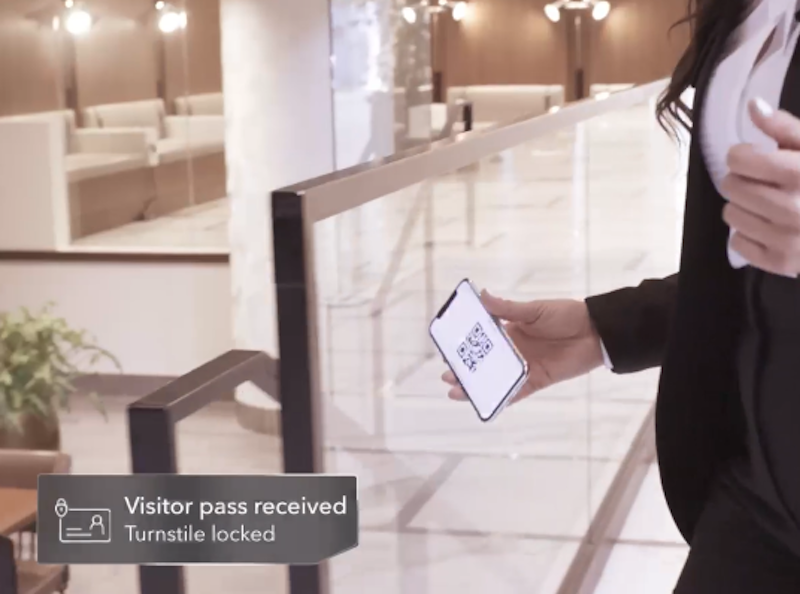
Automated check-in removes the bottleneck. Pre-registered guests check in at a kiosk in seconds; the system notifies the host automatically, and a badge prints without anyone lifting a finger. Reception stops being a chokepoint, and the lobby stops backing up when a few people arrive together.
That same setup works even when no one is at the desk. Early mornings, shift changes, and smaller sites often run without a dedicated receptionist, and an automated kiosk covers those hours instead of leaving the entrance to a sign-in no one is watching.
Accuracy a Clipboard Cannot Deliver
Handwriting on a paper log is a problem in itself. Names come out illegible, times get rounded or skipped, and nothing stops a visitor from writing whatever they like. The record you’re left with is only as reliable as the least careful person who signed it.
An automated system captures structured, consistent data every time. Fields get filled, identity is checked against pre-registration, and each entry is time-stamped by the system rather than guessed. The difference goes beyond tidiness.
When you need to know exactly who was on site and when, a clean digital record answers in seconds. Returning visitors are easier too, since the system recognizes a repeat contractor and pulls up their details instead of starting from a blank line.
Safety and Compliance Built into the Check-In
On industrial and manufacturing sites, the entrance is also a safety checkpoint. You can’t let a contractor onto the floor without knowing the hazards, and host employers are expected to share safety information with contractors before work begins. A manual sign-in enforces none of that. It collects a signature and waves the person through.
Automated check-in can make the requirement part of the process. A visitor can watch a short safety briefing, acknowledge site rules, or sign an agreement before the system issues a badge. The step runs the same way for everyone, every time, with a record that it happened. For a regulated or hazardous site, that consistency is the difference between a policy on paper and one that actually runs at the door.
Data You Can Actually Use
A paper logbook is a dead end. Once a page fills up, it goes in a drawer, and no one looks at it again unless something has gone wrong.
Automation turns check-ins into data a facility can work with. Managers can see visitor volume by day, hour, or location, spot which contractors are on site most often, and pull a complete, searchable history in moments.
That record supports audits, investigations, and capacity planning, and it ties in with the other systems a facility already runs. Throughput at the entrance becomes something a facility can measure and improve, the same way it would any other process on the floor.
Automating the First Handshake
Every other part of a modern facility has been measured, streamlined, and automated. The front desk is often the last place still running on handwriting and good intentions. Moving to automated check-in isn’t about replacing the welcome a visitor gets.
It’s about making that welcome faster, more accurate, and more secure, while aligning the entrance with the operation behind it. For a site that has automated everything else, the lobby is the obvious next step.
