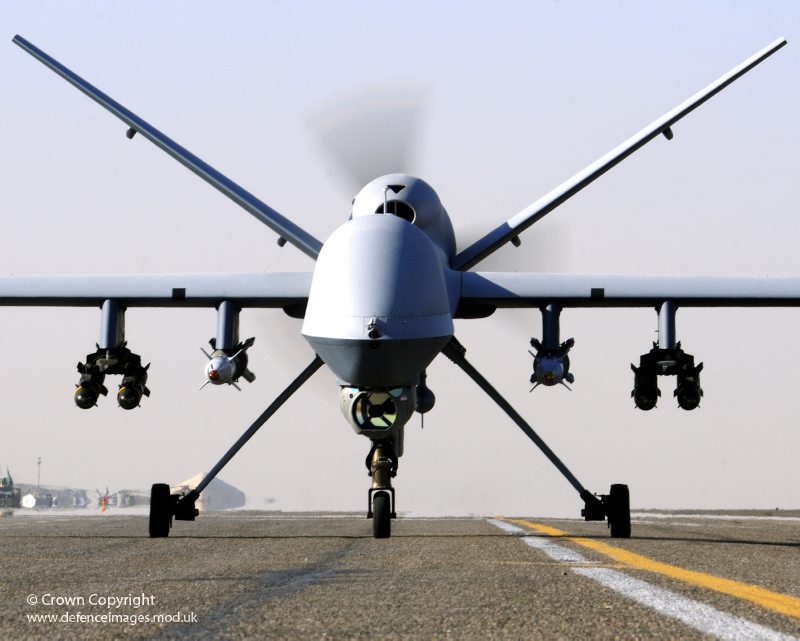
US-based independent researcher Dr Sai Krishna Thota has developed a quantum-inspired decision-support framework designed to improve the safety and reliability of autonomous drone navigation by prioritizing operational risks alongside conventional route planning objectives.
The research, published in Elsevier’s journal Knowledge-Based Systems, addresses the limitations of conventional navigation methods that prioritize finding the shortest route between two locations.
Autonomous unmanned aerial vehicles (UAVs) are increasingly being used in applications including infrastructure inspection, emergency response, logistics and environmental monitoring, where operating conditions can present significant challenges.
The proposed framework takes into account factors including energy consumption, communication reliability, weather conditions and safety requirements when evaluating potential routes.
Across 180 simulated mission scenarios, the framework reduced average route risk by approximately 20.5 percent and safety-rule violations by 52.8 percent compared with an existing risk-aware planning method.
However, the research also identified a trade-off between improved safety and increased energy consumption.
Thota, a senior member of the Institute of Electrical and Electronics Engineers (IEEE), says: “The research introduces a knowledge-guided, quantum-inspired framework that helps autonomous drones prioritize safety over simply finding the shortest route.”
Although the framework draws on mathematical concepts associated with quantum computing, it operates using conventional computing technology and does not require quantum hardware.
The study also found that incorporating explicit operational rules contributed more significantly to improvements in overall performance than the quantum-inspired component.
The findings highlight the potential of knowledge-based decision-support systems to improve the reliability and explainability of autonomous navigation.
While the results are based on computer simulations rather than physical drone trials, the research could inform further investigations into safer autonomous aerial operations.
