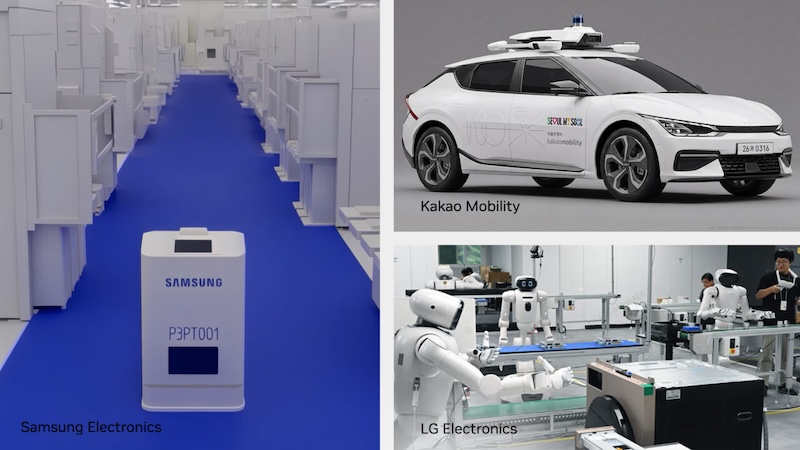
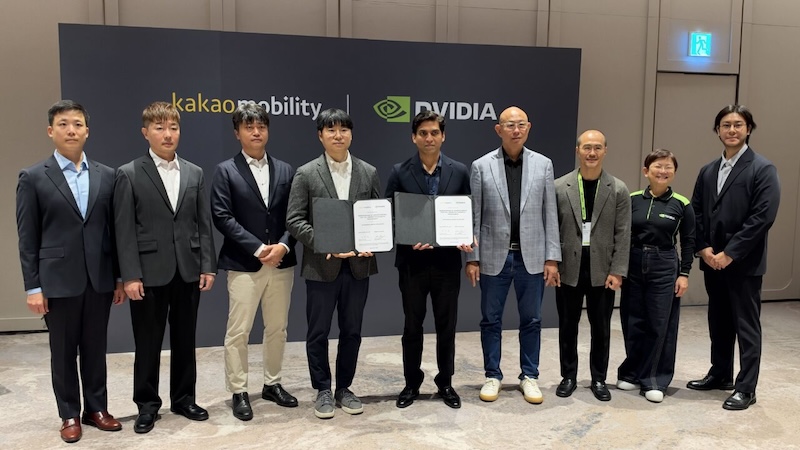
South Korean mobility platform provider Kakao Mobility has signed a memorandum of understanding with Nvidia to develop Level 4 autonomous driving technology, with initial applications planned for Kia’s purpose-built vehicles (PBVs).
The collaboration will combine Kakao Mobility’s proprietary autonomous driving software with Nvidia’s computing, sensor and safety technologies to support the development of driverless mobility services in South Korea.
The agreement builds on Kakao Mobility’s experience operating autonomous vehicles in Seoul’s Gangnam district, where the company has been testing its driving technology in urban environments.
Under the partnership, Kakao Mobility plans to introduce a high-performance autonomous driving computing unit equipped with two Nvidia Drive AGX Thor processors.
The system will use the Nvidia Hyperion sensor and computing architecture to integrate vehicle hardware, sensors and autonomous driving software.
Nvidia’s Halos safety framework will also support software development, testing and validation.
Kia vehicles to provide initial platform
The companies will initially focus on integrating the technology into Kia’s purpose-built vehicles, following a separate agreement between Kakao Mobility and Kia in July to develop vehicles for autonomous driving services.
Kakao Mobility is also advancing its end-to-end autonomous driving AI technology, which combines perception and decision-making within a single model.
Ryu Geung-seon, CEO of Kakao Mobility, says: “Through this collaboration with Nvidia, we will not only accelerate the advancement of E2E autonomous driving but also prepare for the era of Level 4 commercialization as a central hub of a global technology ecosystem connecting software, components, and finished vehicles.”
Level 4 autonomy allows vehicles to operate without human intervention within defined operating conditions and geographical areas.
Kakao Mobility says the partnership will help establish the technical foundations for commercial driverless services in Korea, while potentially supporting expansion into international markets.
The companies have not announced a timetable for commercial operations.
