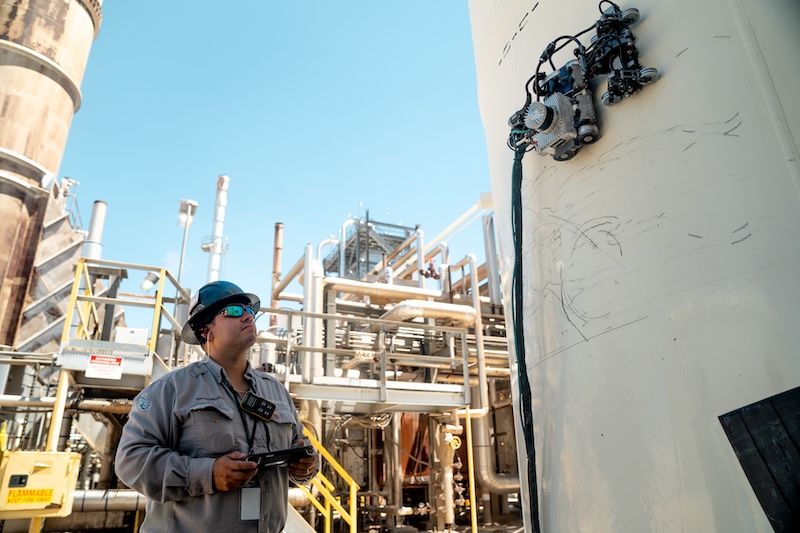
Gecko Robotics has unveiled Raptor, its next-generation industrial inspection robot, designed to collect data on the condition of critical infrastructure significantly faster than existing systems.
Introduced at ADIPEC 2026, the new robot will initially be used by ADNOC in the United Arab Emirates, supporting the energy company’s efforts to integrate artificial intelligence and robotics into asset maintenance operations.
Raptor is designed to inspect pipelines, storage tanks and other steel infrastructure, collecting detailed information about their structural condition to help operators identify potential problems and plan maintenance.
According to Gecko Robotics, Raptor can collect data three to five times faster than the company’s existing robots and perform inspections up to 20 times faster than other automated inspection tools currently available.
The robot is also capable of capturing millions of data points from individual industrial assets, providing information that can be analyzed using Gecko’s AI-powered software.

Improved mobility for complex environments
Alongside its increased inspection speed, Raptor features improved mobility designed to help it navigate complex industrial environments.
The company says the robot can perform a three-point turn similar to a car, allowing it to maneuver around obstacles and operate in confined or challenging spaces.
Gecko Robotics develops robotic systems capable of climbing, crawling, flying and swimming to inspect infrastructure that would otherwise be difficult, dangerous or expensive to assess manually.
Its technology combines robotic data collection with software designed to help industrial operators understand the condition of their equipment and make more informed maintenance decisions.
The initial Raptor rollout with ADNOC will be followed by installations at other industrial customers internationally.
Gecko says the increased speed and data-collection capabilities will allow operators to inspect more infrastructure in less time, potentially improving workplace safety, reducing maintenance costs and supporting more reliable industrial operations.
