As robotics companies race to develop increasingly capable AI models for machines operating in the physical world, TorqueAGI is taking a different approach: supplying the intelligence layer to robot and equipment manufacturers rather than building hardware of its own.
Founded by robotics researcher Dr Ashutosh Saxena, TorqueAGI has spent nearly two years developing and testing what it calls a World-Reasoning Model for industrial robots and heavy machinery.
The company says its approach differs from many vision-language-action models by representing objects, machines and workflows through a spatio-temporal architecture in which physics and geometry form part of the model’s reasoning.
The aim is to enable machines to adapt to changes and learn new tasks from relatively small numbers of demonstrations, while making use of operational data that customers already possess.
Saxena has a long background in robotics and artificial intelligence. He completed his PhD at Stanford University under AI researcher Andrew Ng and later became a professor at Cornell University, where he led the RoboBrain project.
His work on robotic grasping received the Robotics: Science and Systems Test of Time Award in 2023.
TorqueAGI is an Nvidia Perception Partner and was selected for John Deere’s 2026 Startup Collaborator Program.
The company has also worked with Dexterity on truck-unloading robotics and says its technology has been integrated with machines from several major industrial robot manufacturers.
In this Q&A with Robotics & Automation News, Saxena explains how much intelligence can transfer between different types of machines, why TorqueAGI believes physics and geometry should be built into AI reasoning, and where the difficult integration work still remains.
He also discusses the company’s “Sovereign Physical AI” architecture, the case for keeping industrial AI private and local to the customer, and whether world models can materially reduce the time and cost involved in bringing robots into real-world industrial operations.
Interview with Dr Ashutosh Saxena
Robotics & Automation News: What does TorqueAGI’s World-Reasoning Model enable an industrial robot or machine to do that existing robotics AI models cannot?

Ashutosh Saxena: Most robot AI today is a language or vision model with robot data added to it. It is very good at matching what it sees to examples it has already seen. Our model works differently.
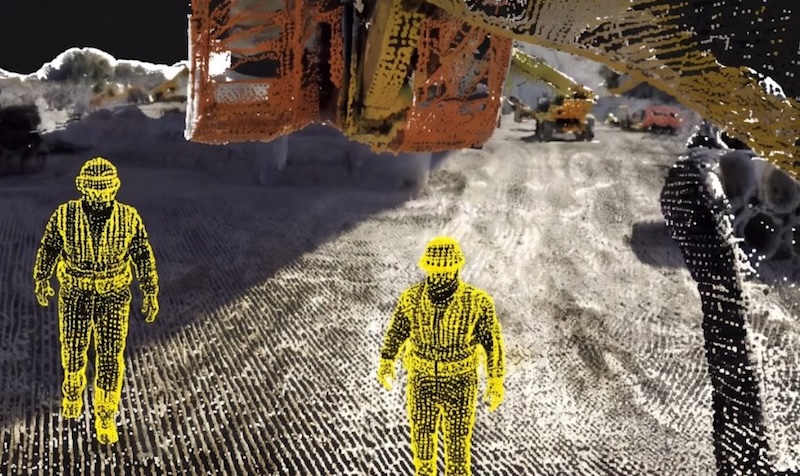
It represents the world as spatial-temporal graph with objects, machines and workflows that exist in space and move forward in time, with physics and geometry built into how it reasons.
In practice, that means the machine can handle a change without being retrained from scratch. If the gripper gets smaller, it works out a new grasp. If a conveyor moves half a metre, it adjusts.
It can also explain why it chose an action, which matters when an engineer has to sign off on a machine that moves heavy loads. And it can use the data a customer already has, such as order histories, equipment logs and operating procedures, rather than waiting for thousands of new demonstrations.
R&AN: You say the model can learn new tasks from only a few demonstrations. How few are we talking about, and what additional training or engineering is typically required before the machine can perform the task reliably?
AS: For a new task, we typically need a few dozen examples rather than tens of thousands. Those examples usually come from the customer’s own operation, which is where the real variation lives.
The examples are only part of the picture. At a job site, a new hire is shown a task a few times and is productive quickly because they already understand how the physical world behaves, and the model starts from the same place.
What the customer adds is context: their operating procedures, their safety limits, their equipment logs. We then validate the behaviour in simulation and in a supervised run on the customer’s site before the machine works unattended.
The aim is that the engineering effort goes into checking and tuning for that site, not into collecting a mountain of data.
R&AN: How much knowledge can genuinely transfer between different robots and machines? Could something learned on a robotic arm, for example, be useful to a humanoid, agricultural machine or construction vehicle?
AS: The part that transfers is the understanding of the physical world and of the workflow. Objects fall, loads shift when you turn, two solid things cannot occupy the same space, and a pallet has to be built in a certain order.
None of that belongs to one body. The same model has run on single-arm and two-arm robots, mobile platforms, scissor lifts, humanoids and tractors.
What does not transfer automatically is the body-specific detail: how a particular machine moves, what its limits are, how its controls respond.
That has to be described for each machine. The point is that we describe the body and keep the intelligence, rather than starting again for every new machine.
R&AN: Your model incorporates physics and geometry into its reasoning. How does that differ from the vision-language-action models and other world models now being developed for robotics?
AS: Vision-language-action models map what the robot sees, plus an instruction, to what it should do. They learn that mapping from large amounts of demonstration data. World models predict what happens next, and many of them learn that from video at very large scale.
Ours is built on a spatio-temporal graph, which represents the world as things that happen in space and forward in time, with physics and geometry part of the structure rather than something the model has to infer from examples.
That lets it predict consequences and choose actions in one system, which is why we call the product a world model. But it is a different route from either camp, and the practical difference is that it does not need to have seen a situation many times to reason sensibly about it.
R&AN: TorqueAGI supplies the intelligence rather than building robot hardware. How difficult is it to integrate your model with different manufacturers’ robots, sensors and control systems, and where does most of the integration work remain?
AS: Integration is real work, and I would not pretend otherwise. We have integrated with robots from Dexterity, Kawasaki Robotics, Kuka, Berkshire Grey, Universal Robots and ABB, and each one has taught us something that makes the next one faster.
Because the intelligence sits in the understanding of the workflow rather than in a specific body, the model itself does not change much from one machine to another.
Most of the remaining effort is on the machine side: connecting to the manufacturer’s control interface, calibrating sensors, and making sure the model respects that machine’s safety systems and limits.
That is also where manufacturers can help most, and it is why we work as a model supplier alongside the companies that build the machines.
R&AN: What does your “Sovereign Physical AI” architecture mean in practical terms for an industrial customer, and why is running and learning locally at the edge important compared with using a shared cloud-based model?
AS: In practical terms, it means a common foundation with each customer running its own dedicated, private model on its own machines. The model learns locally, under that customer’s own operating procedures, and what it learns stays with that customer. Your machines, your data, your intelligence.
There are three reasons this matters.
- First, operations: a machine cannot stop being intelligent because the network drops, so perception and safety decisions have to happen at the machine.
- Second, control: with a shared model, your operational knowledge feeds a brain that every other customer, including your competitors, also runs on, and it can change underneath you when the vendor updates it.
- Third, accountability and compliance: industrial equipment has to be tested and certified, and the EU Machinery Regulation, which applies from January 2027, treats AI-driven safety functions as high risk.
You cannot certify a machine on a model you cannot version and test. A shared model improves faster, and I do not dismiss that, but for critical equipment I think ownership matters more.
R&AN: Ultimately, can this approach materially reduce the cost and time required to deploy industrial robots? What evidence from your enterprise pilots or work with companies such as John Deere and Dexterity can you share to demonstrate that?
AS: Yes, and the reason is simple. The expensive part of deploying a robot is rarely the robot. It is collecting data, adapting to each new product or layout, and validating the result. A model that reasons and learns from a customer’s existing data attacks all three.
On evidence, in one large warehouse deployment we improved packing density across 700,000 orders, and in that business a one or two per cent gain is substantial.
With a heavy-equipment customer, a model trained on 6,000 events matched a system built over nine years and seven million events. Our model also supports Dexterity’s truck-unloading robots, and we are part of John Deere’s 2026 Startup Collaborator Program.
I would add that the right test is the one your customer applies: does the line keep running, at speed, over a full shift. That is the number we encourage buyers to ask every vendor for.
