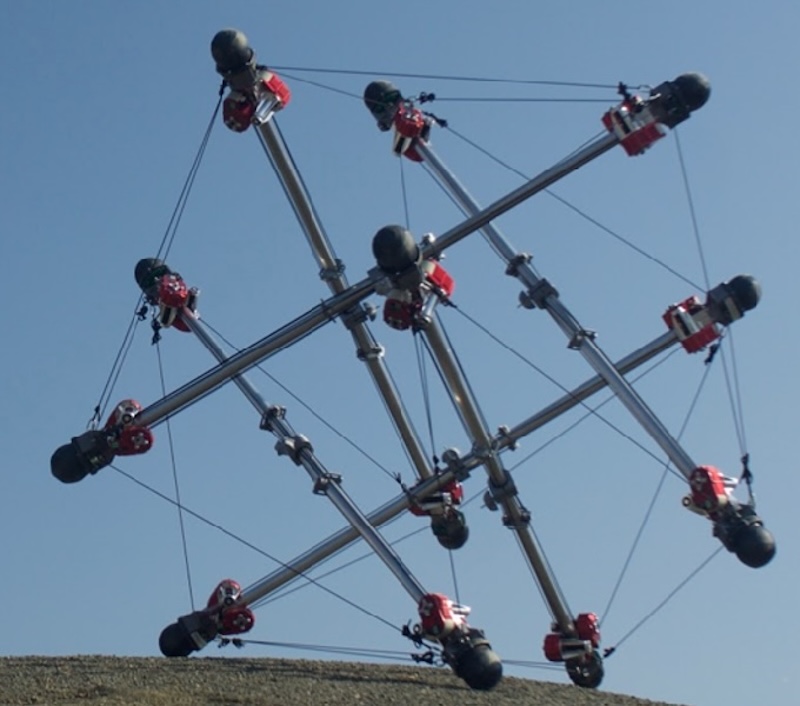
HEBI Robotics has been awarded a Phase I contract from NASA’s Small Business Innovation Research (SBIR) program to develop compact robotic actuators for use in small satellites and other space missions.
The project will focus on designing miniature actuators that can generate high levels of force while remaining small enough for spacecraft where space and weight are limited.
NASA said the technology could be used in CubeSats and other compact spacecraft, where existing robotic hardware is often too bulky or lacks the flexibility needed for advanced tasks.
The contract, awarded through NASA’s SBIR Ignite funding program, runs through December 2026.
According to HEBI Robotics, the research will explore different motor and gearbox designs to create a compact actuator suitable for space missions. The company says the goal is to fill the gap between inexpensive hobby-grade servo motors and expensive custom-built space robotics systems.
Andrew Willig, director of hardware at HEBI Robotics, said the commercial space industry is creating demand for lower-cost robotic hardware that can still operate reliably in harsh conditions.
“With space becoming increasingly commercialized, there is real demand for affordable, versatile, and scalable mass-production of robotic systems that can function in difficult environments,” says Willig.
“We’re looking to bring the price point down on rugged hardware without compromising the reliability that a critical industry such as aerospace relies on.”
Willig added that NASA has previously used the company’s hardware.
“NASA has used our hardware in the past and it is exciting to be able to work on projects like this that make it possible for America to do more in space,” says Willig.
HEBI said the technology could also have applications beyond the space sector.
The company plans to continue developing its existing actuator products alongside the NASA-funded research, arguing that hardware designed to withstand the extreme conditions of space could also benefit industrial and field robotics operating in demanding environments.
Willig says: “Space is difficult, but the lessons apply here on earth as well. Making systems that are easy to use and rugged means these actuators are of interest not just to NASA but to anyone looking for modular actuation hardware they can deploy in rough and dangerous environments in the field.”
