The robotaxi industry has spent billions of dollars developing vehicles that can drive without a human behind the wheel.
But removing the driver creates another problem: the vehicle may be autonomous on the road, but it still needs people and infrastructure to charge it, clean it, inspect it and keep it ready for its next passenger.
As robotaxi fleets expand, those seemingly mundane operations could become a significant constraint. Large centralized depots require land, electrical capacity and staff, while every journey to and from them takes a vehicle out of revenue-generating service.
Aseon Labs believes part of the answer is to bring the depot to the robotaxi.
The Silicon Valley startup is developing portable autonomous “pit stops” that can be installed inside robotaxi operating zones.
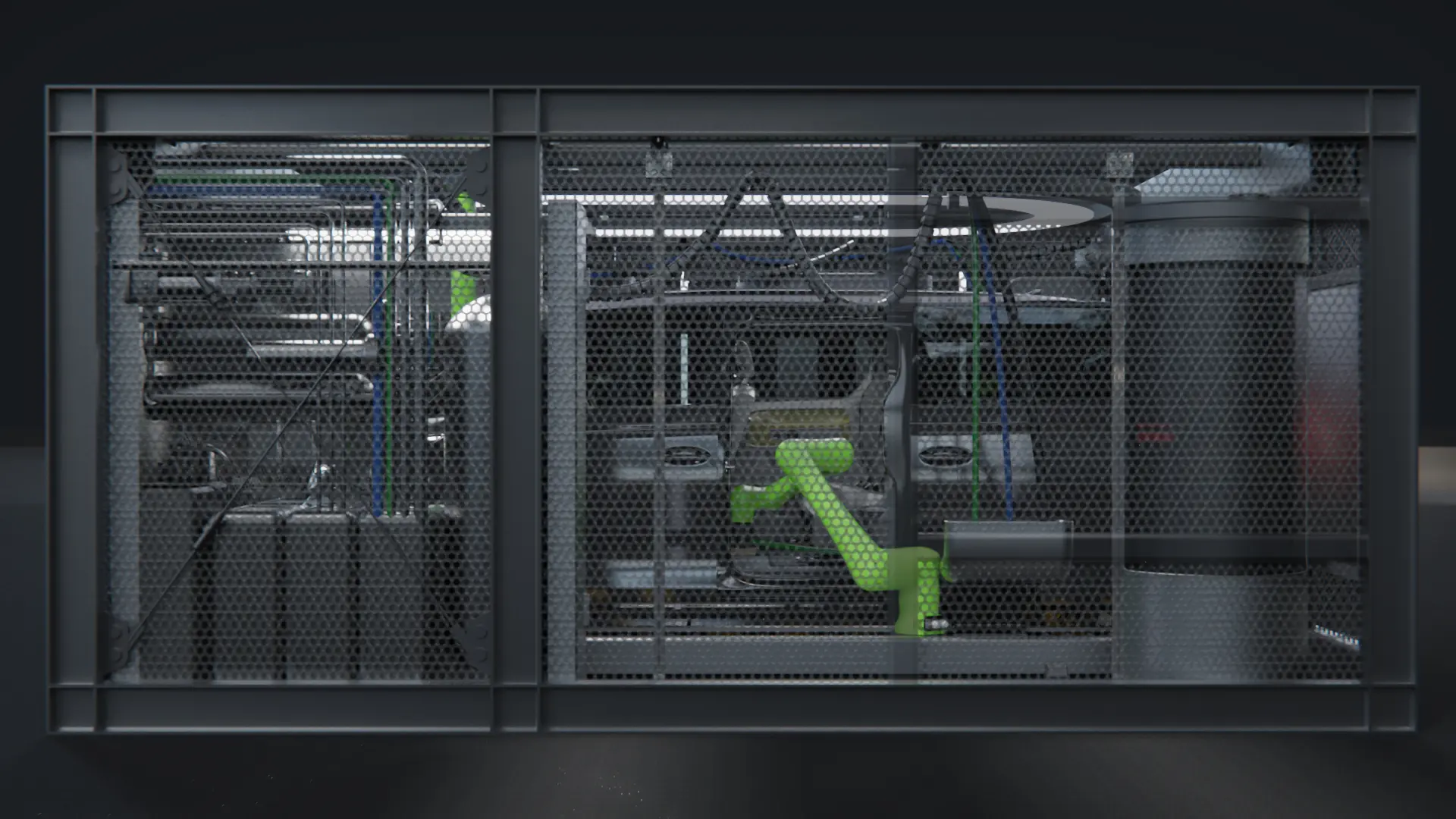
Its pods use cameras and industrial robotic arms to inspect vehicles, connect charging cables, remove rubbish and lost belongings, wipe surfaces and vacuum interiors, with a complete servicing cycle expected to take around 30 minutes.
The company has raised $10 million from investors including Crane Venture Partners, Y Combinator and Expa, founded by Uber co-founder Garrett Camp.
Aseon is led by CEO George Kalligeros, a former Tesla engineer who previously co-founded battery-swapping company Pushme with Aseon co-founder Dan Keene. Pushme built thousands of battery-swapping locations before being acquired by TIER.
In this Q&A with Robotics & Automation News, Kalligeros explains why he believes operations will increasingly determine the pace of robotaxi expansion, how Aseon’s robotic pods distinguish routine cleaning from situations requiring human intervention, and why distributed servicing could eventually become shared infrastructure used by multiple autonomous fleets.
He also looks further ahead to automated sensor cleaning, calibration checks and component replacement. As Kalligeros puts it: “The car can already drive itself to the pit stop. We’re building the infrastructure to take care of it when it gets there.”
Interview with George Kalligeros

Robotics & Automation News: As robotaxi fleets scale, how significant a constraint will charging, cleaning, inspection and servicing become?
George Kalligeros: Operations will increasingly determine the pace of the robotaxi rollout. The autonomous driving technology is already proving itself.
Waymo reports 95 percent fewer serious or fatal crashes than comparable human driving across more than 270 million driverless miles.
But Waymo currently operates in 15 US cities, compared with Uber’s presence in more than 15,000 cities worldwide. That gives you a sense of how early we are in this industry’s development.
Every robotaxi still needs charging, cleaning and inspection, which today means dedicated depot space and people working around the clock.
Add 100,000 vehicles to a fleet, and the necessary facilities, personnel and electrical infrastructure must be in place before those vehicles can begin generating revenue.
Power availability is an especially significant constraint. California regulators have established maximum timelines approaching two years for new or upgraded electrical circuits and nearly nine years for new substations.
Meanwhile, data centers are increasing competition for the industrial land and electrical capacity these facilities require. Those are precisely the infrastructure constraints we’re building Aseon to address.
R&AN: What happens when a robotaxi enters an Aseon pod, and which tasks can it perform autonomously?
GK: Our Menlo Park demonstration unit is scheduled to begin running the complete servicing process at the end of October.
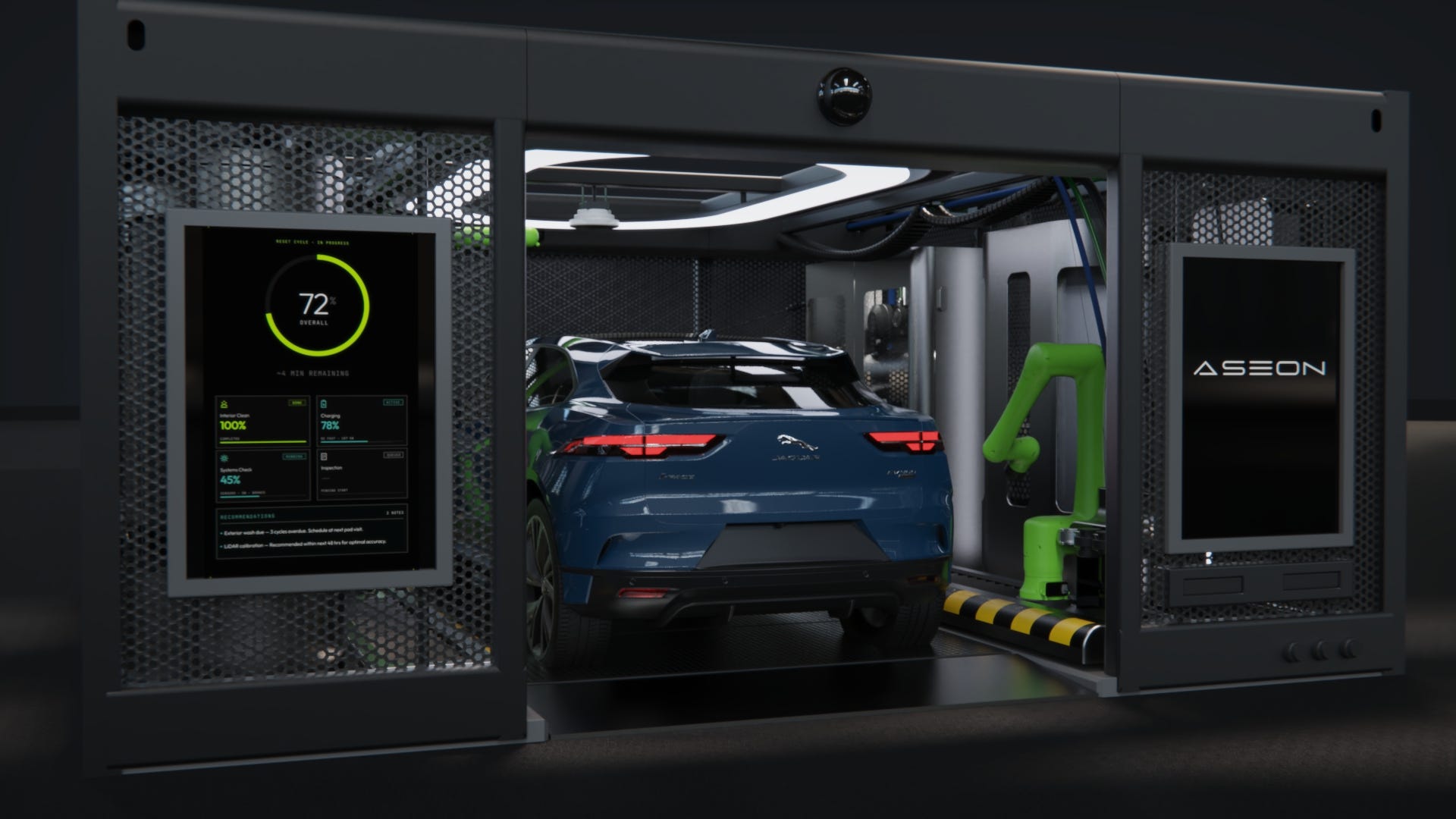
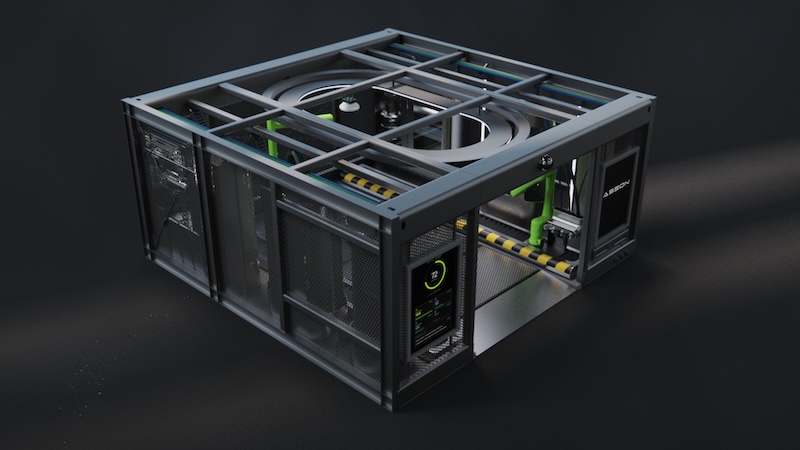
A vehicle enters the pod via a ramp, where cameras scan and document its exterior and cabin. One of two industrial robotic arms connects a NACS or CCS charging cable, while the system begins cleaning the interior.
The arms remove rubbish, collect lost belongings for secure storage in a locker, wipe surfaces and vacuum using interchangeable end-effectors.
Each arm moves along a floor track that provides a seventh axis of motion, with access to a tool wall containing the necessary attachments.
Their work is confined to the charging port and vehicle cabin. A complete servicing cycle takes approximately 30 minutes. Robotic charging is already established technology; automating interior cleaning is the major advancement we’re introducing.
Repairs, tire changes, sensor maintenance, deep cleaning and mechanical work will continue to be handled by people at conventional depots.
R&AN: How much time and mileage could distributed servicing save compared with returning robotaxis to centralized depots?
GK: Robotaxi operators don’t publicly disclose the mileage attributable specifically to depot journeys, but the available operating data illustrates the scale of the problem.
Waymo’s California filings show 566,282 charging sessions in the second quarter of 2026, equivalent to more than 6,000 daily sessions.
A May study by researchers at UC Irvine and UC Berkeley, funded by Waymo, examined 1,700 robotaxis in San Francisco and found that circling instead of pulling over added more than 125,000 miles of driving per day, an increase of nearly 60 percent.
That finding concerns circling rather than depot travel, but it demonstrates how operational decisions can substantially increase non-revenue mileage.
Our approach is to position robotic servicing pods close to where vehicles are already dropping off passengers, allowing them to make short stops for charging, inspection and cleaning without traveling back to a centralized facility. A vehicle might need just ten minutes for a quick top-up, scan and tidy before returning to service.
We’re not publishing specific fleet-size economics yet, but the operating model is straightforward: central depots continue handling overnight servicing, repairs and exceptions, while distributed pods manage routine daytime requirements, one vehicle at a time.
R&AN: How does the system distinguish routine cleaning from situations that need human intervention?
GK: Our guiding principle is to inspect the cabin before touching anything. Cameras assess its condition before the robotic arms begin work, allowing the system to identify routine cleaning tasks such as removing rubbish, securing lost belongings, wiping surfaces and vacuuming.
More complicated situations, including spills, biohazards, damage or difficult substances such as melted chocolate, are referred to human personnel.
When the system identifies something beyond its capabilities, the cleaning arm stands down while charging continues. Images and a corresponding alert are sent to the depot so the issue can be addressed appropriately.
We’d rather refer ten vehicles that we could have cleaned than risk making one stain worse. We expect routine cleaning requirements to account for most visits, and our demonstration program will help establish exactly what proportion can be handled autonomously.
R&AN: How can one Aseon pod service robotaxis with different dimensions, charging systems and interiors?
GK: The fundamental pod architecture remains consistent across fleets. What changes are the software configurations, vehicle profiles and tools used to service each platform.
Two robotic arms mounted on floor tracks can access charging ports and cabin interiors from either side of a vehicle, while cameras identify the locations of doors, seats and charging connections. An interchangeable tool system accommodates different charging standards and cleaning requirements.
Each additional vehicle platform requires its own software profile and calibration. We’re designing around production vehicles and vans, including platforms such as the Jaguar I-PACE, Hyundai Ioniq 5, Lucid Gravity and Tesla Model Y, while purpose-built autonomous vehicles require their own configurations.
Integration with the fleet’s dispatch and vehicle systems coordinates arrival, door access and charging-port activation. Establishing that integration is the starting point of every conversation we have with a prospective fleet partner.
R&AN: Who do you expect will ultimately own and operate autonomous robotaxi servicing infrastructure?
GK: There’s room for several models, and partnerships are already becoming central to robotaxi operations. Avis is working with Waymo in Dallas, Moove supports operations in Phoenix and Miami, and Lyft’s Flexdrive is involved in Nashville.
These arrangements demonstrate how fleet operations can involve companies beyond the autonomous driving technology developers themselves.
Our model is for Aseon to own the pods, secure the locations and manage the servicing operations, while fleet operators supply the vehicles. A single location could accommodate multiple fleets through scheduled servicing slots, with parking operators and charging networks providing access to land and electrical infrastructure.
Municipalities also have an important role through permitting and curbside regulations. By operating on private property and scheduling vehicle arrivals around available capacity, we can keep routine servicing off public streets while making infrastructure available to multiple operators.
R&AN: Could robotaxis eventually handle routine inspection, servicing and minor repairs with little or no human involvement?
GK: Absolutely. Autonomous vehicles already monitor their battery levels, and fleet management systems already coordinate servicing schedules. Our architecture builds on those capabilities by allowing a pod to offer an available servicing slot that the fleet’s dispatch system can book automatically.
Every visit would also generate inspection data, creating a continuously updated record of the vehicle’s condition and identifying changes such as new scratches, cracked lens covers or dirty sensor housings.
Sensor cleaning and calibration checks are logical next steps because the vehicle is stationary inside a controlled environment.
Eventually, relatively straightforward component replacements, such as windshield wipers and cabin filters, could also be automated, although more complex mechanical work and decisions requiring human judgment would remain with trained personnel.
The broader opportunity is to make routine vehicle servicing as autonomous as the driving itself. The car can already drive itself to the pit stop. We’re building the infrastructure to take care of it when it gets there.
