Artificial intelligence has become the dominant theme in technology investing, but when it comes to robotics, some investors argue that the industry may be drawing the wrong conclusions from recent breakthroughs in large language models and generative AI.
Among them is Ankur Saxena, investment director at TDK Ventures, the corporate venture capital arm of TDK Corporation.
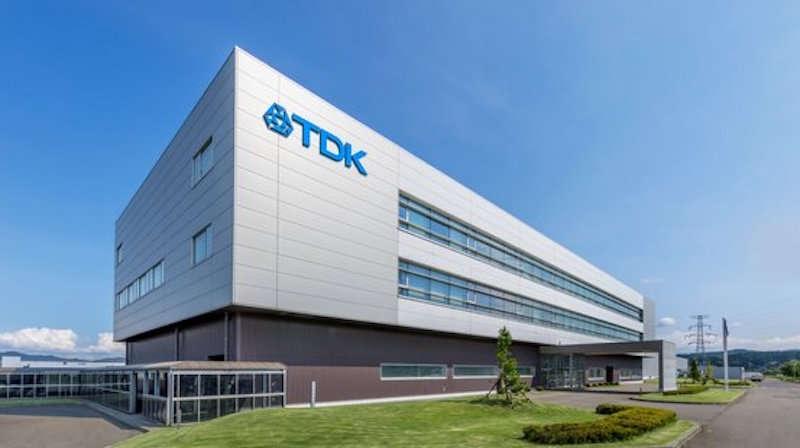
While TDK is widely recognized today as a supplier of electronic components, sensors, power systems, and advanced materials, many readers will remember the company as one of the world’s most recognizable brands in the era of cassette tapes and audio recording media.
The famous TDK logo appeared on millions of audio and video tapes throughout the 1970s, 1980s, and 1990s before the company evolved into a major technology supplier serving industries ranging from automotive and industrial automation to consumer electronics and energy systems.
Today, through TDK Ventures, the company is investing in the next generation of robotics, artificial intelligence, energy, and advanced manufacturing startups.

Its portfolio includes companies such as ANYbotics, which develops autonomous inspection robots for industrial facilities, and EdgeCortix, which specializes in energy-efficient AI computing for robotics and edge applications.
In this interview, Saxena discusses what he sees as one of the biggest misconceptions in the robotics sector: the assumption that advances in foundation models and generative AI will automatically translate into capable physical machines.
He argues that success in robotics depends on far more than software intelligence and proposes a framework he calls the “4Ps of Physical AI” – perception, planning, performance, and platform.
The conversation also explores whether the current wave of investment in humanoid robots is justified, where the most attractive near-term opportunities can be found, why enabling technologies such as sensors, power electronics, motion control, and edge computing remain undervalued, and which robotics sectors are likely to create the most value over the remainder of the decade.
For investors, engineers, and technology leaders trying to understand where robotics is heading next, Saxena offers a pragmatic perspective grounded in both industrial reality and venture capital experience.
Interview with Ankur Saxena

Robotics and Automation News: What do investors and robotics companies still misunderstand about AI and physical-world automation?
Ankur Saxena: The dominant narrative in the market conflates AI capability with physical world utility. Foundation models are probabilistic machines trained on human expression: language, images, code. The physical world obeys mechanics, not statistics.
Robotics demands determinism: sub-millisecond response, fault tolerance, and reliable perception under real environmental variance. Many investors assume that scale applied to language will translate automatically to mechanical systems. It won’t.
Robotics companies make the inverse mistake. Many are bolting generative AI onto existing hardware stacks as a marketing layer, without rearchitecting for the actual constraint, which is grounding language and reasoning models in real-world sensor and actuator feedback.
The opportunity isn’t generative AI replacing robotics engineering. It’s physical AI: models trained on sensor fusion, kinematics, and closed-loop feedback, that augment it.
R&AN: Which of the 4Ps, perception, planning, performance, platform, is the weakest link?
AS: Perception is the bottleneck most people underestimate. Planning has matured significantly with advances in foundation models and sim-to-real transfer.
Performance continues to track hardware curves. But perception, which involves reliably interpreting sensor data in unstructured, dynamic environments, remains brittle.
Industrial robots excel in controlled settings where the world is deterministic. The moment you introduce ambient lighting variation, object occlusion, or surface anomalies, accuracy degrades fast.
The industry is still heavily dependent on expensive sensor stacks and custom calibration. Until perception generalizes robustly to novel environments with low compute overhead, autonomy at scale remains constrained.
R&AN: Is humanoid robot investment justified, or are we building a bubble?
AS: Both can be true simultaneously. The long-term thesis for humanoids is sound. If you want robots to operate in human-designed environments without retrofitting the world, bipedal form factors make architectural sense, and companies like Agility Robotics, which already has Digit deployed in commercial logistics environments, prove the category isn’t purely speculative.
But current investment broadly is pricing in a commercialization timeline that is optimistic by at least a decade. Humanoids face compounding hard problems: dexterous manipulation, energy efficiency, real-time balance under load, and cost-per-unit at manufacturing scale.
The companies that survive will be those building genuine mechanical and AI differentiation, not those riding the hype cycle with impressive demos and thin deployment pipelines.
R&AN: Where do the strongest near-term robotics opportunities actually lie?
AS: Constrained, high-value environments with repetitive tasks and measurable ROI. Autonomous mobile robots in logistics and warehousing.
Inspection and monitoring robots in energy infrastructure, mining, and industrial facilities, where startups like ANYbotics are already delivering.
Aerial autonomy is an underappreciated category here too: AutoFlight’s eVTOL platforms are opening up cargo logistics and infrastructure inspection from the air, a segment with real near-term commercial pull.
Surgical and rehabilitation robotics round this out, where precision requirements justify premium pricing. These segments don’t require solving open-ended manipulation or general navigation. They demand deep reliability in a defined operational domain.
R&AN: What do you look for when evaluating robotics startups?
AS: Impressive technology is table stakes. Almost every robotics startup can produce a great demo. The real question is whether the team understands the deployment gap: the distance between a working demo and a system an enterprise will trust to run unsupervised, 24/7, in a real facility.
I look for teams obsessed with their own failure modes, not just their wins. Have they instrumented production systems and confronted what breaks?
Are they building toward a defined customer with measurable ROI, or chasing the next funding round? At TDK Ventures, we also ask a sharper question: does this company own a moat, in hardware, data, or integration depth, or is it one well-funded competitor away from commoditization?
R&AN: Are investors underestimating enabling hardware, sensors, motion control, power electronics, computing?
AS: Significantly. The software layer captures attention because it’s legible to generalist investors and generates compelling demo moments. But robots are physical objects: their real constraints are thermal, mechanical, and electrical.
You cannot software-engineer your way around power density limitations, sensor noise floors, or actuator backlash. This is precisely why TDK’s position in physical AI is distinctive.
Deep materials science and component heritage in magnetics, energy storage, power supplies, and sensors provides portfolio companies with access to enabling technology that is genuinely hard to replicate.
The next defensible moats in robotics will be built at the hardware-software interface, not above it.
R&AN: What are the biggest barriers preventing robotics from achieving broader industrial adoption?
AS: Three interconnected problems.
First, integration complexity: most industrial environments were not designed for autonomous systems, and the cost of retrofitting or reconfiguring workflows is underestimated.
Second, reliability expectations: enterprise buyers require uptime and safety certification standards that many robotics companies cannot yet meet consistently at scale.
Third, the talent gap at deployment, not in building robots, but in operating and maintaining them across distributed sites. Software companies solved this with SaaS and remote updates.
Robotics companies haven’t fully cracked the equivalent. The companies that will win at scale are those treating post-deployment operations as a core product, not an afterthought.
R&AN: Which robotics segments will create the most value by 2030, and which trends are overhyped?
AS: The greatest value creation will come from industrial and field robotics in energy, infrastructure, and supply chain: segments with acute labor shortages, high safety risk, and quantifiable productivity impact.
Edge AI inference hardware, enabling on-device processing without cloud dependency, will quietly become critical infrastructure for the entire sector.
The most overhyped trend: general-purpose humanoid robots as near-term enterprise solutions. The second: “full-stack” robotics software platforms that claim to abstract away hardware entirely.
Physics doesn’t abstract. The companies that respect that constraint will outlast the ones that don’t.
