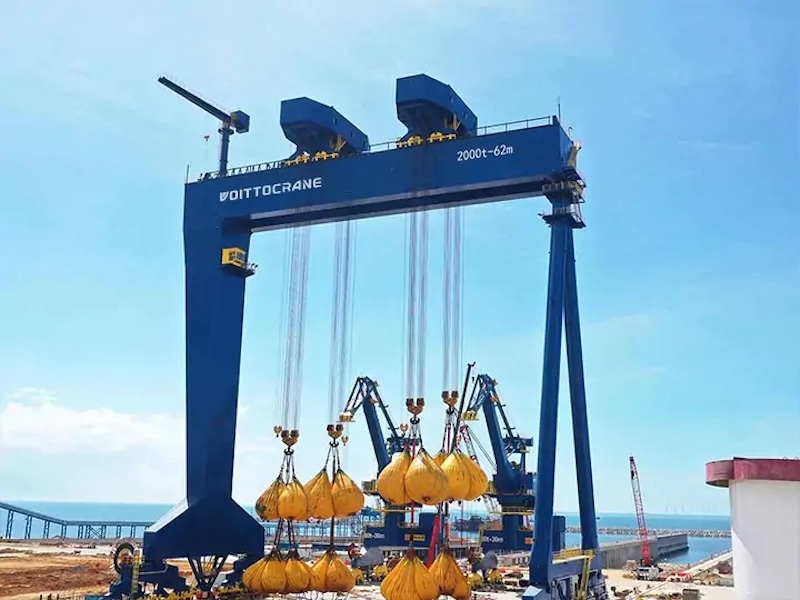
Container gantry cranes have long been the backbone of global port logistics. However, in 2026, these towering machines are undergoing a profound transformation.
Driven by automation, artificial intelligence, and the growing pressure to reduce emissions, container gantry cranes are no longer just mechanical workhorses – they are becoming intelligent, connected systems that redefine how ports operate.
Leading manufacturers such as Voitto Crane are at the forefront of this shift, delivering next-generation crane solutions that combine smart controls, energy efficiency, and seamless integration with port management systems.
The Rise of Automation in Container Port Operations
Ports worldwide are under enormous pressure to handle more cargo, faster, with fewer errors and lower costs. As a result, automated container gantry cranes are replacing traditional manually operated systems at an accelerating pace.
Modern automated container gantry cranes use sensor fusion, laser positioning, and machine vision to perform precise container movements without direct human intervention. Operators, therefore, shift from physical cabins to remote control centers, supervising multiple cranes simultaneously from a single workstation.
According to recent market analysis, the global container crane market was valued at approximately USD 4.12 billion in 2025 and is projected to reach USD 5.02 billion by 2034, driven largely by automation adoption in major shipping hubs across Asia, Europe, and North America.
Key Technologies Driving the Change
1. AI-Powered Anti-Sway Control
One of the most significant advances in container gantry cranes is AI-powered anti-sway technology. Traditional cranes rely heavily on operator skill to stabilize swinging loads. Today, intelligent control algorithms automatically detect load movement and apply corrective micro-adjustments in real time.
This technology, integrated into Voitto Crane’s latest container gantry crane series, reduces cycle times by up to 20% while dramatically lowering the risk of load collisions and workplace accidents.
2. IoT-Enabled Predictive Maintenance
Downtime is one of the most costly challenges in port operations. Consequently, container gantry cranes equipped with IoT sensors can now monitor structural integrity, motor performance, wire rope tension, and hydraulic pressure continuously.
By collecting and analyzing this data, port operators receive early warnings of potential failures – often days or weeks before a breakdown occurs. Voitto Crane embeds multi-point sensor arrays across its crane systems, enabling predictive maintenance schedules that reduce unplanned downtime by up to 30%.
3. Automated Stacking and Positioning
Rail-mounted gantry cranes (RMGs) and rubber-tired gantry cranes (RTGs) are increasingly working in tandem with automated guided vehicles (AGVs) on the terminal floor. Together, they create a fully automated container flow – from vessel to yard stack to truck gate – with minimal human touch points.
This level of integration is central to the smart terminal concept that Voitto Crane designs its container gantry crane solutions around, enabling terminals to achieve throughput increases of 25-35% compared to conventional operations.
Environmental Impact: The Push for Electric Container Gantry Cranes
Sustainability is no longer optional in port operations. Regulatory frameworks in Europe, North America, and parts of Asia are mandating lower emissions from port equipment. In response, electric and hybrid container gantry cranes are rapidly gaining market share.
Electric container gantry cranes eliminate diesel consumption at the point of operation and, when powered by renewable energy sources, can achieve near-zero carbon footprints. Furthermore, regenerative braking technology – standard on Voitto Crane’s electric RTG models – recovers energy during lowering operations and feeds it back into the terminal power grid.
Ports that have transitioned to fully electric container gantry cranes report energy cost reductions of between 30% and 40% compared to diesel-powered equivalents.
RTG vs RMG: Choosing the Right Automated Container Gantry Crane
Port operators frequently face the decision between rubber-tired gantry cranes (RTGs) and rail-mounted gantry cranes (RMGs) when planning terminal automation. Both configurations offer distinct advantages.
- RTG cranes deliver flexibility. They can be repositioned across the terminal yard as operational needs change, making them ideal for ports with variable container flows or limited space for permanent rail infrastructure.
- RMG cranes, on the other hand, offer superior precision and higher throughput for high-density stacking operations on fixed tracks. They are the preferred choice for large-scale automated terminals handling millions of TEUs annually.
Voitto Crane offers both RTG and RMG configurations within its automated container gantry crane portfolio, with customizable span widths, lifting capacities ranging from 35 to 65 tonnes, and full compatibility with leading terminal operating systems (TOS).
The Human Factor: Redefining the Operator Role
A common concern around crane automation is workforce displacement. However, the reality in most modern terminals is more nuanced. Automation does not eliminate jobs – it redefines them.
Crane operators today require digital literacy alongside mechanical knowledge. They monitor system dashboards, manage exception handling when automation encounters unexpected scenarios, and oversee maintenance workflows. As a result, the demand for technically skilled port workers is actually increasing alongside automation adoption.
Voitto Crane supports this transition by providing comprehensive operator training programs as part of every automated container gantry crane deployment, ensuring that port teams can confidently manage and maintain intelligent crane systems.
Looking Ahead: What’s Next for Container Gantry Cranes
The next phase of container gantry crane evolution is already taking shape. Fully unmanned remote operation centers — where a single operator manages an entire fleet of container gantry cranes from an off-site facility – are being piloted at leading global terminals.
Additionally, the integration of digital twin technology allows port engineers to simulate crane performance, model maintenance scenarios, and optimize container flow before making physical changes to terminal infrastructure.
Voitto Crane is actively investing in both remote operation capability and digital twin compatibility across its container gantry crane product line, positioning its customers to remain competitive as port automation continues to accelerate through 2026 and beyond.
Conclusion
Automated container gantry cranes represent one of the most impactful technological shifts in global logistics today. From AI anti-sway control to electric zero-emission lifting, the container gantry crane of 2026 is smarter, cleaner, and more capable than ever before.
For port operators seeking to future-proof their terminal infrastructure, partnering with an experienced and innovative manufacturer is essential. Voitto Crane combines deep engineering expertise with cutting-edge automation technology, making it a trusted partner for ports navigating the transition to fully automated operations.
