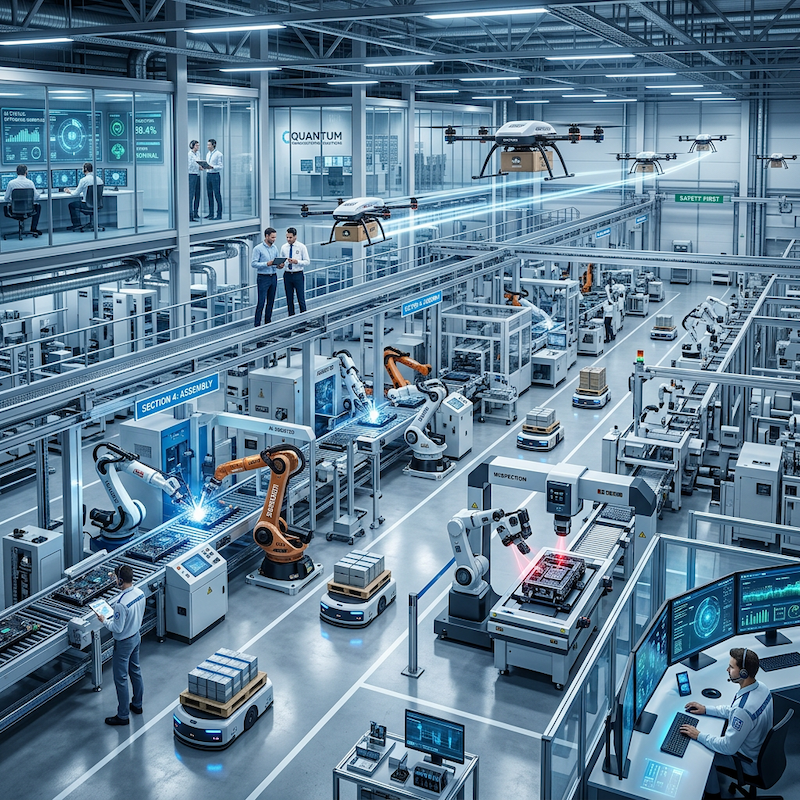
The pressure on modern supply chains is higher than it’s ever been. As consumer expectations shift toward lightning-fast delivery times and flawless order accuracy, warehouse operators are realizing that traditional, manual picking, packing, and sorting processes simply can’t keep pace.
Upgrading your facility with advanced automation equipment, whether that means automated guided vehicles, smart conveyor systems, or robotic sorting arms, has moved from a luxury to an absolute necessity for survival.
To compete in today’s landscape, you’ve got to find ways to squeeze maximum efficiency out of every square foot of your fulfillment space.
However, deciding to upgrade your facility is only the first half of the battle. The much more complex challenge is figuring out how to pay for it without choking your operational cash flow.
Warehouse automation requires a massive upfront capital investment that can easily stretch into hundreds of thousands, or even millions, of dollars, depending on the scale of your footprint.
As an operator, you’re faced with a classic financial crossroads, which is deciding whether you should lease the equipment or finance it through a commercial equipment loan. Both paths offer distinct advantages, but making the wrong choice can tie up your capital or lock you into outdated technology for years to come.
Leasing: Flexibility and Technological Agility
Leasing warehouse automation equipment is highly attractive for growing companies that want to protect their liquid cash reserves. When you sign an equipment lease, your upfront capital requirement is usually minimal, often requiring just the first month’s payment or a small security deposit.
This allows you to deploy cutting-edge technology into your facility almost immediately without draining your corporate checking account.
This model essentially treats automation as an operating expense rather than a massive capital expenditure sitting heavily on your balance sheet, giving you a cleaner look when evaluating short-term liquidity.
The biggest advantage of leasing is the built-in protection against technological obsolescence. Robotics, machine learning algorithms, and warehouse software systems evolve at a staggering pace.
If you enter into a standard operating lease that lasts two or three years, you retain the complete freedom to walk away or upgrade to the newest generation of equipment once the lease term expires.
The leasing company absorbs the depreciation risk and the logistical headache of disposing of the outdated machinery, leaving your fulfillment operations lean, modern, and technologically agile.
Furthermore, many lease agreements include comprehensive maintenance and service packages built right into the monthly payment, which completely removes the risk of unexpected, expensive repair costs that could disrupt your weekly budget.
Financing: Ownership, Equity, and Asset Value
On the other side of the equation sits equipment financing. Taking out a commercial loan to buy your automated hardware means you own the machinery from day one, or at least once the final payment is cleared with your lender.
This path completely transforms your automation project into a tangible corporate asset, allowing your company to build real equity over time.
For established operators with steady, predictable revenue streams, putting your capital into assets that you own is a powerful way to strengthen the overall valuation of your business entity.
Ownership also unlocks significant long-term financial benefits that can lower your total cost of operation. From a tax perspective, you can often leverage depreciation strategies to significantly lower your corporate tax burden in the first few years of operation.
Most importantly, once the equipment loan is fully paid off, your operational overhead drops drastically because you no longer face monthly equipment payments.
If your business model relies on stable, time-tested automation systems, like standard heavy-duty automated conveyor setups or durable vertical lift modules that won’t need to be replaced every three years, financing is often the most cost-effective path over the actual lifespan of the hardware.
You pay for the asset once, and it continues to generate a high return on investment for years to come.
Balancing Debt and Financial Health
When you look beyond the mechanical specifications of the automated machinery and the immediate monthly costs, you have to look closely at how this new debt will affect your overall corporate financial profile.
Choosing to finance a massive capital project changes your corporate leverage and impacts your debt-to-equity ratios, which can influence your ability to secure future business lines of credit, inventory financing, or commercial real estate loans for new warehouse locations.
Commercial lenders evaluate your company’s operational health by looking closely at how easily your existing revenue streams can cover your fixed debt obligations.
Before committing to a massive equipment loan that binds your cash flow for the next five to seven years, savvy operators use a DSCR loan calculator to analyze their debt service coverage ratio. Knowing this specific ratio helps you understand exactly how a new monthly payment will impact your broader corporate borrowing power.
It ensures that adding a major monthly loan payment won’t put your core business at financial risk during slower quarters or unexpected economic downturns. It keeps your eyes wide open to your actual financial boundaries before signing any long-term commercial debt agreements.
Assessing Your Long-Term Operational Strategy
To make the right choice, you’ve got to take a hard look at your specific operational volume and your five-year business roadmap.
If you’re a rapidly scaling e-commerce fulfillment business that needs to stay highly adaptable, or if you regularly switch up your warehouse layouts to accommodate changing client contracts, the flexibility of leasing is hard to match.
It gives you the operational freedom to scale up, scale down, or pivot your hardware configurations without being anchored to a warehouse full of paid-off machinery that no longer fits your structural flow.
Conversely, if you own your physical warehouse space, serve a highly stable market, and run repetitive, high-volume operations that rely on standard automation frameworks, financing is the more logical choice.
The long-term equity, tax deductions, and eventual elimination of monthly payments will yield a much higher financial reward. You absorb more upfront risk, but you gain absolute control over your hardware assets.
Ultimately, the choice between leasing and financing hinges on whether your primary goal is technological rotation or long-term asset accumulation.
If your priority is to stay on the absolute cutting edge of rapid technological breakthroughs without risking your liquidity, leasing gives you the agility you need to survive.
But if you’re building a permanent, predictable logistics foundation and want to maximize asset equity and long-term profitability, financing is the stronger anchor for your warehouse growth.
Main image courtesy of Easy-Peasy.ai
