Summary
- RFID and barcode technology help businesses run tighter operations through real-time asset and inventory tracking.
- Barcodes bring accuracy and speed to everyday workflows.
- RFID automates visibility at a larger scale.
- Together, they reduce downtime, sharpen decision-making, and support smarter operations across manufacturing, healthcare, retail, and logistics.
Walk into a busy warehouse right when it’s peak hours, and you’ll basically see the same story showing up everywhere: items moving fast, teams under pressure, and managers trying to keep inventory accurate while everything around them is moving.
One missing shipment, one misplaced asset, one fat-fingered data entry, and then suddenly a delay starts rippling across the whole operation like it has momentum.
It’s a pretty familiar problem. And it’s exactly why RFID, together with barcode inc technology, has become so central to how modern businesses run. Companies aren’t really hunting for tracking systems that tell them what happened yesterday. They want awareness of what’s going on right now.
They want fewer manual steps, fewer mistakes, and processes that don’t constantly force someone to pause mid-task just to record something. Whether the setting is manufacturing, healthcare, retail, logistics, or warehousing, the need feels the same. Keep up with the operation, or step aside.
Manual tracking had its moment. It’s done.
Understanding the Difference Between RFID and Barcode Technology
On the surface, RFID and barcodes look like they do the same job. Both identify things. Both track assets and inventory. But they work differently in ways that matter a lot in practice.
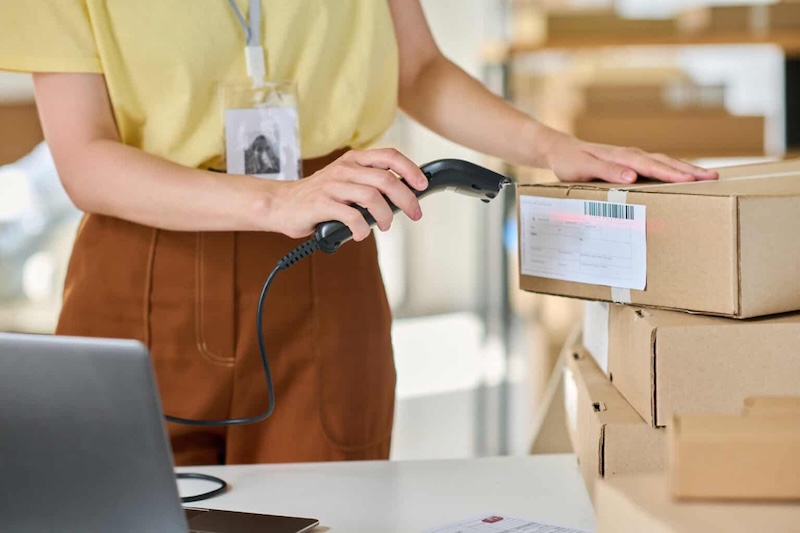
Barcode technology uses printed labels that workers scan one at a time with a handheld or fixed scanner. It’s simple, affordable, and it works. Barcodes have been the backbone of supply chains, shipping operations, and inventory management for decades – and they still earn their place.
RFID is a different tool for a different level of need.
Instead of printed labels and line-of-sight scanning, RFID uses radio frequency signals to identify tagged assets automatically. Multiple items can be read at once, even while they’re moving through a dock door or down a warehouse aisle. Nobody has to stop. Nobody has to point anything at anything.
That one difference – no manual scan required – changes how the whole operation flows.
Why Businesses Are Moving Toward Smarter Tracking
Think about the time people spend in a given week just looking for things. A tool that got moved. A pallet that ended up in the wrong bay. Inventory that the system says is there, but nobody can find. Now multiply that across a full team, a full facility, a full year.
The losses aren’t always obvious, but they add up:
- Delayed shipments
- Inventory inaccuracies
- Excess labor costs
- Production downtime
- Asset loss
- Compliance risks
RFID and barcode systems cut into all of those. A warehouse manager can pull up inventory on a screen instead of walking the floor. A manufacturer can see exactly where a part is in the production process.
A hospital can locate a piece of equipment in seconds instead of sending someone to check three different floors. A retailer can catch a stock problem before it hits the shelf.
Better tracking doesn’t just mean better data. It means the whole operation runs with less friction.
How RFID Creates Real-Time Visibility
If barcode inc is reliable, RFID is transformative.
With RFID, tracking happens without anyone initiating it. Passive tags identify products moving through checkpoints on their own. Active tags continuously monitor high-value assets across large facilities. The system knows where things are because it’s always watching – not because someone remembered to scan.
Picture what that looks like in practice:
- Inventory updates without a manual count
- Missing assets trigger an alert before anyone notices they’re gone
- Equipment movement is logged automatically
- Cycle counts that used to take half a day take minutes
- Workers spend their time on actual work instead of searching
In manufacturing, RFID tracks parts through every stage of production and keeps tool management from becoming a daily headache.
In healthcare, it means a nurse can find mobile equipment without calling three departments. In logistics, shipments get verified automatically rather than depending on someone catching every scan.
The labor savings are real. The accuracy improvement is real. And once operations teams see it working, going back to manual scanning becomes genuinely unthinkable.
Combining RFID and Barcode Technology
The businesses getting the most out of tracking aren’t choosing one or the other. They’re using both.
Different workflows have different requirements. Not everything needs RFID-level automation, and not everything can get by with a barcode scan. The smart move is matching the technology to the task.
A typical hybrid setup might look like this:
- Barcodes handle standard outbound shipments
- RFID monitors pallet movement through the warehouse automatically
- GPS tracks assets once they leave the facility
- IoT sensors keep an eye on temperature-sensitive inventory in transit
None of these needs to operate in isolation. When they all feed into a centralized platform, the data becomes something you can actually act on rather than just store.
The Importance of Integrated Tracking Platforms
Tracking technology is only as useful as what you can do with the data it generates.
A barcode scan that feeds into a disconnected spreadsheet doesn’t help much. An RFID read that disappears into a system nobody checks isn’t moving the needle. The technology has to connect to the inventory system, to the ERP, to the people making decisions.
Modern tracking platforms bring barcode, RFID, GPS, Bluetooth, and IoT data together in one place. Inventory levels, asset locations, maintenance schedules, shipment status – all visible, all current, all in one dashboard.
That kind of integration changes how organizations operate:
- Manual processes get replaced by automated ones
- Decisions get made on real information instead of best guesses
- Workflows run more consistently
- Maintenance gets scheduled before equipment fails
- Downtime drops
The operations that are still running on spreadsheets and disconnected systems aren’t just inefficient – they’re flying blind. Problems hide until they’re expensive. By the time someone notices, the damage is already done.
Smarter Operations Require Smarter Technology
Operational efficiency isn’t really something that just “happens” on its own. It shows up because you have the right visibility, the right automation, and data you can genuinely trust, not guess at. RFID and barcode inc tech give businesses all that, together.
And the organizations that see the biggest gains are often the ones that stopped treating tracking like an afterthought, and started treating it like infrastructure – like it depended on everywhere in the operation, not only as a warehouse team thing.
That’s also where the right technology partner matters a lot. Lowry Solutions helps companies roll out integrated RFID, barcode, GPS, IoT, and asset tracking systems meant for real environments, not “perfect” ones.
With decades of hands-on experience, the proprietary Sonaria tracking platform, certified hardware partnerships, and support that doesn’t quietly fade after go-live. Lowry Solutions helps organizations track everything, see everything, and then use the information in a way that actually moves the needle.
FAQs
1. What’s the difference, really, between RFID and barcode technology?
Barcodes typically need to be scanned one by one, and you have to keep a direct line of sight. RFID instead relies on radio signals, so it can pick up multiple tagged items automatically, even if they’re moving around at the same time. For those high-volume, fast-paced operations, that nuance matters more than most people think.
2. Which industries tend to benefit most from RFID and barcode systems?
You see solid improvements in manufacturing, warehousing, healthcare, retail, transportation, and logistics. Basically, in any setting where inventory or assets are constantly in motion and still have to be counted correctly and quickly, day after day.
3. Do RFID and barcode systems work together, or are they competitors?
They work together, and honestly, most serious setups use both. Barcodes cover the parts where individual scanning is totally fine. Then RFID steps in when automation, speed, and visibility are the main goals. They end up being a good pair, not an either/or thing.
4. How does RFID boost operational efficiency?
Mostly by removing that manual scanning step for a lot of tracking activities. Assets and inventory can get logged automatically as they move, which cuts down labor a lot, reduces mistakes, and gives you a more current picture of what’s going on across the site.
5. What should businesses check for when choosing a tracking technology provider?
Look for real field implementation experience, not only sales experience. Also, make sure they can integrate cleanly with the systems you already use. Hardware that has been validated in real conditions, not just demos. Plus ongoing support after go-live. And software that can scale as your operation grows, because it won’t stay the same forever.
