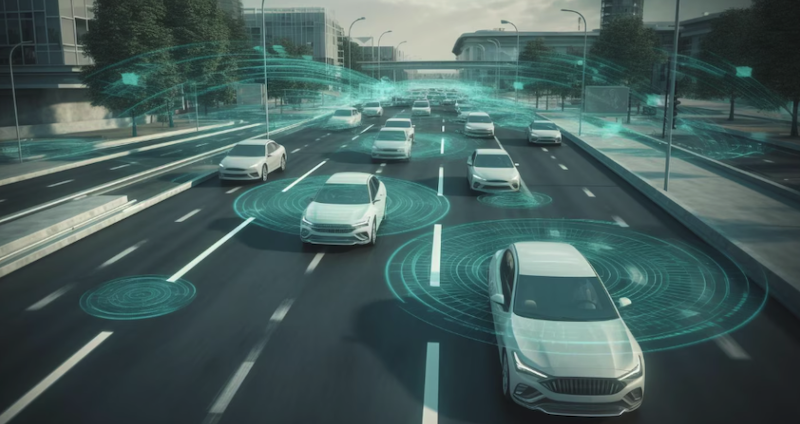
A modern windshield is often a mounting surface for forward-facing cameras, rain and light sensors, and brackets that hold them in a precise position. When the glass comes out, that geometry can change.
Even tiny differences in glass thickness, curvature, or bracket placement can move a camera’s view enough to affect how advanced driver assistance systems interpret the road. That is where windshield calibration enters the picture, and it is now tied directly to ADAS after many glass jobs.
Shops that work on windshield repair and replacement are dealing with more than adhesive cure times and chip fills. Some vehicles will show a warning if a sensor is offline, but physical misalignment can be silent. The car may drive fine while lane keeping, automatic emergency braking, or traffic sign recognition behaves late or inconsistently.
What ADAS Recalibration Actually Involves After Glass Work
ADAS recalibration is the process of aligning cameras and sensors with the manufacturer’s specifications so that the vehicle’s control modules interpret the environment correctly. It is not a generic reset. The work depends on the make, model, and the sensor package.
As more vehicles rely on cameras and sensor arrays mounted near the windshield, drivers are increasingly looking for auto glass repair services that factor in ADAS calibration and safety-system alignment after replacement.
There are two common calibration paths:
- Static calibration, performed inside a controlled workspace using calibration targets set at precise distances and specified heights
- Dynamic calibration, done on the road under specific speed and lane-marking conditions
Some vehicles require both. Tire pressure, ride height, alignment angles, and even lighting can change the outcome.
Why the Hardware Can Cost $20,000 And Keep Climbing
The headline number often refers to a calibration frame, target set, and core software bundle. That price makes sense once you look at what the equipment must do. It has to position targets with repeatable accuracy, support multiple vehicle platforms, and interface with OEM scan tools or licensed software.
Below is a simplified view of common equipment tiers seen in the aftermarket.
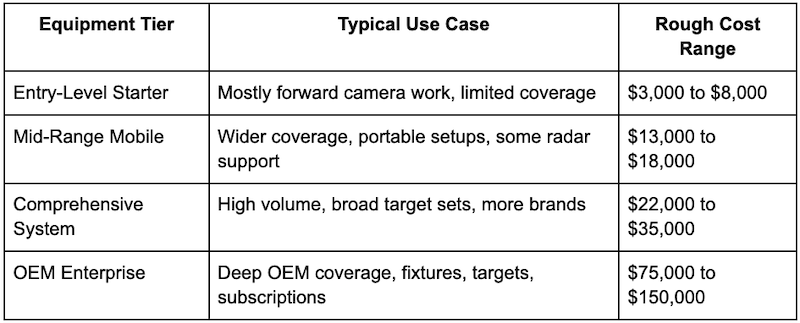
Then come the costs that do not show up in the brochure. Software subscriptions, target updates for new model years, training, and bay requirements all add up. Shops also give up floor space, and some sublet calibrations to a specialist.
As vehicles edge closer to higher levels of automation, the gap between traditional repairs and sensor validation keeps narrowing, a dynamic often discussed in coverage of driverless cars.
Shop Workflow is Changing Around Same-Day Jobs
Drivers want same-day windshield replacement, and that puts pressure on scheduling calibration the right way. Static calibration can take an hour or two in practice. Dynamic calibration adds a road test component that depends on traffic, weather, and road markings.
For a glass shop, the practical questions are plain:
- Can the vehicle be calibrated in-house the same day, or does it need a partner facility?
- Is the bay level, the lighting consistent, and the targets correct for that model?
- Will the job be documented well enough for an insurer or a warranty claim?
When the answer is no, safe windshield replacement starts to look less like a single appointment and more like a coordinated process.
What Government and Safety Organizations Say About Driver Assistance
Two points from public agencies help frame the risk. The U.S. National Highway Traffic Safety Administration states that driver assistance features are designed to support the driver, not replace the driver, so the driver remains responsible even when these systems are active.
Canadian research also shows that winter conditions like snow, ice, and road spray can reduce the performance of camera- and sensor-based systems, especially when sensors are obstructed.
Those statements land differently once you connect them to glasswork. If the sensor view is already stressed by glare, slush, or poor contrast, a camera that is slightly out of alignment has less room for error.
Missed Calibrations and Quiet Failures
A recurring problem in the aftermarket is that required calibrations are skipped, delayed, or treated as optional when they are not. There is also a technical issue: some modules do not detect physical misalignment. No warning light does not mean the camera angle is correct.
This is also where liability enters. If a repair changes sensor position and calibration is omitted, the shop may be exposed after a crash, even if the glass installation itself was solid. Insurers have started paying closer attention, and documentation has become part of the job.
Where This Points as Vehicles Move Toward Automation
As automation features expand, the glass and collision space will keep intersecting. The economics favor specialization, and many regions are seeing dedicated calibration centers and mobile operators.
You can see the direction of travel in the broader conversation about autonomous vehicles and how sensor stacks keep getting more complex. Even mainstream models now carry camera modules that used to be limited to high trims.
The result is simple: windshield repair services increasingly need a calibration plan baked into the estimate, not bolted on at the end.
Final Thoughts
ADAS calibration systems may cost $20,000 or more, but the bigger cost shows up when calibration is treated casually. With cameras sitting behind the glass, windshield calibration is part of returning a vehicle to normal operation, and ADAS recalibration often belongs in the same workflow as the glass install.
If you want more reporting on the technology side of modern mobility, take a look at our articles.
