Most people who get into brick production already know the basics, but it’s the details that determine whether your operation runs smoothly or constantly falls behind.
Getting the right brick making machine for your setup is one of those decisions that ripples through everything else, from how consistent your output is to how much you’re spending on labor each month.
This guide breaks down what today’s machines can actually do, what to look for when choosing one, and how to scale production without running into the common pitfalls.
Understanding Modern Brick Making Machines
Today’s brick making machines aren’t what they used to be. Hydraulic systems have gotten far more precise, vibration controls have improved dramatically, and the result is that you’re consistently getting brick density levels around 95% uniformity across batches, something that would’ve been difficult to promise even a decade ago.
PLC panels let operators dial in adjustments on the fly, which means less wasted material and a lot more control over size, strength, and surface finish.
What’s also changed is flexibility. Solutions like those offered by Lontto in Chicago now let the same machine turn out hollow blocks, solid bricks, decorative pavers, and even AAC blocks for insulation applications.
Automation handles the repetitive precision work so your team doesn’t have to, and quality stays steady whether you’re running a small morning batch or pushing full shifts around the clock.
Types of Brick Making Machines and Their Applications
The main categories of brick making machines are manual, semi-automatic, and fully automatic, each designed for different scales and needs:
- Manual brick making machines are the right fit for small operations or rural startups where reliable electricity or skilled labor isn’t always available. Output stays under 1,000 blocks a day, but for locations where that’s enough, they get the job done without overcomplicating things.
- Semi-automatic models like the QT4-25C have found a sweet spot for businesses that are growing but aren’t quite ready (or don’t need) to go fully automated. Putting out anywhere from 300 to 1,500 blocks per hour (roughly 800 to 3,500 per day), they cut labor needs by 40-65% while keeping costs manageable. It’s no surprise the 2025 global market forecast puts these machines at a 51.3% market share, and they’re a reliable workhorse for urban affordable housing projects.
- Fully automatic lines like the QT4-15 and LT4-10 are built for serious volume, up to 4,000 bricks in a single 8-hour shift. You only need a handful of operators, and real-time monitoring keeps things running with minimal interruptions. These are the machines you want when you’re supplying large commercial or government projects and delays aren’t an option.
Key Features to Consider When Choosing a Machine
Selecting the right brick making machine requires careful attention to several essential features:
- Automation Level: Fully automatic machines cut labor costs and accelerate output. Semi-automatic models offer valuable flexibility at a lower price.
- Hydraulic & Vibration Systems: High-pressure hydraulics and a solid vibration assembly are what give you denser, more durable bricks. When these systems are consistent, your product quality is consistent. Simple as that.
- Mold Versatility: The ability to swap mold types matters more than people realize. Local building codes change, clients have specific requirements, and being stuck with one mold size is a real limitation. Flexibility here pays off over time.
- Production Capacity: Be honest about your actual demand. Oversizing wastes money upfront and ongoing; undersizing creates bottlenecks right when you need to deliver.
- Cost and ROI: A mid-range semi-automatic line typically runs $18,000-$35,000, with most operations seeing return on investment within 15 to 30 months of running it properly.
- Supplier Support and Scalability: A machine is only as good as the support behind it. Choosing a supplier like Lontto means you’re not left hunting for parts or troubleshooting blind, and when you’re ready to expand, they can grow with you.
Optimizing the Brick Production Process for Efficiency
To maximize output and lower costs, it’s important to optimize every stage of your brick production workflow:
- Automated batching takes the guesswork out of material ratios. Getting cement, sand, and aggregate proportions right every time cuts waste and keeps finished brick quality where it needs to be.
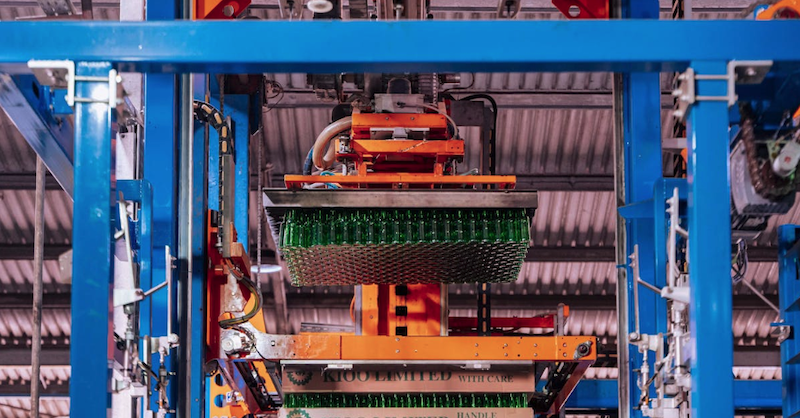
- Mechanical pallet handling and stacking remove one of the most common sources of downtime between cycles. In semi-automatic and automatic setups, smoothing out this step alone keeps machines running closer to their actual potential.
- Precise mixing and curing directly impact how many bricks you reject. Controlling water content and additives properly means stronger bricks and far fewer defective ones leaving the line.
Medium semi-automatic machines in particular offer a genuinely smart balance, using about 42% less energy than larger fully automated systems while still putting out triple the volume of manual setups.
Companies running Lontto equipment see this in practice: consistent output, lower energy bills, and bricks that hold up on tight construction schedules.
Scaling Up: Strategies for Expanding Your Output
As market demand rises, brick producers need smart strategies to expand production without compromising quality. The natural path is stepping up gradually, starting from manual to semi-automatic, and then to a full-line system when the volume justifies it.
Modern machines make the mold-change process straightforward, so serving a wider range of clients or adapting to new construction trends doesn’t require buying entirely new equipment.
Bringing in more automation, moving to systems that run efficiently with just 2-4 operators per shift, can shave 25-35% off labor costs over time.
The key is matching your machine capacity to where your market is actually heading, not just where it is today. Overbuilding early ties up capital; underbuilding means scrambling to fill orders.
Lontto works closely with manufacturers and contractors in the Chicago area to map out scalable production lines, with custom mold options and upgrade paths that make sense as business grows, not just for the sale.
Maintenance and Troubleshooting Tips for Longevity
Long-term performance of your brick making machine depends on a routine maintenance program and swift troubleshooting strategies. Choose machines built with durable steel, reinforced for continuous use in challenging environments.
- Hydraulic pumps and vibration motors need regular inspection and calibration. Letting these slip leads to uneven bricks and, eventually, mechanical failures that cost far more than a routine check would have.
- Lubrication and bolt checks should happen after every shift. It sounds basic, but these small habits are what separate machines that run for years from ones that cause constant problems.
- Molds wear out and need cleaning or replacing as part of normal operations. A worn or clogged mold is one of the most common causes of product defects, and one of the easiest to prevent.
Lontto backs Chicago-area clients with genuine replacement parts and technical support you can actually reach, so you’re not stuck waiting around when something needs attention. Keeping a documented service schedule isn’t glamorous work, but it’s what keeps your production on time and your equipment running the way it should.
About Lontto
- Business: Lontto
- Spokesperson: Chao Zhang
- Position: CEO
- Phone: 708 260 8300
- Email: lontto66@gmail.com
- Location: 4992 S Austin Ave, Chicago, IL 60638, USA
- Website: https://www.block-machine.net/
Frequently Asked Questions about Brick Making Machines
What are the main benefits of using modern brick making machines?
They automate the entire production process, delivering bricks with up to 95% density uniformity while cutting labor costs and material waste significantly.
How do semi-automatic brick making machines compare to manual and fully automatic models?
Semi-automatic machines sit comfortably in the middle, producing 300 to 1,500 blocks per hour with 40-65% less labor than manual, at a fraction of the cost of fully automatic lines.
What key features should I consider when choosing a brick making machine?
Prioritize automation level, hydraulic system quality, mold flexibility, and production capacity that matches your real demand. Reliable supplier support matters just as much as the machine itself.
How can I optimize my brick production process for better efficiency?
Use automated batching for accurate material mixing, streamline pallet handling to cut downtime, and keep your curing process consistent. These three steps alone make a noticeable difference in output.
What are effective strategies to scale up brick production as demand grows?
Upgrade in stages from manual to semi-automatic, then to fully automatic when volume justifies it. Match your capacity to actual market growth rather than jumping ahead of it.
How important is maintenance for the longevity of brick making machines?
Very. Routine checks on hydraulics, vibration motors, and molds keep defects low and downtime rare. A good after-sales support partner makes this even easier to stay on top of.
