The landscape of smartphone hardware has evolved radically. In 2026, fixing a phone is no longer just about swapping out a modular component with a basic screwdriver.
Today’s flagship devices from Apple, Samsung, and Google are tightly engineered puzzles held together by microscopic, application-specific security screws, multi-layered logic boards, and heavy industrial waterproof gaskets.
To help you navigate this complex market without wasting money on low-grade gear, we have put together this definitive guide in partnership with DIYFIXTOOL – your premium one-stop wholesaler for verified, field-tested mobile repair equipment.
This curated cell phone repair toolkit guide breaks down the exact hardware you need to get started safely, efficiently, and with maximum professional precision.
1. The Realities of Modern Phone Openings
Modern smartphone engineering relies heavily on three core protective defenses designed to keep unauthorized users out:
- Varying Screw Geometries: Brands use unique, highly fragile internal fasteners like the 5-point Pentalobe or the microscopic Tri-point (Y000) bracket shields.
- Industrial Thermal Adhesives: Perimeter seals hold screens and glass back-covers firmly to the mid-frame to guarantee IP68 dust and water resistance.
- Electrostatic Discharge (ESD): A microscopic static spark from your fingertips can pass straight into an uncovered logic board, quietly killing an Integrated Circuit (IC) without your knowledge.
To bypass these barriers smoothly, you need specialized gear built for electronic repair.
2. Core Hand Tools: The Open-and-Isolate Essentials
If you are assembling your first workspace, these are your absolute baseline essentials. Think of this category as your foundational entry into phone repair tools for beginners.
High-Hardness Screwdriver Sets
Do not cut corners on your drivers. Cheap chrome-vanadium steel bits flex and deform under minor torque, permanently flattening the teeth of a tiny screw. Look for precision kits made from high-grade S2 Tool Steel, with a hardness rating of 58-62 HRC.
Your starter kit must include:
- Pentalobe (P2): Required for the bottom two tracking screws on every iPhone.
- Tri-point (Y000): Crucial for internal EMI grounding shields.
- Torx (T3, T4, T5, T6): Standard cross-industry drivers for Google Pixel and Samsung Galaxy assemblies.
- Standoff Drivers: Specialized bits designed to unseat layered logic board anchor pins.
Mechanical Suction & Lifting Fixtures
Standard retail suction cups pull unevenly, applying bending tension to the center of a glass panel, which can snap an old or compromised screen. Professional setups use dual-suction plier mechanisms or dedicated non-heating screen separators (such as the PHONEFIX or Mechanic line).
These fixtures anchor firmly across the glass surface, allowing you to use controlled mechanical lever-force to split the adhesive seal evenly without snapping internal ribbon flex cables.
Nylon Spudgers & Anti-Static Tweezers
Never slide standard metal blades or raw steel tweezers into an open phone casing. Metal will scratch structural aluminum walls, slice delicate screen matrices, and potentially pierce soft lithium-polymer batteries, risking a hazardous thermal runaway fire.
Instead, work exclusively with ESD-safe plastic or reinforced carbon-fiber nylon spudgers. For handling tiny internal elements, choose high-grade anti-static ceramic or insulated steel tweezers to shield sensitive board paths from static damage.
3. Thermal Management & Chemical Adhesives
Heat is the absolute key to accessing modern smartphone interiors. Trying to separate a cold frame will almost always result in shattered glass.
Controlled Surface Heating Platforms
While older methods relied on unsteady manual hot air guns, modern technicians utilize uniform-surface tools. A dedicated Graphene Heating Pad or an intelligent pre-heating station provides steady, computer-controlled ambient warmth across the entire device footprint.
For clean screen separations, maintaining a consistent surface temp between 80°C to 90°C softens modern structural sealants perfectly without altering the pixel structures of delicate organic light-emitting diode (OLED) panels.
High-Purity Cleaning Solvents
Keep a high-quality dispenser bottle of 99% Isopropyl Alcohol (IPA) at your bench. Standard retail rubbing alcohol contains too much water, which pools under chips and causes long-term mineral corrosion.
99% IPA completely shears through resilient glue matrices, lifting away left-behind tape lines and evaporating cleanly within moments without leaving behind any conductive layer.
4. Diagnostic Infrastructure: Essential Tools for Mobile Repair Business Scaling
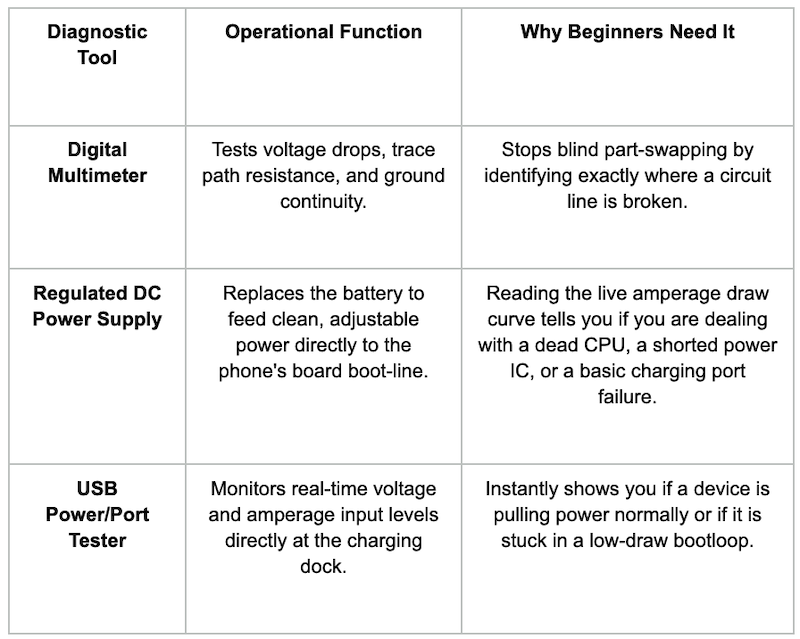
When your work shifts past basic screen and battery swaps into diagnosing why a phone won’t turn on or charge, basic hand tools aren’t enough. Tracking down electrical faults requires advanced hardware to look beneath the surface. This diagnostic tier represents the essential tools for mobile repair business growth.
5. Setting Up Your Workspace: Repair Shop Starter Tools 2026
Building an organized, highly professional workspace requires clean staging, ample illumination, and serious safety precautions. If you are configuring a commercial storefront or an in-house workstation, these are your essential repair shop starter tools for the 2026 layout items.
High-Temperature Grounded Silicone Mats
A workspace needs a safe foundation. Your workspace should center around a high-grade, heat-resistant silicone workspace mat placed on top of a grounded ESD protective sheet.
This setup guards your bench surface against stray drops from your soldering iron up to 500°C and provides a safe grounding point to clear away personal static buildup before you handle internal parts.
Magnetic Screw Memory Mapping Mats
Smartphones use dozens of tiny screws with variations down to tenths of a millimeter. Putting a screw that is slightly too long into a shallow hole causes a major issue known as “long-screw damage” – where the screw cuts through the paths of the underlying logic board, permanently killing the phone.
A compartmentalized magnetic mapping mat lets you lay out and organize your screws exactly how they came out, ensuring every fastener goes back precisely where it belongs.
Optical Magnification Infrastructure
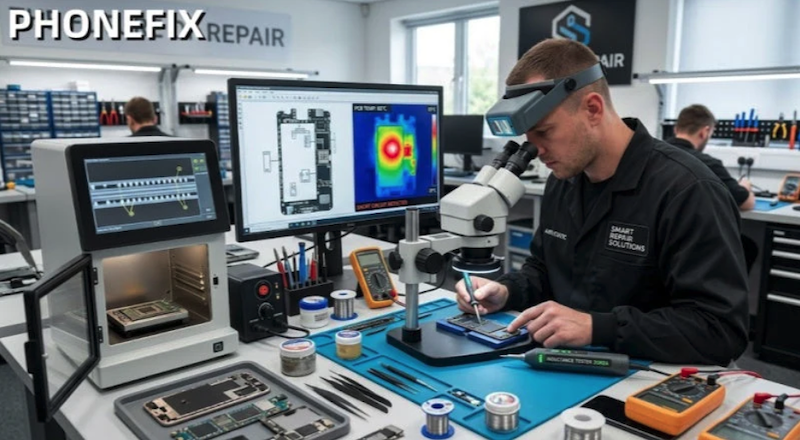
As electronic components shrink down to microscopic scales, trying to trace circuitry with the naked eye is no longer practical. A dedicated Trinocular Stereo Microscope (such as the popular 6.5X-75X configurations from brands like Mechanic or RF4 available at DIYFIXTOOL) on a durable boom arm is a vital addition to any modern workspace.
It gives you a crystal-clear, high-depth 3D field of view for verifying solder points, aligning delicate FPC ribbon connectors, and spotting hairline board cracks.
Why DIYFIXTOOL is the Ultimate Choice for Your Bench
When you are starting, the sheer volume of repair tools available online can be overwhelming. Avoid the temptation to buy cheap, unbranded toolkits from mass-market marketplaces. Here is exactly why DIYFIXTOOL is the best partner for sourcing your repair setup:
Curated Professional Ecosystem: Unlike generic e-commerce sites that sell everything from clothing to electronics, DIYFIXTOOL specializes strictly in phone and electronics repair. Every single item – from high-end Mechanic microscopes to simple JCID programmers – is selected specifically for real-world repair technicians.
Verified Component Authenticity: In an industry flooded with counterfeit parts and weak steel copycat tools, DIYFIXTOOL sources directly from leading repair brands like PHONEFIX, QianLi, Sugon, and Sunshine. You know exactly what grade of steel, silicone, or optics you are getting.
Wholesale Pricing for Growing Businesses: If you are building a repair shop starter tools 2026 inventory, costs add up fast. DIYFIXTOOL provides competitive supply-chain pricing, allowing beginners and small business startups to access industrial-grade diagnostic equipment without massive upfront overhead.
Global Shipping & Technical Support: They don’t just ship boxes; they understand the global repair community’s demands, offering up-to-date 2026 hardware variations designed to handle the layout changes of the newest flagship smartphones.
Final Thoughts
Succeeding in the modern phone repair space doesn’t mean you have to spend thousands of dollars on industrial laser separators or advanced BGA micro-soldering stations on day one.
True precision starts with mastering the fundamentals. Focus your initial investment on high-quality, durable basics: a premium S2 driver set, uniform heating solutions, safe opening fixtures, and essential diagnostic meters.
By sourcing your setup from trusted, specialist platforms like DIYFIXTOOL, you protect your customer’s hardware, eliminate unnecessary frustration, and build a reliable, scalable setup that can evolve right along with your technical expertise. Take your time, document your teardowns, and invest in quality gear that lasts.
